Thu 30 Dec 2010, 06:49 GMT

Freight volumes up 13% in Antwerp


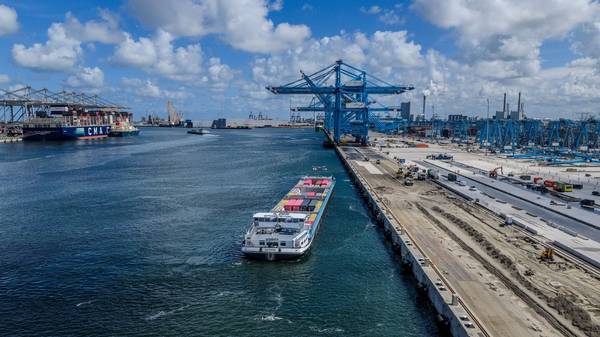
Container freight and liquid bulk set new records as Antwerp handles 178 million tonnes of freight in 2010.


By the end of this year the port of Antwerp is expected to have handled 178 million tonnes of freight, up 13% from the recession year of 2009.

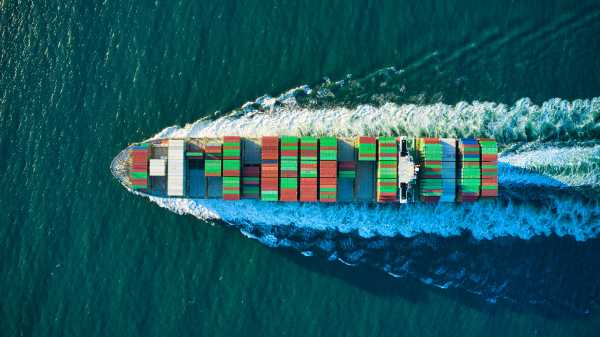
The increase is said to be mainly due to container freight, which has once again passed the 100 million-tonne mark and set a new record. Liquid bulk also performed well in 2010, setting an all-time record, and conventional/breakbulk performed better than in 2009 but still remains below 2008 levels.

Container volume rose by 17.8% to 102,775,000 tonnes. In terms of TEU it was up by 16.1% to 8,483,000 TEU. Ro/ro for its part also increased, by 14.8% to 3.6 million tonnes. In comparison with 2008, however, it is still down by 16.9%. Imports of new cars in particular are struggling to get back to 2008 levels.

The volume of bulk freight is trending up once more in 2010, up 7% on last year. Both liquid bulk (up 4.8%) and dry bulk (up 12.0%) recorded growth figures. Liquid bulk has even performed better than in 2008, with a 5.4 % increase since then. Crude oil (up 20.67%) and chemicals (up 18 %) are the top performers in this segment. While dry bulk has done better than in 2009 (up 12%), it still lags well behind 2008 levels (down 28.8%). The volume of coal handled continues to decline (down 16.3%). The volumes of ore (up 19.5 %), grain (up 14.5 %), fertilisers (up 56.8%) and sand and gravel (up 22 %) are all rising once more.

Conventional/breakbulk increased by 6.3% to 11.1 million tonnes in 2010, but remains far below 2008 levels (down 34.4%). In comparison with 2008, conventional/breakbulk is the sector experiencing the greatest difficulty in recovering from the recession.

"The figures show that Antwerp is further strengthening its position as the second-largest container port in Europe. And in liquid bulk too Antwerp is performing very well. These two sectors, which between them make up 80% of the total volume, will continue to form sources of growth for the port of Antwerp in future," the port of Antwerp said in a statement.

Aurora Botnia vessel. Gasum and Wasaline extend bio-LNG supply agreement to 2027  

Nordic energy company renews fuel supply contract with Finnish-Swedish ferry operator through 2027.

Luminara vessel truck-to-ship bunkering. MOL Techno-Trade completes Japan’s first truck-to-ship LNG bunkering for foreign cruise vessel  

Ritz-Carlton cruise ship Luminara refuelled at Nagasaki Port using truck-to-ship method on 3 April.

NKT Eleonora vessel cable-laying. Methanol-ready cable-laying vessel hull launched in Romania  

Shipbuilder floats hull of dual-fuel vessel designed for offshore renewable energy cable operations.

Dr Prapisala Thepsithar, GCMD. GCMD biofuels lead receives Singapore standardisation award  

Dr Prapisala Thepsithar recognised for contributions to marine biofuel specification development.

Marine Energy Wales (MEW) Conference 2026 graphic. Certas Energy to attend Marine Energy Wales conference in April  

Marine fuel supplier to discuss sector solutions at UK marine renewable energy conference.

Dinamo IV vessel. Sanmar completes sea trials for 14th all-electric tugboat  

Turkish shipyard marks half-century in business with latest battery-powered vessel from ElectRA series.

Gotland Horizon X render. Echandia to supply battery system for Gotlandsbolaget’s hybrid ferry  

Swedish battery supplier wins contract for new high-speed catamaran operating between Visby and Nynäshamn.

Suezmax crude oil tanker render. Guangzhou Shipyard secures Suezmax order, delivers vessels ahead of schedule  

China State Shipbuilding subsidiary reports nine vessel deliveries in the first quarter of 2026.

Clean ammonia project pipeline chart as of March 2026. Renewable ammonia pipeline grows despite Norway project freeze  

GENA Solutions tracks 325 projects totalling 146 MMT of capacity by 2034 despite execution challenges.

Antwerpen and Arlon naming ceremony. Exmar names world’s first ocean-going ammonia dual-fuel gas carriers in South Korea  

Two 46,000-cbm vessels can reduce CO₂ emissions by up to 90% during navigation.