Mon 29 Oct 2018, 12:42 GMT

MEPC 73 guidance approvals and further work


Work still to be done on fuel oil best-practice guidance for member states and SIP.


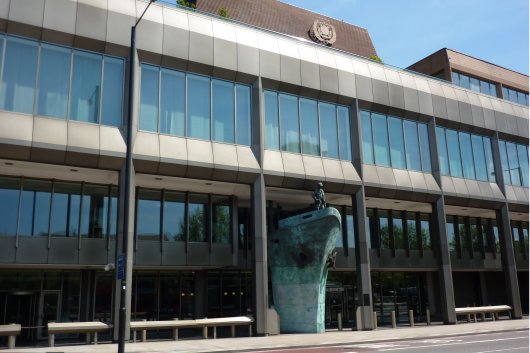
The International Maritime Organization's (IMO) headquarters in London.
Image credit: Flickr
Work on developing a best-practice guidance for member/coastal states to assure the quality of fuel oil delivered to ships is to be sent back to a correspondence group for further work, the International Bunker Industry Association (IBIA) notes.

According to the marine fuel body, it was deemed "premature" to complete the draft at the 73rd Marine Environment Protection Committee (MEPC). The objective will therefore be to submit a draft for finalisation and approval at the next MEPC meeting in May 2019.

Supplier guidance approved

As previously reported, MEPC 73 did approve the 'Best practice guidance for suppliers for assuring the quality of bunkers delivered to ships'. The first edition was developed by the International Bunker Industry Association (IBIA) earlier this year and submitted to MEPC 72 in April.

The final version made a few small amendments to the draft submitted in MEPC 74/5/4 (which in turn had proposed changes to the draft guidance provided by IBIA to MEPC 72), with co-sponsors representing the shipping and fuel oil supply industries cooperating on a number of improvements said to be "primarily editorial".

The best-practice guide for fuel oil suppliers addresses procedures to safeguard and maintain bunker fuel quality control throughout the entire supply chain - from the production of bunkers all the way through to the delivery to ships.

The supplier guide was developed to complement the 'Best practice guidance for fuel oil purchasers/users for assuring the quality of fuel oil used on board ships' - a guide for bunker buyers that was approved at MEPC 72 and is designed to help improve standards and lower the risk of fuel delivered not meeting the buyer's quality specifications.

Ship implementation plan (SIP) - further work

MEPC 73 also approved the draft guidance on the development of a non-mandatory ship implementation plan (SIP), which had been developed during July's intersessional working group (ISWG) meeting - held under the auspices of the Sub-Committee on Pollution Prevention and Response (PPR) - to help ship owners and operators devise a 0.5 percent sulphur cap plan and demonstrate the steps taken to prepare for compliance.

The document features an appendix covering the impact on machinery systems, including advice on how to prepare for the use of distillates and/or fuel oil blends, and changes that may be needed ahead of 2020.

A set of guidelines of a more operational nature - to help operators manage both distillate fuels and fuel oil blends containing residual fuel - is expected to be addressed at PPR in February next year for approval at MEPC 74, in May 2019.

A second SIP appendix addresses tank cleaning; it is based on a document submitted by IBIA which examines the options available for cleaning fuel oil tanks and systems.


Caspar Gooren, Titan. Titan Clean Fuels signs e-methane supply deal with TURN2X for 2028 delivery  

Bunker supplier to receive e-methane from Spanish production plant for distribution across European ports.

Hydrogen-fuelled engine 6UEC35LSGH. Japan consortium achieves hydrogen co-firing in main engine for large commercial vessel  

Engine reaches over 95% hydrogen co-firing ratio, with installation planned for 2027.

BTB bunker truck. Belgian Trading & Bunkering expands DMA 0.89 truck deliveries in ARA region  

BTB extends marine fuel offerings with truck-based deliveries to meet maritime market demand.

Fuel pathway roundtable meeting participants. ABS convenes roundtable on offshore power barge for Great Lakes emissions reduction  

Meeting brought together ports, academia and industry to advance shore power solution under EPA programme.

Lego Ane Maersk video screenshot. Maersk marks 50-year Lego partnership with dual-fuel vessel model  

Shipping company displays an exhibition of Lego sets spanning five decades at Copenhagen headquarters.

Guo Yun Hai vessel. Cosco Shipping takes delivery of 80,000-dwt methanol-ready grain carrier  

Guo Yun Hai features box-shaped cargo hold and methanol-ready design with energy-saving devices.

CMA CGM Innovation ship-to-ship transfer. Algeciras reports record LNG bunkering volumes, claims European top-three position  

Spanish port says it supplied 333,833 cbm of LNG across 78 ship-to-ship operations in 2025.

Additional costs chart. T&E: Iran conflict costing shipping industry €340m a day in fuel costs  

Transport & Environment analysis shows marine fuel price surge has cost the industry €4.6bn since conflict began.

CF 3850 vessel render. Damen delivers second hybrid-ready combi freighter to German shipowner  

The vessel features biofuel capability and will be retrofitted with wind-assist technology with government funding.

Engine retrofit report 2026 graphic. Retrofit capability expands as regulatory uncertainty slows alternative-fuel conversions  

Lloyd’s Register warns delayed conversions could compress demand into a narrower, costlier timeframe as the fleet ages.