
 |
The introduction of FuelEU Maritime (FEUM) on January 1, 2025, has added new layers of complexity to commercial relationships between shipowners, charterers and independent ship managers, according to DNV. While the EU Emissions Trading System (EU ETS) imposes annual reporting obligations on shipowners, FuelEU Maritime assigns emissions reporting to the ship manager holding the Document of Compliance (DoC), a change with significant contractual and financial implications for all parties.
Arne Lippens, Head of Technical Compliance at Exmar Ship Management, said in a DNV Industry Insights article on November 27: "It finally opens up the dialogue between the partners. In the past, there was always a split incentive: the charterer was paying the fuel costs, whereas any investments by the owner in efficiency improvements or fuel and emission monitoring technology would benefit the charterer, not the owner."
DNV notes that while owners with in-house management divisions can manage the implications more easily, independent ship managers (ISMs) now carry direct legal responsibility for FuelEU reporting, and therefore assume the full financial risk associated with compliance failures or deficit balances. Because the ISM often has little influence over fuel selection or trading patterns, this creates a mismatch that must be corrected contractually. Owners must therefore closely track FuelEU compliance balances for each charter period and ensure that financial exposure is fairly allocated in charterparty negotiations.
Helge Hermundsgård, Head of Business Development for DNV’s Emissions Connect services, said another challenge comes from the timing mismatch between FuelEU requirements and commercial arrangements."Charter parties rarely line up with the annual compliance cycle. This means that charter parties must ensure that the incurred liabilities are addressed as charters start and end during the reporting year," he said. Hence, the ISM responsible at the end of the calendar year is legally accountable for emissions reporting across the entire year, according to FEUM.
Hermundsgård added that because ship managers cannot control the key drivers of FuelEU exposure, such as fuel type, energy intensity, or voyage routes, the financial implications should follow the principle that the “polluter pays.” This means the chartering party or owner making operational decisions that influence greenhouse gas (GHG) intensity should bear the associated cost. To support this, the Baltic and International Maritime Council (BIMCO) published a FuelEU Maritime clause for its widely used SHIPMAN standard contract on December 19, 2024, though DNV notes that this clause cannot solve every practical scenario.
Lars Nyfløt, Global Sales Manager Emissions Connect Business Development at DNV, commented: "Independent ship managers, charterers, and owners must understand the regulations clearly and find ways to allocate the financial consequences in their charter parties fairly, including provisions for hypothetical events or situations."
Questions about how responsibility for FuelEU Maritime will be reallocated to owners and how ship managers are guaranteed compensation for additional liabilities must be answered in advance, according to Nyfløt.
Lippens said the regulatory requirements create opportunities for ship managers: "The emission penalties resulting from EU ETS, FEUM, and the forthcoming IMO regulation might double the cost of fuel in the foreseeable future, making it crucial for the party paying the bill that their operational expense and fuel spend are managed well."
Nyfløt, who has decades of commercial experience on both the owner’s and charterer’s side, said effective negotiations depend on a neutral, trusted dataset. “One of the most important assets in charter negotiations is a trusted source of emission data. Proper documentation and a single source of truth accepted by all stakeholders are key to negotiations that deliver satisfactory results.”
DNV's Emissions Connect service, accessible on the DNV Veracity platform, enables customers to track and document emissions continuously throughout the year and monitor financial liabilities and risks, according to Nyfløt.
Moreover, the service provides rules-based documentation verified by DNV, he stated: "The commercial focus is not on historical, summary data but on specific time spans, voyages, or charter periods."
Lippens also said: "To us, the Emissions Connect data feed is a single source of truth, which is then pushed through to the DNV platform for an automatic quality check. This provides us with a verified emissions report as soon as the voyage ends, eliminating human input errors."
Therefore, the compliance balance, the difference between required and actual greenhouse gas intensity during a charter period, determines liability under the regulation, according to Hermundsgård.
He also mentioned that, "In the event of lagging compliance, the balance needs to be paid for, which means that the owner is likely to ask the charterer for compensation. However, if a charterer uses biofuel and generates a compliance surplus but has paid more for the fuel by the end of the charter period, will the charterer be willing to pay the corresponding monetary benefit to the owner, or should the owner compensate the charterer for the extra fuel cost?"
The platform allows companies to capture surpluses and deficits under FuelEU Maritime and to implement pooling mechanisms between well-performing vessels and older tonnage, according to Lippens.
DNV said Emissions Connect is continually being updated to reflect ongoing regulatory developments, new contractual practices, and user feedback. Nyfløt added that the tool is cost-agnostic, meaning it does not convert emissions into monetary values because allowance prices fluctuate. Instead, it focuses on verified data that stakeholders can rely on during commercial planning.

|
Japan Engine completes land-based testing of landmark hydrogen-fuelled engine for large vessels
Hydrogen co-firing rate of at least 95% achieved during factory testing. |
|
|
|
||
|
Ethanol edges into shipping’s fuel mix as methanol crossover eases adoption barriers
Rising interest from cargo owners, shared technology with methanol and Brazilian production growth push ethanol beyond regional niche status. |
|
|
|
||
|
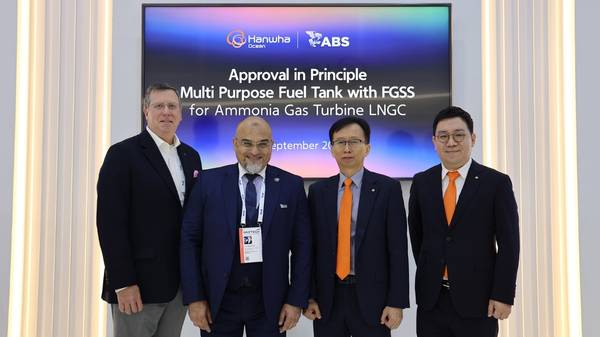
ABS grants Hanwha Ocean approval for dual-fuel tank enabling LNG-to-ammonia switch
In-principle approval awarded for fuel tank and supply system enabling LNG carriers to convert to ammonia without replacement. |
|
|
|
||
|
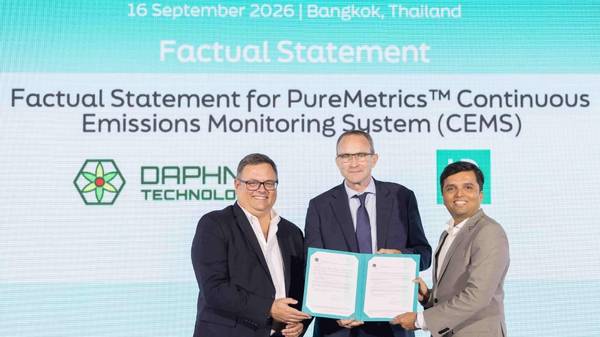
Lloyd's Register confirms suitability of Daphne Technology's emissions monitoring system
Factual Statement validates the PureMetrics design for monitoring greenhouse gas emissions from marine engines. |
|
|
|
||

|
IMO issues shipboard biofuel blend checklist developed by IBIA
Checklist for FAME-based biofuels formally incorporated into IMO document, supporting crews handling biofuel blends for the first time. |
|
|
|
||
|
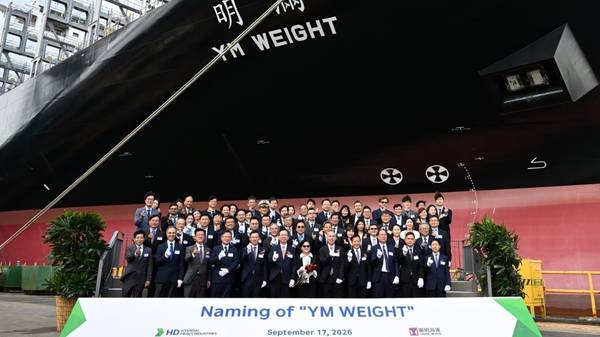
Yang Ming names fourth LNG dual-fuel container vessel YM Weight
Newbuild features high-pressure dual-fuel main engines capable of running on either LNG or low-sulphur fuel oil. |
|
|
|
||
|
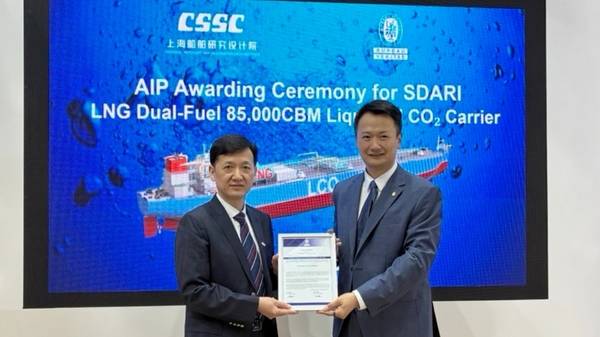
Bureau Veritas grants AiP to SDARI’s LNG dual-fuel liquefied CO₂ carrier design
Classification society approves 85,000-cbm vessel concept designed to support the growing carbon capture and storage sector. |
|
|
|
||

|
JuWonOil looking to strengthen with two Houston hires
Texas-based firm is recruiting a marine lubricants sales executive and a marine fuels and distillates trader. |
|
|
|
||
|
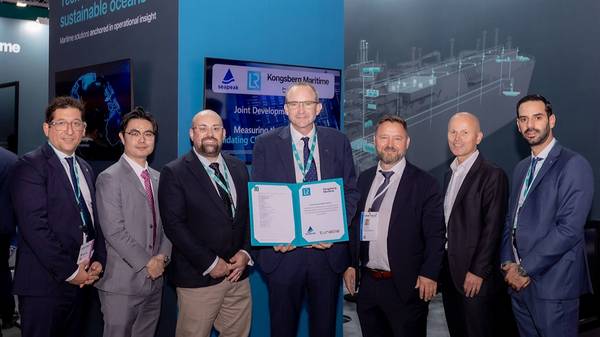
Four firms partner to trial continuous emissions monitoring on LNG carrier
LR, Seapeak, Kongsberg Maritime and Tunable will test onboard CO₂ monitoring against engine data and default emissions factors. |
|
|
|
||
|
Bunker Holding reshuffles commercial leadership across brand portfolio
Appointments announced across KPI OceanConnect, Glander International Bunkering and its digital sales operations. |
|
|
|
||
| FuelEU penalties spark contract disputes as first-year compliance costs emerge [News & Insights] |
| Furetank switches EU fleet to biomethane under new FuelEU regulations [News & Insights] |
| DNV and WMMF release guide to help shipowners navigate path to net-zero [News & Insights] |
| Ethanol edges into shipping’s fuel mix as methanol crossover eases adoption barriers [News & Insights] |
| Lloyd's Register confirms suitability of Daphne Technology's emissions monitoring system [News & Insights] |
| Four firms partner to trial continuous emissions monitoring on LNG carrier [News & Insights] |
| DNV grants approval in principle for HD HHI’s 271,000-cbm LNG carrier design [News & Insights] |
| Wind propulsion offers 'no fundamental barriers' for LNG carriers, study finds [News & Insights] |
