Fri 24 May 2013, 15:52 GMT

Defining the 'Eco' ship


Taking a look at what the terms 'eco' and 'sustainable' actually mean.


Source: BIMCO

What on earth do we mean when we use the word "sustainable?" It is a term that is bandied about endlessly; part of the language of environmentalism that has intruded itself since such matters became important. We may think we know what it means, but its imprecision in this particular context tends to render it largely meaningless, apart from giving an impression of environmental gravitas, to the extent that something 'sustainable' will hopefully not harm our environment too much. It is an example of how the meaning of words change over time. In reality, it is a word that will mean largely what the person using it wishes to convey!

It is the same with the 'eco' ship, which is a term given, with a veneer of hope, by shipbuilders anxious to present their products in a new and attractive light, to encourage owners to purchase them and keep their shipyards in operation, despite the gross oversupply of shipping across the world. Here again, we may think that we know what the shipbuilders mean in this context, but there is a lack of definition of what constitutes 'economy'.

There is nothing new about shipbuilders branding their products 'economy' in order to meet the climate of the times. British shipyards, in the inter-war years, were adept in producing their 'economy' designs. But in those days, what was on offer was probably better understood - it was a cheap, no-frills ship that was slow and would consume very little fuel. The owner knew what he was getting.

The 'eco' ships on offer currently might be considered reasonably inexpensive, as shipbuilding prices have fallen from the previous heights. They will tend to be what a few years ago might be described as 'standard', with a limited variety of equipment choices available in the specification. But they will also offer more economical machinery and a hullform and underwater hydrodynamics which will offer improved performance; therein lies the complexity.

BIMCO  

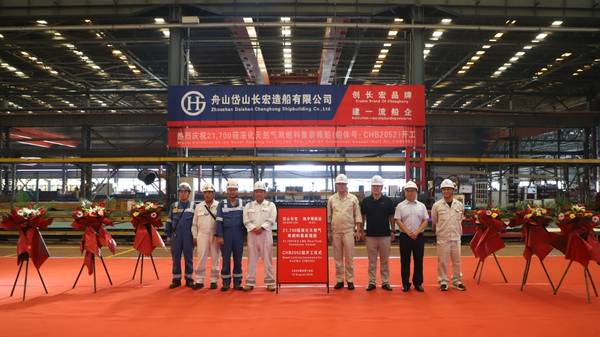
Keel-laying ceremony of an LNG carrier and bunker vessel hull no. S-1123. Avenir lays keel for new LNG carrier and bunkering vessel  

Marine fuel supplier has commenced construction of Hull No. S-1123 as part of its newbuild programme.

Hydrogen production unit. Aurora Hydrogen secures $3m from Oldendorff Overseas Investments for hydrogen production  

Investment advances microwave-driven methane pyrolysis technology that produces hydrogen from natural gas.

Electric ferry charging infrastructure. Corvus Energy and Beyonder sign MoU to develop maritime battery systems  

Norwegian companies to explore next-generation energy storage solutions for shipping sector decarbonisation.

Avenir Ascension vessel. Anew Climate and Avenir complete first joint bio-LNG bunkering in Europe  

Partnership delivers waste-based bio-LNG from Lithuania to Swedish ferry operator via Klaipėda terminal.

Flex Commodities logo. Flex Commodities changes legal suffix from DMCC to FZCO under Dubai naming framework  

Administrative change aligns marine fuel trader with new UAE free zone company naming conventions.

Capu Rossu vessel. Stena RoRo takes delivery of 13th E-Flexer vessel from Chinese shipyard  

Capu Rossu handed over to Corsica Linea for Marseille-Corsica route starting mid-June.

Caspar Gooren, Titan. Titan Clean Fuels signs e-methane supply deal with TURN2X for 2028 delivery  

Bunker supplier to receive e-methane from Spanish production plant for distribution across European ports.

Hydrogen-fuelled engine 6UEC35LSGH. Japan consortium achieves hydrogen co-firing in main engine for large commercial vessel  

Engine reaches over 95% hydrogen co-firing ratio, with installation planned for 2027.

BTB bunker truck. Belgian Trading & Bunkering expands DMA 0.89 truck deliveries in ARA region  

BTB extends marine fuel offerings with truck-based deliveries to meet maritime market demand.

Fuel pathway roundtable meeting participants. ABS convenes roundtable on offshore power barge for Great Lakes emissions reduction  

Meeting brought together ports, academia and industry to advance shore power solution under EPA programme.