Mon 11 Jun 2018, 07:04 GMT

Titan LNG and Transafe sign crew safety training contract


Training programme includes simulations at the Simwave facility and practical training at the Falck LNG training centre.


Image credit: Titan LNG
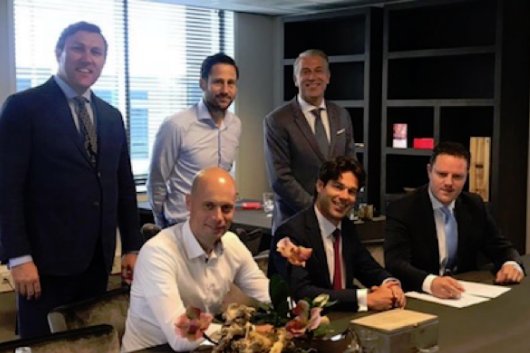
Transafe and Titan LNG have signed a long-term crew safety training contract ahead of Titan's first LNG ship-to-ship bunkering operation.

Titan LNG's FlexFueler, Europe's first LNG bunkering pontoon, is due to become operational by the end of this year.

Ronald van Selm, COO of Titan LNG, commented: "Safety is paramount to everything we do here at Titan LNG. In order to engrain operational safety in all our nautical crew, we have selected Transafe as our partner for this extensive LNG bunkering safety-training programme. Transafe will contribute to set the industry safety standard for our bunkering pontoons and our other planned LNG bunker barges."

Cristiaan Heuvelman, Managing Director of Transafe, remarked: "LNG as a marine fuel is growing fast. We are training more vessel crews on how to work safely with LNG as a fuel. Titan LNG is the first bunker supplier to commit to this high quality programme, showcasing their dedication to safety."

The training programme includes simulations in the brand-new Simwave facility and practical training at the Falck LNG training centre in Rotterdam.

Igor Jansen, director of Amulet Management & Services (AMS), the FlexFueler operator and crew provider, added: "With this LNG specific programme we will set the standard in safe LNG bunkering in the ARA region. All crew members will receive extensive training to comply with the International Association of Ports and Harbors regulations."

Dutch supplier Titan currently performs LNG deliveries by truck and was the first company to ever supply LNG to a seagoing vessel at the port of Amsterdam in November 2016.

In the last quarter of 2017, Titan also performed its first simultaneous two-truck LNG delivery in Rotterdam.

As previously reported, Titan has signed a long-term rental agreement with Amsterdam Port Authority for the Dutch port to be the FlexFueler pontoon's home location.

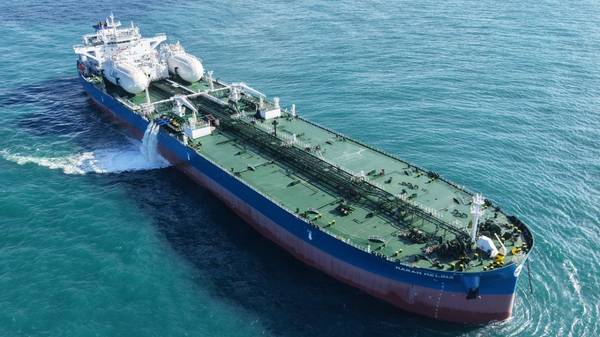
Maran Melina vessel. Angelicoussis Group takes delivery of fifth dual-fuel Suezmax tanker  

Maran Tankers Management adds the 155,500-DWT Maran Melina to its fleet.

CMA CGM Orsay naming ceremony. CMA CGM takes delivery of LNG-powered Orsay for Asia-Europe trade  

24,212-TEU vessel joins 10-ship series, adding capacity to the carrier's FAL3 route.

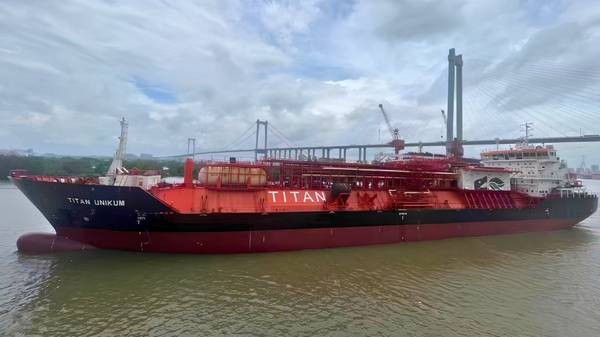
Titan Unikum vessel. Titan Clean Fuels completes 15-year survey on LNG bunkering vessel Titan Unikum  

Multi-gas carrier has undergone dry-docking work at a Chinese yard, preparing it for future upgrades.

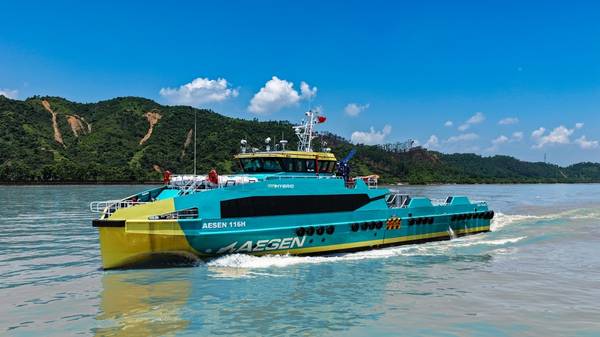
Aesen 116H vessel. Lehmann Marine’s CUBE battery system debuts in China aboard hybrid crew boat  

German battery maker’s first Chinese installation targets fuel savings on a Cheoy Lee-built vessel for a Singapore operator.

Person signing a document. Iino Lines secures transition loan from Mizuho Bank for LPG dual-fuel VLGC  

Japanese shipowner finances the acquisition of Lumi Aurora through a green transition finance framework aligned with ICMA guidelines.

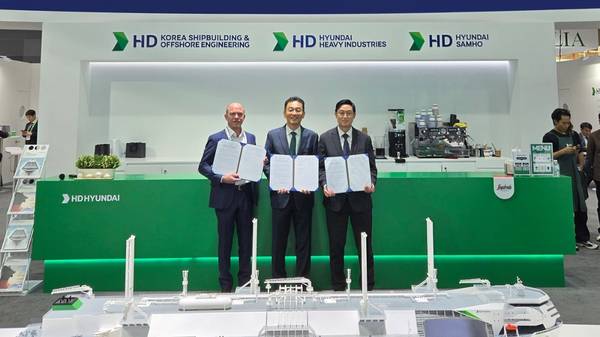
ABS, HD KSOE and Siemens MoU signing. ABS, HD KSOE and Siemens partner on digital twin technology for ammonia-fuelled ship safety  

Three firms will combine CFD analysis and digital twin technology to assess ammonia leak scenarios in vessel design.

American Bureau of Shipping (ABS) logo. Nuclear-powered LNG carriers cost more upfront but cut lifetime fuel bills, ABS-backed study finds  

Joint study with Blossom Energy examines the economics of a 174,000-cbm LNG carrier powered by a small reactor.

Christos Doulaveris, Flex Commodities. Flex Commodities appoints Christos Doulaveris as general manager for Greece  

Bunker trader strengthens its Greek operations with a new leadership appointment.

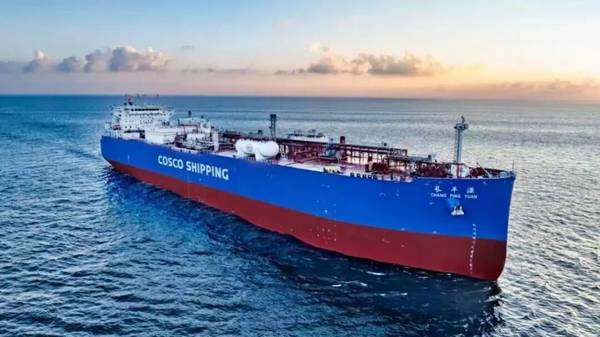
Chang Ping Yuan vessel. China delivers first domestically built VLGC under Chinese flag  

Cosco Shipping’s new 88,000-cbm gas carrier features an LPG dual-fuel main engine.

IMO, GreenVoyage2050 and Republic of Türkiye MoTI logos. Electric and hybrid ferries could cut Sea of Marmara emissions by 63%, IMO study finds  

A GreenVoyage2050 study finds that electrification could slash emissions, avoid €492 million in damage costs and support jobs.