A number of side events relating to the proposed ban on heavy fuel oil (HFO) in Arctic waters are being held this week at the International Maritime Organization's 73rd meeting of the Marine Environment Protection Committee (MEPC 73) in London.
October 22 / October 22-26
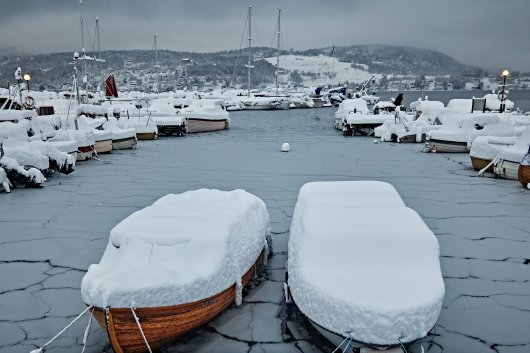
The photo exhibition 'The Arctic - On Our Watch' will be open all week in the Delegate's Lounge on the Mezzanine floor of IMO's headquarters.
On October 22, at 16:00 hrs, Arctic explorer and photographer
Pen Hadow will be introducing the exhibition in the Plenary meeting.
The collection of images from 25 amateur and professional photographers forms a visual journey around the Arctic and aims to show that this seemingly remote and inaccessible region is home to uniquely adapted communities and wildlife. The photos are also designed to reflect the Arctic as it is today and how it is changing.
October 23
On October 23, from 12:45 to 13:15 hrs, a WWF-organised lunchtime side event entitled 'Impacts and benefits of a heavy fuel oil ban in the Arctic' is being held in the main hall on the ground floor of IMO's headquarters. Here, a panel is due to discuss the economic and community benefits and impacts of a HFO ban in the Arctic.
The panel will present an indigenous community perspective on a HFO ban as well as recent research findings on: the potential impacts from a HFO spill in the Arctic; shipping costs to transport commodities; costs incurred by Arctic residents as a result of a HFO spill in the Arctic; the impact of fleets and individual ships; changes in consumer prices; and incremental costs for the cruise industry.
The speakers are: Faig Abbasov, Transport & Environment; an Alaskan indigenous representative; Elise DeCola, Nuka Research and Planning Group; Andrew Dumbrille; WWF Canada; and Dagmar Nelissen, CE Delft.
Also on October 23, between 13:00 and 14:15 hrs, there will be a lunchtime side event entitled 'Challenges and opportunities of maritime transport decarbonisation: The initial GHG Strategy and HFO ban in the Arctic', which is to be held in room 14 on the second floor of IMO's headquarters.
The event, which will be in Spanish with no translation available, will explore HFO risks and black carbon reduction measures in the Arctic; the role of Latin America in polar issues; perspectives on moving from away from fossil fuels; as well as the development of a detailed greenhouse gas strategy.
Confirmed speakers are: Charlotte Inglis, Head of the Maritime and Arctic Programme, European Climate Foundation; Victor Jimenez Fernandez, Counsellor for transport Alternate permanent Rep. of Spain to the IMO; Oriol Sanchez, Lead Electronics Engineer, Bound4blue; Santiago Suarez de la Fuente, Marine Lecturer / Researcher, UCL; Miriam Zaitegui, Climate Change Policy Officer, ECODES.
October 24
During the evening of October 24, the side event 'Indigenous perspectives on Polar North shipping and a ban on heavy fuel oil (HFO) in the Arctic' is being held at the Attlee Room of the House of Lords between 18.30 and 21:00 hrs.
The event is organised by both Polar Research and Policy Initiative and Friends of the Earth US.