
 |
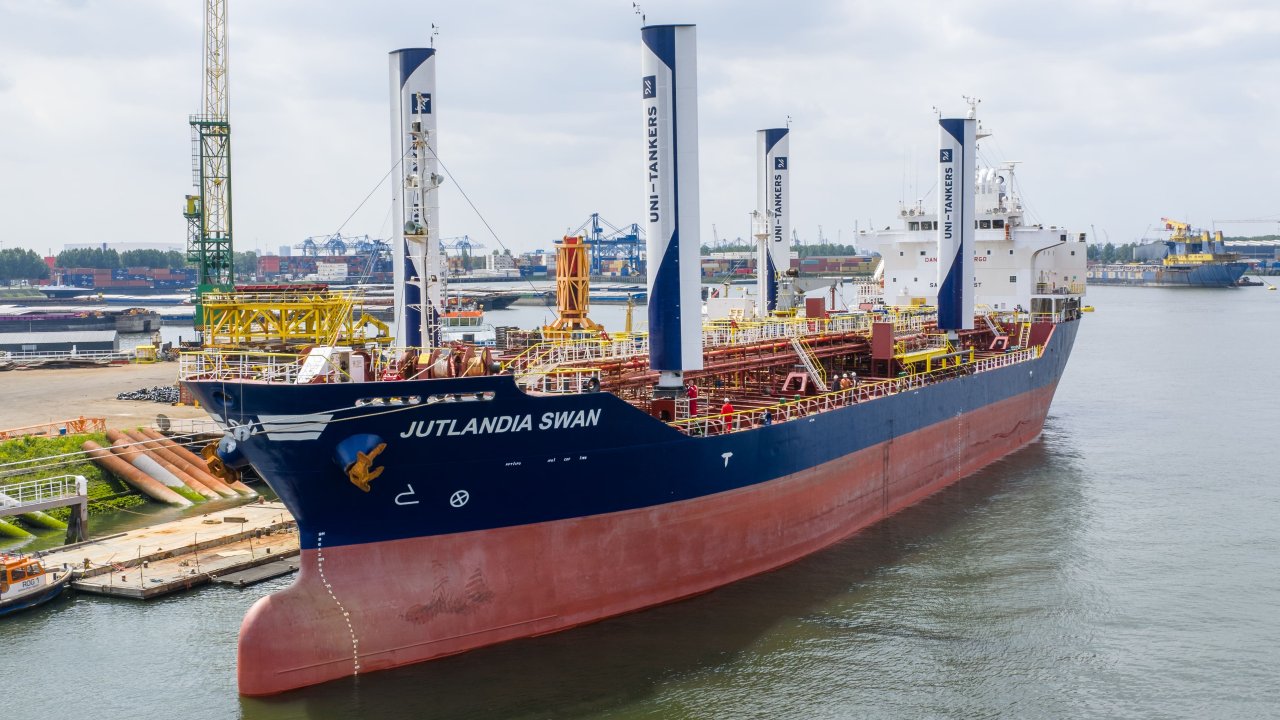
Econowind has installed four of its 16-metre VentoFoil units aboard the chemical tanker M/T Jutlandia Swan, a vessel operated by Danish shipping company Uni-Tankers.
The installation, which is said to have been carried out in just four days at the port of Rotterdam, represents another development in the adoption of wind-assisted ship propulsion (WASP) technology within the tanker segment. With more than 130 VentoFoils sold to date, Econowind is expanding its presence in the commercial shipping fleet, providing solutions designed to reduce emissions and assist owners in adhering to increasingly stringent regulations.
"This is the fourth tanker to sail with VentoFoils," commented Chiel de Leeuw, Chief Commercial Officer at Econowind. "It shows how our suction wing technology is gaining traction in the tanker segment. Thanks to our experience and ATEX-approved systems, we know what's required for these vessels. And we're proud to support Uni-Tankers as they take this important step."
The Jutlandia Swan measures 124 x 20 metres and was inspired by a similar setup on a Chemship parcel tanker that ultimately led to Uni-Tankers deciding to install wind propulsion on one of its own vessels, aligning with the firm's wider strategy to decarbonise its fleet.
The project is said to have been carefully prepared in advance, with foundational work executed during a scheduled drydock in Turkey prior to the ship's arrival in Rotterdam.
According to Econowind, once the vessel arrived in the Netherlands, the commissioning process at Rotterdam Offshore Group (ROG) proceeded smoothly, illustrating the ease of integrating VentoFoils into existing operational frameworks.
Currently, the system is undergoing classification with Bureau Veritas and it is expected to deliver a projected 10% improvement in Energy Efficiency Existing Ship Index (EEXI) and contribute 3% towards compliance with FuelEU Maritime legislation — positioning the technology as both technically and economically viable for vessel operators.
"Wind-assisted ship propulsion has clear potential — but its real value depends on how well it integrates into daily operations," remarked Kristian Larsen, Technical Director at Uni-Tankers. "Now we'll be able to test how these sails behave at sea, what they mean for fuel efficiency, and how the crew can work with them in practice."
As wind power is seen as a key component of Uni-Tankers' decarbonization strategy, the Jutlandia Swan will now serve as an experimental platform for assessing the practical application of suction-based wind propulsion in everyday tanker operations.
|
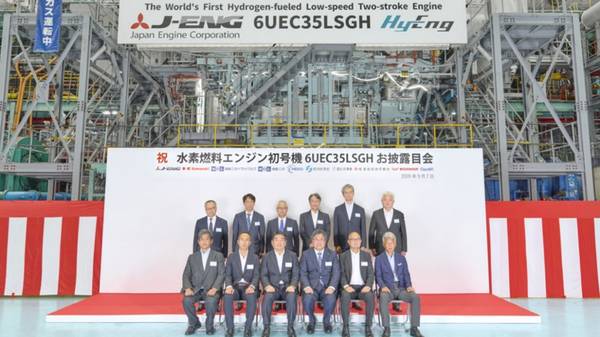
Japan Engine completes land-based testing of landmark hydrogen-fuelled engine for large vessels
Hydrogen co-firing rate of at least 95% achieved during factory testing. |
|
|
|
||
|
Ethanol edges into shipping’s fuel mix as methanol crossover eases adoption barriers
Rising interest from cargo owners, shared technology with methanol and Brazilian production growth push ethanol beyond regional niche status. |
|
|
|
||
|
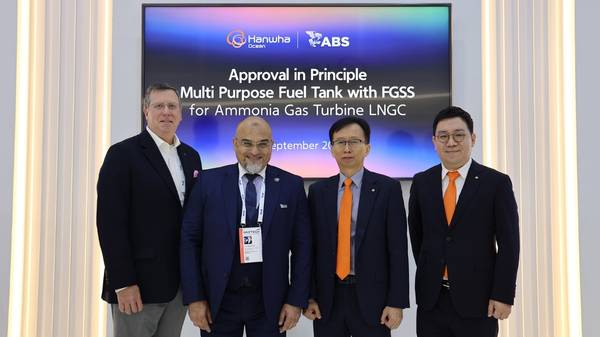
ABS grants Hanwha Ocean approval for dual-fuel tank enabling LNG-to-ammonia switch
In-principle approval awarded for fuel tank and supply system enabling LNG carriers to convert to ammonia without replacement. |
|
|
|
||
|
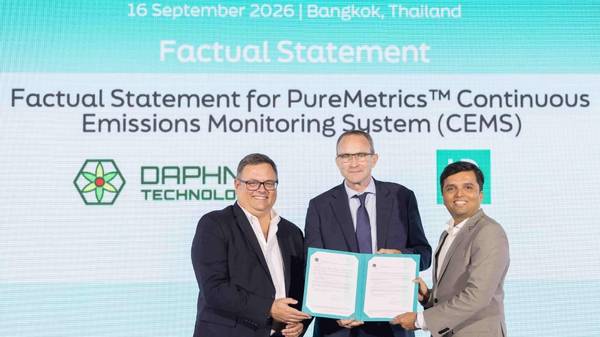
Lloyd's Register confirms suitability of Daphne Technology's emissions monitoring system
Factual Statement validates the PureMetrics design for monitoring greenhouse gas emissions from marine engines. |
|
|
|
||

|
IMO issues shipboard biofuel blend checklist developed by IBIA
Checklist for FAME-based biofuels formally incorporated into IMO document, supporting crews handling biofuel blends for the first time. |
|
|
|
||
|
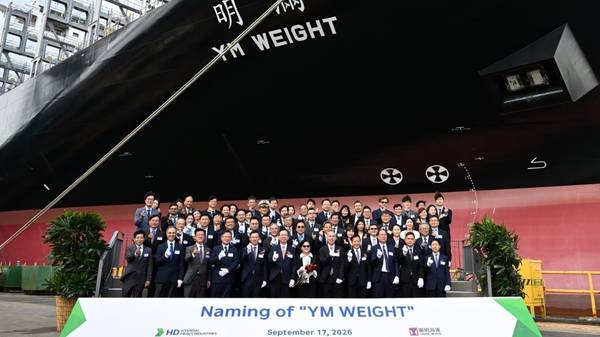
Yang Ming names fourth LNG dual-fuel container vessel YM Weight
Newbuild features high-pressure dual-fuel main engines capable of running on either LNG or low-sulphur fuel oil. |
|
|
|
||
|
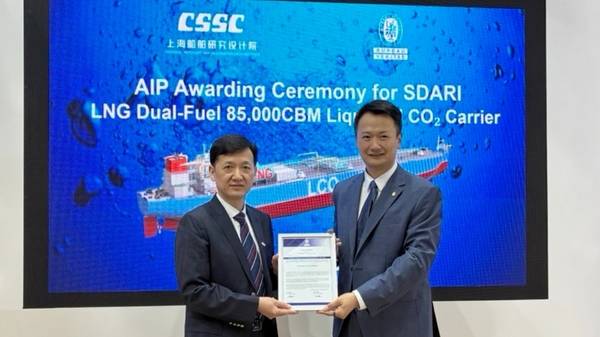
Bureau Veritas grants AiP to SDARI’s LNG dual-fuel liquefied CO₂ carrier design
Classification society approves 85,000-cbm vessel concept designed to support the growing carbon capture and storage sector. |
|
|
|
||

|
JuWonOil looking to strengthen with two Houston hires
Texas-based firm is recruiting a marine lubricants sales executive and a marine fuels and distillates trader. |
|
|
|
||
|
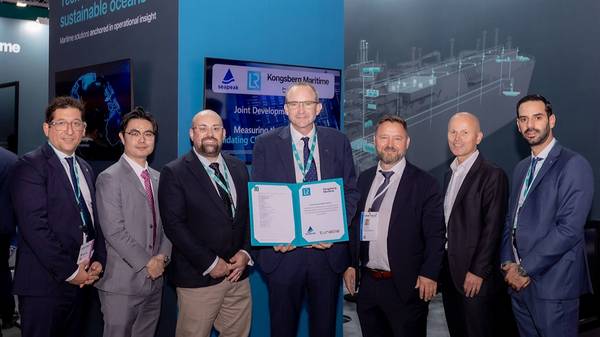
Four firms partner to trial continuous emissions monitoring on LNG carrier
LR, Seapeak, Kongsberg Maritime and Tunable will test onboard CO₂ monitoring against engine data and default emissions factors. |
|
|
|
||
|
Bunker Holding reshuffles commercial leadership across brand portfolio
Appointments announced across KPI OceanConnect, Glander International Bunkering and its digital sales operations. |
|
|
|
||
| KPI OceanConnect and Uni-Tankers complete biofuel trial [News & Insights] |
| Bureau Veritas grants AiP to SDARI’s LNG dual-fuel liquefied CO₂ carrier design [News & Insights] |
| Bureau Veritas grants approval in principle for methanol-fuelled catamaran concept [News & Insights] |
| Wind propulsion offers 'no fundamental barriers' for LNG carriers, study finds [News & Insights] |
| Bureau Veritas grants AiP to Hudong-Zhonghua for new LNG carrier and VLGC designs [News & Insights] |
| Bureau Veritas awards AiP to Kairong and MannTek for LNG bunkering crane system [News & Insights] |
