Tue 16 Jan 2018, 09:23 GMT

Oil and fuel oil hedging market update


By the Oil Desk at Freight Investor Services.


Commentary

Brent hit $70.37 a barrel on Monday, a December 2014 high - when markets were at the beginning of a three year-long slump. U.S. WTI crude futures were at $64.47 a barrel, up $17 cents, or 0.3 percent from their last settlement, after WTI hit a December-2014 peak of $64.89 a barrel in early trading. Well, who'd have thunk it; look at the headlines this morning: 'Oil prices up at 3 year highs, as market supported by healthy demand'. Well, yeeeessss, in any historical look at demand it looks pretty healthy. It's like my food intake across the day; it looks a pretty healthy amount, around the levels of the last few years, BUT, and that is a big butt, exercise needs to be taken into account. What's the point in just focusing on demand and not supply. Not to worry, the very accurate projections from banks are here to back it up. Merrill Lynch: 'We now see a deficit of 430,000 bpd in 2018 compared to 100,000 prior'; Morgan Stanley: 'oil markets were 0.5 million bpd undersupplied in 2017'. Well, l'm sure you can talk up the numbers to show anything. It's like modern art: "What do you see?" "I see the artist's attempt to illicit the feeling of sorrow and the bottom corner makes me see into the tormented soul of the artist, really understanding their feelings when creating this piece". NO, I see randomly arranged colours on a canvas. The banks are like a used car salesman: they have a vested interest in it going up, up to the hilt they are. So of course they aren't going to talk it down. "Well, it's an okay car, not really worth the money, once you get to about 40 mph, it drags to the left, which is pretty dangerous, actually." Technically, we are due a corrective phase, so don't be too surprised if we get a drop back in prices, before a renewal of the bullish sentiment.

Fuel Oil Market (January 15)

The front crack opened at -11.15, weakening to -11.55 across the day. The Cal 19 was valued at -11.90.

Cash premiums for Asia's 380 cSt high-sulphur fuel oil cargoes climbed to their highest since Jan. 3 amid elevated deal value on Monday, trade sources said.

In the break bulk ex-wharf market, stiff competition weighed on 380 cSt fuel oil ex-wharf premiums as suppliers sought to attract buyers ahead of the lull period during the Chinese new year holidays next month, source said.

ST Shipping, Glencore's shipping arm, has chartered the Almi Sun suezmax tanker to load up to 130,000 tonnes of fuel oil from the Middle East Gulf around Jan. 18 for discharge into Asia, according to ship broker reports and ship tracking data in Reuters Eikon.

Economic Data and Events

* EIA releases monthly Drilling Productivity Report

* Sandefjord oil conference, with speakers including Statoil CEO Eldar Saetre and Norway Petroleum and Energy Minister Terje Soviknes, 1st day of 2

* China National Petroleum Corp. releases annual oil and gas report

* Argus Americas Crude Summit, Houston, with executives from Trafigura, Reliance Industries, Motiva Enterprises, among others, 1st day of 3

* Angola, Nigerian loading programs for March

Singapore 380 cSt

Feb18 - 378.00 / 380.00

Mar18 - 378.50 / 380.50

Apr18 - 378.75 / 380.75

May18 - 378.75 / 380.75

Jun18 - 378.25 / 380.25

Jul18 - 377.75 / 379.75

Q2-18 - 378.50 / 380.50

Q3-18 - 376.75 / 378.75

Q4-18 - 372.75 / 375.25

Q1-19 - 365.00 / 367.50

CAL19 - 346.50 / 349.50

CAL20 - 292.00 / 297.00

Singapore 180 cSt

Feb18 - 382.50 / 384.50

Mar18 - 383.50 / 385.50

Apr18 - 383.75 / 385.75

May18 - 384.00 / 386.00

Jun18 - 383.50 / 385.50

Jul18 - 383.25 / 385.25

Q2-18 - 383.75 / 385.75

Q3-18 - 382.25 / 384.25

Q4-18 - 378.75 / 381.25

Q1-19 - 372.75 / 375.25

CAL19 - 355.00 / 358.00

CAL20 - 301.00 / 306.00

Rotterdam Barges

Feb18 365.75 / 367.75

Mar18 366.75 / 368.75

Apr18 367.25 / 369.25

May18 367.00 / 369.00

Jun18 366.50 / 368.50

Jul18 365.25 / 367.25

Q2-18 366.75 / 368.75

Q3-18 363.25 / 365.25

Q4-18 355.00 / 357.50

Q1-19 347.00 / 349.50

CAL19 326.00 / 329.00

CAL20 272.00 / 277.00

BP  

Flag of Brazil. Petrobras resumes bunkering operations at Rio Grande Terminal after power restoration  

Brazilian supplier restarts marine fuel supply after completing an inspection following an electricity outage.

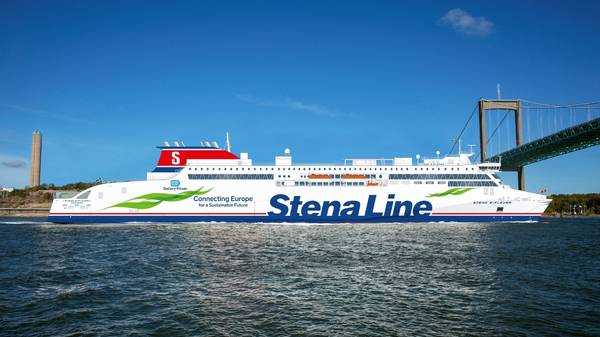
Stena E-Flexer vessel render. Stena RoRo orders battery-ready E-Flexer 2.0 ferries from Chinese yard  

Vessels include diesel engines capable of running on biodiesel and are methanol-ready.

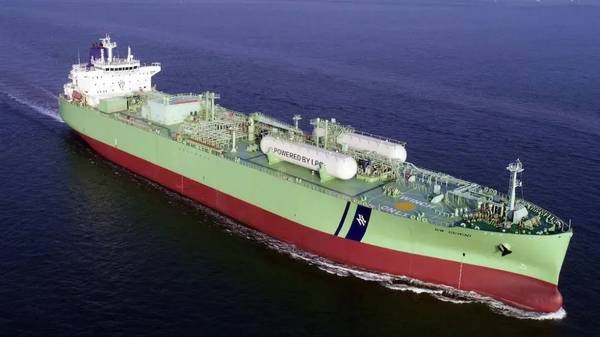
BW Gemini vessel. Nord Gas Solutions to supply cargo and fuel systems for eight BW LPG VLGCs  

Gas-handling systems specialist awarded contract for new 90,000-cbm vessels.

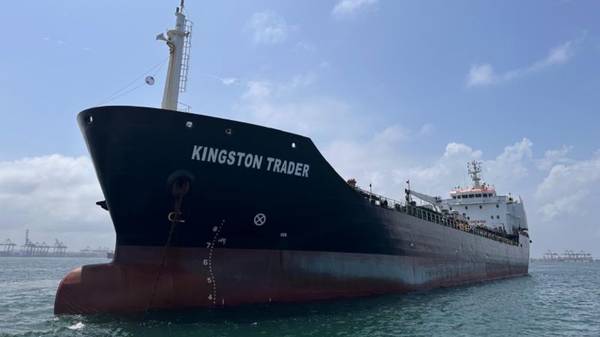
Kingston Trader vessel. TFG Marine fits mass flow meter to Jamaica-bound bunker barge  

Kingston Trader becomes the first Caribbean bunkering vessel with mass flow metering as TFG Marine’s fleet coverage nears 90%.

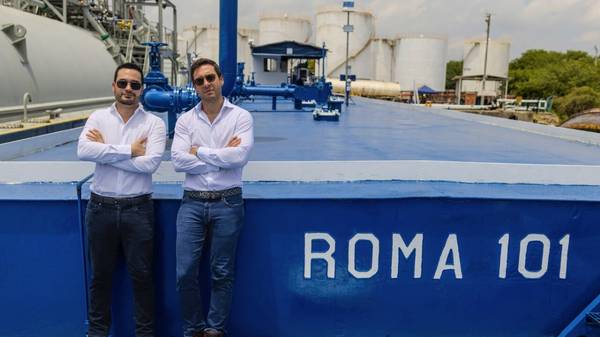
Sebastian Vasquez and Camilo Angulo Ferrand, Monjasa. Monjasa announces full-chain marine fuel operations in Cartagena  

Monjasa says it now covers the entire marine fuel supply chain in Colombia, from oil wells to ship-side deliveries.

Steel-cutting ceremony for vessel with builder's hull no. H619. Ceremonies held for Van Oord’s methanol-hybrid rock installation vessels  

Two ships advance through parallel construction at China’s CIMC Raffles shipyard.

WK NatPower and AREL MoU signing. Wah Kwong NatPower signs MoU to explore Hong Kong marine electrification  

Venture will examine shore power, vessel charging and electric vessel deployment around Aberdeen’s waterfront.

Vard 4 39 design render. Dong Fang Offshore orders CSOV with battery-hybrid propulsion  

Vard secures fifth newbuild contract from Taiwanese firm, with delivery scheduled for 2028.

Rock Star vessel. CSL and OWL launch first subsea rock installation vessel for offshore wind  

MV Rock Star can run on MGO and methanol and is designed to support scour protection and cable burial for offshore wind projects.

François Michel and Andy McKeran. Lloyd’s Register study backs 200,000-cbm LNG carriers for fleet renewal  

Analysis finds larger LNG carriers could cut transport costs while retaining access to most major terminals.