This is a legacy page. Please click here to view the latest version.
Fri 6 Sep 2019, 13:17 GMT

Monjasa completes first ship-to-ship VLSFO supply


Delivery performed in Southampton on August 29.


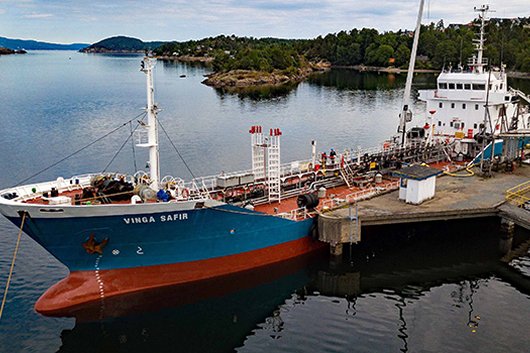
The Vinga Safir completed its first bunker deliveries for Monjasa in Skaw, Denmark, on July 2, 2018.
Image credit: Monjasa
Monjasa has announced the completion of its first ever ship-to-ship supply of Very Low-Sulphur Fuel Oil (VLSFO) with a maximum sulphur content of 0.5 percent.

As part of Monjasa's bunker operations from Portland in the English Channel, the Monjasa-operated Vinga Safir went alongside the ro-ro cargo ship Hurst Point in Southampton on August 29, supplying both VLSFO and 0.1-percent marine gas oil (MGO).

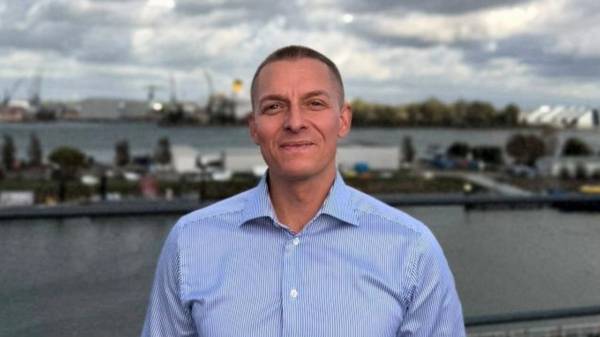
Group COO, Svend Stenberg Mølholt, commented: "Cleaning up our first tanker and supplying the new 0.5% product is a milestone for Monjasa. During this first supply, we learned more about the handling and specifications of VLSFO, to conclude that on-board operational expertise and detailed product knowledge is needed to enable a successful transition for the industry. We have been preparing thoroughly for this moment and we are ready to support this transition and keep global trade moving come 2020."

Global roll-out

Monjasa says the next step will be to roll out VLSFO supplies on a global scale.

The supplier recently announced the acquisition of five tankers ahead of IMO 2020, and it will be taking full ownership of sourcing, shipping and the supply of VLSFO in West Africa, Northwest Europe, Panama Canal and the eastern coast of the Arabian Peninsula.

West Africa

In West Africa, VLSFO is to be made available from the Gulf of Guinea to Namibia via the Monjasa-operated SKS Darent (120,000 dwt), which serves as floating storage off Lome, Togo.

Several of Monjasa's 10 deployed tankers in the region are expected to supply low-sulphur products come 2020.

Northwest Europe

In Northwest Europe, Monjasa stores VLSFO product in Portland, UK, and Skaw, Denmark. A total of three Monjasa tankers are deployed in the area.

Panama Canal

Monjasa notes that VLSFO is stored locally in Panama and that three of its vessels will be tasked with performing VLSFO deliveries - including the newly acquired Accra tanker in Balboa. One tanker is deployed in Cristobal.

Middle East

Sourcing VLSFO in Fujairah, UAE, three Monjasa operated tankers will be making VLSFO available across port areas in Dubai, Abu Dhabi and Sharjah, and in the Gulf of Oman.


Zhoushan waterfront at night. Zhoushan becomes world's third-largest bunker port  

Chinese refuelling hub overtakes Antwerp-Bruges and Fujairah to take third place in 2025.

Meyer Turku's net-zero vessel concept render. Meyer Turku completes net-zero cruise ship concept with 90% emissions cut  

Finnish shipbuilder’s AVATAR project vessel design exceeds IMO targets using technologies expected by 2030.

Uni-Fuels Logo. Uni-Fuels renews ISCC certification after first biofuel delivery  

Singapore-based marine fuel supplier completes inaugural ISCC-certified biofuel delivery, supporting EU regulatory compliance.

Close-up of a vessel bow at port. Iberian Peninsula poised to overtake the Netherlands as Europe’s top LNG bunkering hub  

Spanish and Portuguese ports quadrupled ship-to-ship LNG supply in two years, data shows.

FOBAS Fuel Insight Fuel Quality report H2 2025 cover. Lloyd’s Register reports sharp rise in marine fuel quality failures in late 2025  

December recorded the highest monthly off-specification cases, driven by sulphur, catalytic fines and flash point issues.

Bio-LNG bunkering infrastructure. Bahía de Bizkaia Gas launches bio-LNG loading service after ISCC certification  

Spanish regasification terminal begins offering renewable fuel loading for trucks and vessels in January 2026.

Grande Michigan vessel. Grimaldi takes delivery of eighth ammonia-ready car carrier Grande Michigan  

The 9,000-ceu vessel features 50% lower fuel consumption and 5 MWh battery capacity.

Graphic of the ABS logo with a blue background and light effects over a globe. ABS consortium delivers ammonia fuel safety report for EMSA  

Report expands on IMO interim guidelines and highlights need for comprehensive understanding of ammonia properties.

Green Future vessel. NYK operates methanol-fuelled bulk carrier for BHP, claims 65% emissions cut  

Green Future becomes first oceangoing bulk carrier to use low-carbon methanol fuel.

Genesis Sea vessel. Ulstein Verft completes sea trials for Genesis Sea CSOV ahead of spring delivery  

The 89.6-metre vessel features hybrid battery propulsion and preparations for green methanol operation.


↑  Back to Top