This is a legacy page. Please click here to view the latest version.
Wed 17 Oct 2018, 15:23 GMT

Gaseous fuels 'the only way forward': MAN CSO


'Infrastructure will follow in due course,' says Wayne Jones.


Image credit: Pixabay
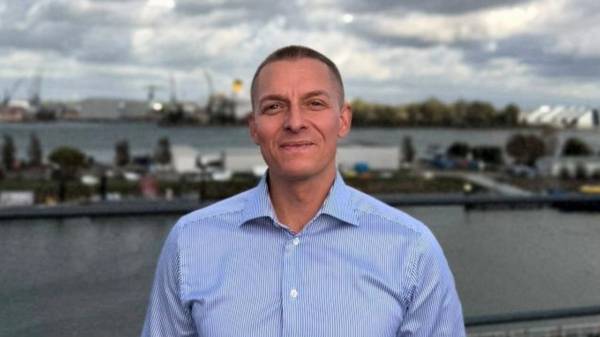
Gaseous fuels are 'the only way forward' for shipping vessels beyond 2020, according to Wayne Jones, Chief Sales Officer (CSO) and Member of the Executive Board at MAN Energy Solutions.

Speaking at the fourth annual Naftemporiki Shipping Conference, held in Athens on October 3, Jones participated in a panel discussion covering decarbonisation, the latest fuels introduced to the market, and the impact of the upcoming IMO regulations limiting fuel sulphur content to 0.5 percent in 2020.

"From the engine-maker's point of view, one of the biggest challenges is to reach agreement on which fuel to use, one that will meet not only the regulations of today, but those of tomorrow. What will everyone use in the future, or will there be a myriad of fuels? For me, the only way forward is to go with gaseous fuels - and the infrastructure will follow in due course," he remarked.

Discussing the company's suppport for LNG and its October 2017 pledge to convert 10 HFO engines into gas engines as part of its drive to find clean solutions for seaborne trade and transportation, Jones said: "MAN Energy Solutions believes fully in its technology, to the extent that we pledge to subsidise the first 10 shipowners that convert their engines to LNG or a gas-derived fuel - up to a cumulative total of EUR 2 million - because I think someone has to stimulate the industry to think more holistically and long-term."

Jones' remarks tie in with MAN Energy Solutions' belief that it is time for what it calls a 'Maritime Energy Transition' to find clean, decarbonised solutions for seaborne trade and transportation.

Launched in 2016 after COP 21, the Maritime Energy Transition initiative is a call to action to reduce emissions and establish natural gas as the fuel of choice in global shipping. It is also an umbrella covering all MAN Energy Solutions' activities in regard to supporting climate-neutral shipping, including:

- The retrofitting of the 'Wes Amelie' feeder containership's MAN 51/60DF engine to dual-fuel gas operation - the first such conversion of its type in the world;

- The development of MAN Energy Solutions' two-stroke ME-GI/ME-LGI engine portfolio to enable dual-fuel operation on, primarily, natural gas but also on alternative gaseous and liquid fuels such as LNG, methane, ethane, methanol and ethanol;

- The development of synthetic fuels created with renewable energy (i.e. power-to-gas) - another technology the company considers to have great CO2-reduction potential. Here, MAN Energy Solutions is closely collaborating with Germany's Federal Ministry of Economic Affairs and Energy to create a research programme.

Additionally, under the brand MAN Cryo (formerly Cryo AB), purchased in 2015, the company offers systems for the storage, distribution and handling of liquefied gases.


Tangier Maersk vessel. Maersk takes delivery of first methanol-capable vessel in 9,000-teu series  

Tangier Maersk is the first of six mid-size container ships with methanol-capable dual-fuel engines.

IBIA MFM bunkering training course graphic. IBIA to run surveyor training course for mass flow meter-equipped bunkering in Rotterdam  

One-day course scheduled for 19 February aims to prepare professionals for MFM-equipped bunkering operations.

CO2 carrier vessel aerial view. MOL secures two 12,000-cbm CO2 carriers for Northern Lights expansion  

Japanese shipowner to deliver vessels in 2028 for cross-border carbon transport and storage project.

MOL and ONGC VLEC long-term charter signing. MOL and ONGC sign 15-year charter deal for two ethane carriers  

Japanese shipowner expands fleet to 16 vessels with newbuildings scheduled for delivery in 2028.

Vessels at sea. Dual-fuel container ship and vehicle carrier fleet reaches 400 vessels  

World Shipping Council reports 83% increase in operational dual-fuel vessels during 2025.

Photograph of a blue cargo vessel. Lloyd’s Register publishes first guidance notes for onboard hydrogen generation systems  

Classification society addresses regulatory gap as shipowners explore producing hydrogen from alternative fuels onboard.

Erasmusbrug bridge in Rotterdam. Rotterdam bunker industry faces upheaval as new regulations drive up costs and shift volumes  

Red III compliance costs and a mass flow meter mandate are creating operational challenges across the ARA region.

Neil Chapman, VPS. VPS appoints Neil Chapman as managing director for the Americas  

Maritime services company names industry veteran to lead regional operations and client partnerships.

Oil refinery infrastructure. Maritime industry shifts towards LNG as alternative fuel enthusiasm stalls  

Geopolitical concerns drive shipping leaders to prioritise established fuels over newer alternatives, survey finds.

OceanScore logo. OceanScore reaches $5m annual recurring revenue as emissions compliance demand grows  

Hamburg-based firm supports compliance workflows for more than 2,500 vessels as regulations enter operational phases.


↑  Back to Top