This is a legacy page. Please click here to view the latest version.
Tue 5 Jun 2018, 10:54 GMT

ABB upgrades bunker-saving propulsion monitoring software


XPERT is said to deliver accurate advice to help lower fuel costs.


ABB's performance evaluation software, Tekomar XPERT, has been upgraded to offer faster access to data for enhanced fleet performance.
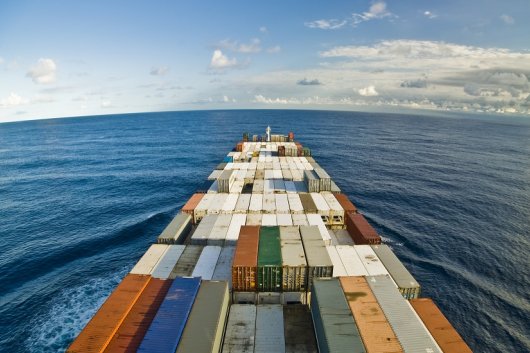
Image credit: ABB
ABB reports that it has upgraded its propulsion performance monitoring software Tekomar XPERT to offer faster access to data that enables enhanced fleet performance.

By evaluating deviations and quantifying potential fuel oil savings, XPERT is said to deliver accurate advice that mitigates high fuel costs and reduces the environmental footprint.

XPERT analyzes the performance of any two-stroke diesel main engine, auxiliary engine or turbocharger for whatever configuration is found on a vessel. Advanced diagnostics, combined with intelligence, are designed to allow ship operators to immediately focus on fixing potential problems, rather than initially spending several hours analyzing them.

The upgrade of XPERT, already used by over 1,000 ships, includes a new interface with essential information in an intuitive display.

With the new overview screen, ABB says a fleet operator can instantly get a sense of priority actions required across a fleet.

The software's connectivity is also said to be a key benefit, with a land-based fleet manager able to respond immediately based on smart insights. It also provides a platform for engine licensors and builders to cooperate.

Beat Guttinger, Head of Tekomar for ABB Turbocharging, observed: "With this new upgrade, Tekomar XPERT offers marine customers an instant overview of their entire fleet. Whether an operator oversees five ships or many more across an international fleet, the benefits are evident. Customers can quickly pinpoint vital data, such as vessel reporting activity and savings potential, and select criteria including engine and ship type to filter results. This saves time and money by making it faster and more convenient for customers to identify and analyse essential data for optimal performance monitoring."

Tekomar XPERT was incorporated into ABB's digital portfolio in 2017. ABB's performance monitoring of ship propulsion falls under the ABB Ability umbrella, which is ABB's unified, cross-industry offering for its digital products and services.

ABB  

Christos Doulaveris, Flex Commodities. Flex Commodities appoints Christos Doulaveris as general manager for Greece  

Bunker trader strengthens its Greek operations with a new leadership appointment.

Chang Ping Yuan vessel. China delivers first domestically built VLGC under Chinese flag  

Cosco Shipping’s new 88,000-cbm gas carrier features an LPG dual-fuel main engine.

IMO, GreenVoyage2050 and Republic of Türkiye MoTI logos. Electric and hybrid ferries could cut Sea of Marmara emissions by 63%, IMO study finds  

A GreenVoyage2050 study finds that electrification could slash emissions, avoid €492 million in damage costs and support jobs.

Study visit to Hamburg, Germany, on sustainable port development. Batumi Sea Port officials study decarbonisation practices in Hamburg  

Georgian port representatives visited Hamburg to study emissions accounting, hydrogen technology and automation ahead of their 2026 recertification audit.

Nave Harmony vessel. Navios Partners takes delivery of methanol-ready MR2 tanker Nave Harmony  

Shipowner adds 49,998-DWT newbuild product tanker equipped with methanol-ready technology.

RS Atlantico vessel. Eastern Pacific Shipping delivers LNG dual-fuel PCTC to Suardiaz  

RS Atlantico is the first mid-sized 5,500-CEU car carrier built through the EPS–Suardiaz partnership.

Tangier Maersk vessel. Maersk completes first US ethanol bunkering of a deep-sea container ship  

Shipper tests US-produced corn ethanol as a marine fuel aboard the Tangier Maersk.

CMA CGM Alceste naming ceremony. CMA CGM names methanol-powered vessel after Molière’s Alceste  

Ship features a MAN B&W 8G85ME two-stroke engine configured to run on conventional marine fuel and methanol.

Cutaway illustration of a battery-electric ship. Why batteries still cannot power ships across oceans  

Battery-electric ships dominate short-sea routes, but energy-density and infrastructure constraints keep deep-sea propulsion out of reach.

VPS logo. VPS to run marine fuel management course in Singapore  

Two-day programme in November covers fuel handling, testing and decarbonisation rules, including a laboratory tour.


↑  Back to Top