This is a legacy page. Please click here to view the latest version.
Fri 1 Jun 2018, 12:11 GMT

Coating helps owners of 1,000 ships slash bunker bill by $400m: Hempel


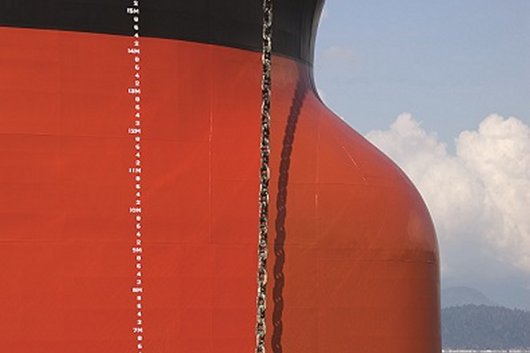
Use of Hempaguard is said to have led to a CO2 emission reduction of more than 3m tonnes per year.


Image credit: Hempel
Coatings manufacturer Hempel says it has applied Hempaguard, its fouling defence coating, to more than 1,000 ships. The one-thousandth full-vessel coating is said to have been performed in April.

According to Denmark-headquartered Hempel, the fuel-saving properties of Hempaguard have enabled the owners of these 1,000 vessels to collectively reduce their annual bunker bill by more than $400 million, which corresponds to a reduction in CO2 emissions of more than three million tonnes per year.

Commenting on the milestone, Hempel's Global Product Manager, Henrik Dyrholm, explained that Hempaguard delivers up to six percent fuel savings, retaining its effectiveness during extended idle periods of up to 120 days.

"At Hempel, we pride ourselves on our investment in R&D and creating customer focused innovative products and services. Customer feedback has been unequivocally positive with shipowners realising significant returns on investment from Hempaguard," Dyrholm remarked.

Actiguard

A key feature of Hempaguard is Hempel's Actiguard technology, which combines a smooth silicone coating with the consistent release of limited biocides through a hydrogel layer.

The technology was five years in development and was launched in 2013 against a backdrop of tightening environmental regulations and an increasing push to reduce CO2 emissions.

Hempaguard X7 & X5

Hempel posits that if the entire world fleet was upgraded to use its Hempaguard X7 hull coatings solution, it would save the industry $12 billion in fuel costs, based on current bunker prices, and reduce global CO2 emissions by close to 95m tonnes annually.

The key benefits of using Hempaguard X7 are claimed to be:

- Six percent fuel savings compared with best-in-class antifoulings over the entire docking interval;

- 'Excellent' fouling resistance for idle periods of up to 120 days;

- 95 percent less biocide than traditional antifoulings;

- Vessels complying with a full Hempaguard X7 specification are offered a performance satisfaction guarantee.

Hempel lists the main features of its Hempaguard X5 fouling control coating as being:

- Efficient fouling prevention during the entire service interval for up to 36 months for any type of vessel with any trading pattern;

- Based on Hempel's patented Actiguard low-friction fusion technology;

- Combines the best from the hydrogel silicone and biocidal antifoulings;

- Documented performance and a long track record;

- Guaranteed fouling resistance for up to 60 idle days.


Zhoushan waterfront at night. Zhoushan becomes world's third-largest bunker port  

Chinese refuelling hub overtakes Antwerp-Bruges and Fujairah to take third place in 2025.

Meyer Turku's net-zero vessel concept render. Meyer Turku completes net-zero cruise ship concept with 90% emissions cut  

Finnish shipbuilder’s AVATAR project vessel design exceeds IMO targets using technologies expected by 2030.

Uni-Fuels Logo. Uni-Fuels renews ISCC certification after first biofuel delivery  

Singapore-based marine fuel supplier completes inaugural ISCC-certified biofuel delivery, supporting EU regulatory compliance.

Close-up of a vessel bow at port. Iberian Peninsula poised to overtake the Netherlands as Europe’s top LNG bunkering hub  

Spanish and Portuguese ports quadrupled ship-to-ship LNG supply in two years, data shows.

FOBAS Fuel Insight Fuel Quality report H2 2025 cover. Lloyd’s Register reports sharp rise in marine fuel quality failures in late 2025  

December recorded the highest monthly off-specification cases, driven by sulphur, catalytic fines and flash point issues.

Bio-LNG bunkering infrastructure. Bahía de Bizkaia Gas launches bio-LNG loading service after ISCC certification  

Spanish regasification terminal begins offering renewable fuel loading for trucks and vessels in January 2026.

Grande Michigan vessel. Grimaldi takes delivery of eighth ammonia-ready car carrier Grande Michigan  

The 9,000-ceu vessel features 50% lower fuel consumption and 5 MWh battery capacity.

Graphic of the ABS logo with a blue background and light effects over a globe. ABS consortium delivers ammonia fuel safety report for EMSA  

Report expands on IMO interim guidelines and highlights need for comprehensive understanding of ammonia properties.

Green Future vessel. NYK operates methanol-fuelled bulk carrier for BHP, claims 65% emissions cut  

Green Future becomes first oceangoing bulk carrier to use low-carbon methanol fuel.

Genesis Sea vessel. Ulstein Verft completes sea trials for Genesis Sea CSOV ahead of spring delivery  

The 89.6-metre vessel features hybrid battery propulsion and preparations for green methanol operation.


↑  Back to Top