Wed 9 Mar 2011, 16:21 GMT

Global Vision Market Report


Technical indicators: bullish

Oil prices rise, both WTI and Brent on continuing fighting in Libya continues to threaten the country's oil infrastructure. Also the reluctance of OPEC to call for an emergency meeting underpins the markets.

Yesterday oil prices slipped, with Brent falling nearly 2 percent, after Kuwait's oil minister said OPEC was considering a production boost as war-torn Libya's output remained disrupted and the region's unrest fueled concerns about more supplies being cut off. Support lines were breached across the whole complex and many selling orders were triggered.

OPEC oil producers are consulting about a supply boost but many in the group remain skeptical, saying high prices are due to fears of shortage and world supply is comfortable despite the loss of Libyan crude. "We are in consultations about a potential output increase, but have not yet decided," Kuwait's Oil Minister Sheikh Ahmad al-Abdullah Al-Sabah told reporters Today.

ICE Gasoil contract for March delivery settled at 966.25 dollars Friday night. This was 6.75 dollars above Friday's settlement. Volume with some 32,700 deals below average.

The Stochastic and RSI for Brent remain bearish today. The Stochastic of WTI shows selling signal, while the RSI remains unclear. If further bearish fundamentals appear, prices will fall further. But analysts are seen prices to consolidate after Yesterday's losses. The first support for the WTI crude is seen at 104.20 dollars, the first resistance at 105.00 dollars. The Brent's first resistance is seen at 113.00 dollars, the first support is at 112.00 dollars.

U.S.

Nymex Access losing. Oil prices are continuing their fall this morning. Oil prices fell to near 104 dollars a barrel after Kuwait's oil minister said that OPEC members are in informal talks about raising oil output as the conflict in Libya , whiich sits atop Africa's largest proven reserves of conventional crude oil continues. In currencies, the dollar rose against the yen and the euro. The traded volume is at average.

APIs: crude oil +3.820; distillates -1.473; gasoline -3.743 million barrels vs previous week. Refinery utilization +1.5%

DOEs: due out tonight

Forecasts: crude oil +0.400; distillates -1.800; gasoline -1.500 million barrels vs previous week. Refinery utilization +0.1%

Houston (ex-wharf indications 8-3)

380 cst $630

180 cst $650

MDO $997

Very tight avails for 180 cst

New Orleans (ex wharf indications 8-3)

380 cst $632
180 cst $653
MDO $999

Singapore (correct as of 1430hrs LT - delivered indications)

Crude is turning upwards again, gaining with WTI +$0.28 Singapore paper is slowing, but not yet turning with -$2.05 for 180 cst and -$1.70 for 380 cst for March, and for Apr 180 cst -$2.05 and 380cst -$1.80 with MGO March contracts at -$2.05 and for Apr at -$1.80 The cargo market is turning bearish with 180cst -$4.40, 380cst -$6.06 and MGO -$2.04

The Singapore bunker differential, the spread between ex-wharf marine fuel prices and fuel oil cargo values, fell $2.18 to $6.70, with bunker fuel prices down $9.00 at $630.00/mt. The West-to-East arbitrage window remained notionally closed, with a steady buffer of $7.00-$8.00, despite a wider April East-West spread at $41.25/mt, up $1.00, versus weaker 380-cst cash differentials at $3.13. Bunker fuel swap prices following general trend in the market, lost app. $10.00/mt along the curve both in Rotterdam and Singapore yesterday. Both markets continue to stay in backwardation which is more pronounced in Singapore where Cal 12 papers are traded at app. $20.00/mt discount compared to spot prices. This morning both markets are trading higher.

High premiums for prompt deliveries.

380 cst $631
180 cst $643
MDO $962

Fujairah (delivered indications 9-3)

380cst: $627
180cst: $655
MGO: $989

Rotterdam

Indications for delivered bunkers:

380cst: $597
(1.0%): $648
180cst: $615
(1.0%): $674 (very low avails)
MGO 0.1%S: $961

MGO  

Factory acceptance test (FAT) for X72DF-A ammonia engine. WinGD completes factory acceptance test on X72DF-A ammonia engine destined for CMB.Tech bulker  

Swiss engine maker WinGD has completed factory acceptance testing of its ammonia-fuelled X72DF-A engine in China.

Everllence B&W S60ME-C10.5-GI-EcoEGR engine render. Everllence secures world’s first order for ME-GI Mk10.7 dual-fuel engine  

Norwegian car-carrier operator GCC selects next-generation methane engine for four newbuilds.

Capital Clean Energy Carriers Corp. (CCEC) and CMA CGM logos. Capital Clean Energy Carriers and CMA CGM form joint venture to build $82.8m LNG bunkering vessel  

The 20,000-cbm dual-fuel vessel is due for delivery in the third quarter of 2028.

Hong Kong flag. Hong Kong launches port dues and vessel registration incentives to boost green fuel bunkering  

Two new schemes offer financial concessions to attract green fuel vessels and grow the Hong Kong fleet.

Mein Schiff Flow vessel. Fincantieri delivers LNG-ready cruise ship Mein Schiff Flow to TUI Cruises  

The 160,000 gross-tonne vessel is the second of two InTUItion-class dual-fuel ships.

Monjasa logo. Monjasa seeks trader for Fredericia-based Northwest Europe desk  

Bunker firm is recruiting a trader to join its Northwest Europe team.

Port of Barcelona and Port of Shanghai signing ceremony. Barcelona and Shanghai sign strategic port cooperation agreement targeting green fuels and digital corridors  

Ports formalise a 'sister ports' relationship covering green shipping, digitalisation and intermodality.

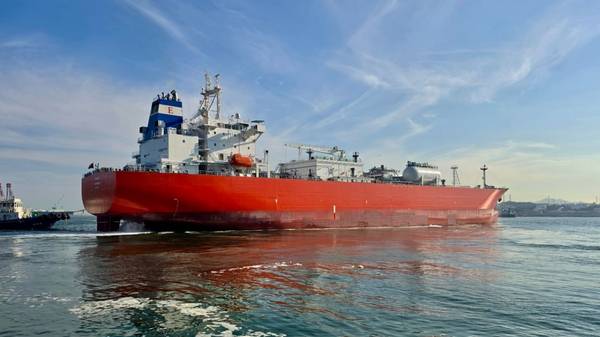
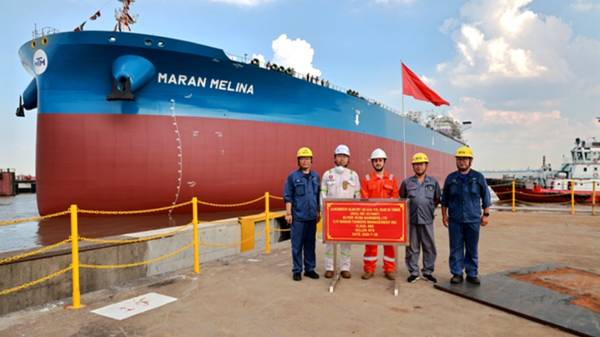
Capital's LNG-powered vessel. Chinese shipbuilder delivers 155,500-dwt LNG dual-fuel crude oil tanker  

Vessel handed over to Capital Ship Management Corp in China.

Glovis Lighthouse vessel. Seaspan takes delivery of first 10,800-ceu dual-fuel LNG car carrier  

Glovis Lighthouse enters service as one of a handful of vessels globally to exceed 10,000 CEU capacity.

Port of Rotterdam, Maersk, Core Power and Lloyd's Register logos. Rotterdam study maps pathway for nuclear-powered commercial ship port calls  

A joint study by Lloyd's Register, the Port of Rotterdam, Core Power and Maersk examines the feasibility of nuclear vessel port calls.