Fri 14 Jan 2011, 13:43 GMT

Global Vision Market Report


Technical indicators: Bearish

Oil prices dropped in electronic trading in the morning following the decision by China's central bank to raise its reserve requirement ratio by 50 bps. The move is designed to curb inflation, but investors are worried that it could result in a decrease in demand for oil from this region. When NYMEX crude fell through 90.70 dollar support, prices fell further when technical selling orders were triggered. ICE futures and the heating oil in New York pared some of their losses at midday, while the WTI crude remained on its low level.

Yesterday, oil futures settled unchanged vs the previous day and US stocks fell slightly as figures showed weekly claims for jobless benefits in the USA rose more than expected. After a volatile session the Brent steadied above 98.00 dollars for the first time in more than two years, widening the spread to US WTI crude prices. A series of production snags from Norway to Alaska has reinforced the view that a tightening of global oil markets will benefit waterborne Brent crude over WTI, a grade delivered at the landlocked storage hub of Cushing, Oklahoma.

ICE Gasoil February is expected to open 1.00 to 2.00 dollars down at about 809.00 dollars/ton after settling at 810.50 dollars (official settlement price) Thursday night. This was 1.00 dollar below Wednesday's settlement. Volume with some 59,900 deals above average.

NYMEX crude failed to breach 92.40 dollar resistance Thursday, taking away some of the bullish market sentiment, but prices still range within a long-term uptrend. The Stochastic indicator meanwhile signals an overbought market and a possible downward correction while the RSI is in neutral territory. The first support for the WTI crude is seen at 90,70 dollars today, the first resistance at 92,40 dollars.

U.S.

NYMEX flat: Oil prices are flat in Asian trading hours and electronic Globex trade this morning, taking their breath after a volatile session Thursday. The WTI crude is lingering just above 91.00 dollars for a barrel. The traded volume is below average.

Houston (ex-wharf indications 13/1)

380 cst $522
180 cst $543
MDO $814

Very tight avails for 180 cst

New Orleans (ex wharf indications 13/1)

380 cst $524
180 cst $546
MDO $817

Singapore (correct as of 1430hrs LT - delivered indications)

Crude is turning bearish with WTI -$0.83. Singapore paper is less determined with Jan +$1.80 for 180 cst and +$2.20 for 380 cst, and for Feb 180 cst +$1.50 and 380cst +$1.40 with MGO Jan contracts at -$0.18 and for Feb at -$0.06. The cargo market is mirroring paper with 180cst +$3.10, 380cst +$2.38 and MGO -$0.06.

The Singapore fuel oil markets were up more than $2.0/mt during the Platts window yesterday. With the prevailing strong crude values, the fuel oil values lag translating to a weaker Asian crack spreads. The delivered bunker premiums in the area were hovering around $8.0/mt above cargo prices yesterday. Bunker fuel swaps gained app.$1/mt at the front of the forward curve both for Rotterdam 3.5% Barges FOB and Singapore 180cst Cargo FOB, while loosing a couple of dollars at the backend. Both markets are trading slightly down this morning.

High premiums for prompt deliveries.

380 cst $542
180 cst $550
MDO $823

Fujairah (delivered indications 14/1)

380cst: $538
180cst: $580
MGO: $875

Rotterdam (delivered indications)

Yesterday, (only barge trade deals of >2 KT reported in the MOC): only 36KT was traded between 507.00-508.00 with Gunvor as the main seller to RWE as the main buyer.

The Asian arbitrage and buying interest in the ARA are firming, keeping the market bullish with loading delays on barges which were scheduled to load as far back as the 3-7th Jan. The LSFO is still sluggish, could prompt suppliers to opt for LSFO to meet the prompt HSFO demand. More US cargoes expected next month.

Indications for delivered bunkers:

380cst: $510
(1.0%): $524
180cst: $518
(1.0%): $534 (very low avails)
MGO 0.1%S: $815

BP   MGO  

Caspar Gooren, Titan. Titan Clean Fuels signs e-methane supply deal with TURN2X for 2028 delivery  

Bunker supplier to receive e-methane from Spanish production plant for distribution across European ports.

Hydrogen-fuelled engine 6UEC35LSGH. Japan consortium achieves hydrogen co-firing in main engine for large commercial vessel  

Engine reaches over 95% hydrogen co-firing ratio, with installation planned for 2027.

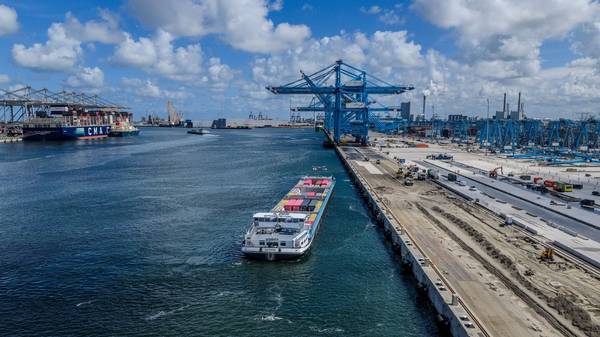
BTB bunker truck. Belgian Trading & Bunkering expands DMA 0.89 truck deliveries in ARA region  

BTB extends marine fuel offerings with truck-based deliveries to meet maritime market demand.

Fuel pathway roundtable meeting participants. ABS convenes roundtable on offshore power barge for Great Lakes emissions reduction  

Meeting brought together ports, academia and industry to advance shore power solution under EPA programme.

Lego Ane Maersk video screenshot. Maersk marks 50-year Lego partnership with dual-fuel vessel model  

Shipping company displays an exhibition of Lego sets spanning five decades at Copenhagen headquarters.

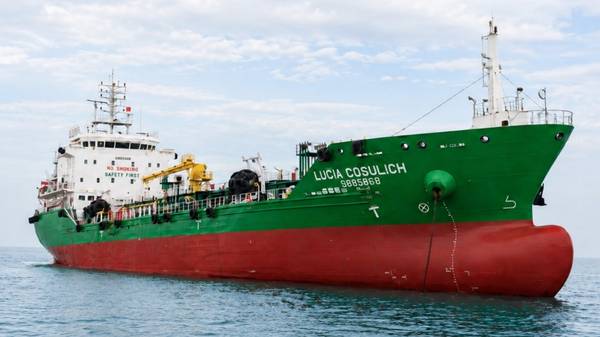
Guo Yun Hai vessel. Cosco Shipping takes delivery of 80,000-dwt methanol-ready grain carrier  

Guo Yun Hai features box-shaped cargo hold and methanol-ready design with energy-saving devices.

CMA CGM Innovation ship-to-ship transfer. Algeciras reports record LNG bunkering volumes, claims European top-three position  

Spanish port says it supplied 333,833 cbm of LNG across 78 ship-to-ship operations in 2025.

Additional costs chart. T&E: Iran conflict costing shipping industry €340m a day in fuel costs  

Transport & Environment analysis shows marine fuel price surge has cost the industry €4.6bn since conflict began.

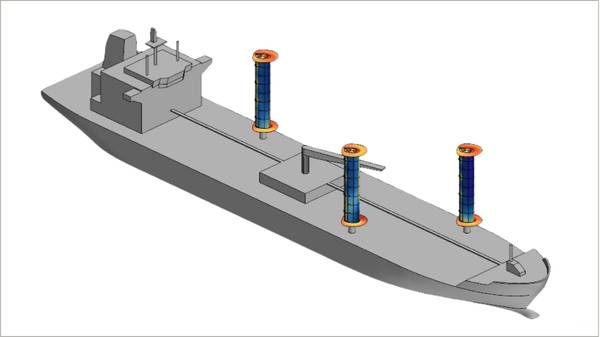
CF 3850 vessel render. Damen delivers second hybrid-ready combi freighter to German shipowner  

The vessel features biofuel capability and will be retrofitted with wind-assist technology with government funding.

Engine retrofit report 2026 graphic. Retrofit capability expands as regulatory uncertainty slows alternative-fuel conversions  

Lloyd’s Register warns delayed conversions could compress demand into a narrower, costlier timeframe as the fleet ages.