Tue 4 Sep 2018, 11:40 GMT

Shell Marine's new GM talks engine protection beyond 2020


Discusses lube management service designed to improve reliability, efficiency and profitability.


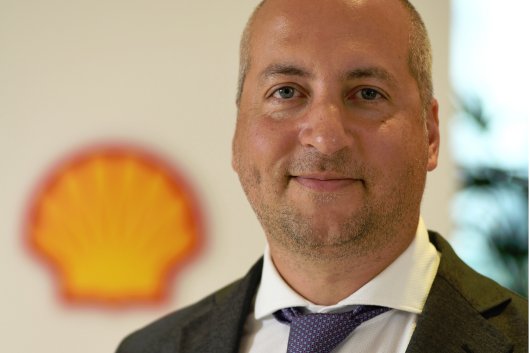
Joris van Brussel is Shell Marine's general manager, based in Singapore.
Image credit: Shell Marine
Marine lubricant choices to address International Maritime Organization restrictions on the fuels used by ships from 2020 must be based on verifiable cylinder oil performance data and engine testing to cover all operating conditions, according to Shell Marine's new general manager, Joris van Brussel.

Based in Singapore, van Brussel has gained experience across Shell's fuels, lubricants and renewables businesses worldwide, with roles in licensing, branding and retail activities, as well as group strategy, product marketing and distribution.

"Recent months have seen some movement by mainstream shipowners towards exhaust gas scrubbing to meet the 2020 marine fuel sulphur cap," said van Brussel. "These customers will continue using high sulphur heavy fuel oils with two stroke engines, and demand lubes that are proven to protect cylinders against cold corrosion under extreme stress, such as Shell Alexia S6 or the higher BN Shell Alexia 140.

"However, with just over a year to go before the new restrictions enter into force, a significant part of the market will shift to fuels with less than 0.5% sulphur, where other cylinder oil formulations with a lower BN number is expected to deliver optimum performance.

"The two-stroke product portfolio for 2020 is largely in place, but we expect that there will be a requirement for significant volumes of higher BN cylinder oils to be replaced by BN40 or BN70 grades."

Van Brussel also noted that, with engine makers still developing technology aggressively, and the fuels market mix evolving, sulphur-emission-free LNG is also securing a position as a marine fuel requiring widespread distribution.

Shell uses test engines installed at the Marine & Power Innovation Centre (MPIC) in Hamburg, putting formulations through their paces in the most extreme conditions oils can face before field trials and OEM validation tests. Latest work at MPIC is focusing on the final tests of a new 40BN cylinder oil for two stroke engines that is already undergoing field trials and is expected to be available in the market in the early part of 2019.

"Today, the work we do at MPIC has to be part of that multi-faceted strategy for customers that has developed into MILES, where we address the most pressing operational concerns customers have," remarked van Brussel. Shell's Marine Integrated Lubrication and Expert Solutions (MILES) programme aims to help by combining purchasing options, services and an extensive lubricant range into a strategy that addresses these pressing operational concerns. This approach to lubricants management can help to improve reliability, efficiency and profitability, the company says.

As well as providing optimal port lifting recommendations, a MILES package can include the entire lubrication management for a vessel, combining stock levels and demand planning for a given operating profile, feed-rate optimisation, and even 'flexi pay' schemes.

"Shell Marine has also been concentrating on developing its technical services for a world where there is much more uncertainty and the likelihood is that the quality of fuel will vary," explained van Brussel.

Better monitoring of lubricant performance for engines in service, for example, backed by advanced technology to communicate data from ship to shore improves decision-making when it comes to lubricants logistics.

Earlier this year, maritime contractor Van Oord signed a five-year agreement with Shell Marine covering the lubrication needs for its entire fleet of vessels, based on the MILES offer. The agreement included arrangements to take advantage of Shell Marine's LubeMonitor 4T programme to help manage oil consumption.

"Our tests and customer feedback show that reductions in feed rates can be achieved with an overall cost reduction to customers. In another case, [a] customer had seen the use of our Shell LubeMonitor was able to cut their cylinder oil costs by 25 percent whilst still complying with the engine maker's recommendations," van Brussel said.


Fjord1's ferry Bergensfjord. Gasum selected as LNG supplier for Fjord1 ferries on Norway’s west coast  

Long-term agreement covers LNG delivery to ferries operating the Arsvågen–Mortavika route.

Bill Watts, Bernhard Schulte (Singapore) Pte Ltd. Shipping’s fuel transition faces $9 trillion funding gap, Singapore technical talk to hear  

Global merchant fleet said to be ordering alternative-fuel vessels faster than the fuels can be produced.

Rijkswaterstaat Power2Tow R&D phase launch. Netherlands launches R&D phase for electric emergency towing vessels with e-methanol as backup fuel  

Vessels will operate electrically wherever possible, while e-methanol will serve as fuel during emergency towing operations.

KPI OceanConnect Logo. KPI OceanConnect seeks marine fuel trading intern for China desk in Singapore  

Bunker firm is recruiting a bilingual staff member to support its China trading operations.

Philippos Ioulianou, EmissionLink. EmissionLink calls for clarity amid crowded regulatory landscape  

Emissions management firm calls for practical guidance to prevent duplicate carbon costs under overlapping regulatory regimes.

Shell flag. Shell forecasts sevenfold rise in LNG bunkering demand to 27m tonnes by 2035  

Annual LNG outlook projects global demand reaching nearly 700 million tonnes per year by 2050.

Opening ceremony of VPS Shanghai laboratory. VPS opens Shanghai lab as China’s bunker market expands  

Sixth laboratory added to global network, targeting faster fuel testing for customers in APAC region.

Heinrich Wegener & Sohn Bunkergesellschaft m.b.H. logo. Heinrich Wegener joins Global Ethanol Association  

German family-owned bunker firm joins industry body to support ethanol and methanol adoption.

Keel-laying ceremony of vessel with builder's hull no. CHB2048. Second MSC ultra-large LNG dual-fuel boxship enters dry dock at Zhoushan  

Changhong International's Daishan Base receives 19,000-teu container vessel built for MSC.

175,000-cbm LNG carrier vessel render. Deal signed to build four LNG-fuelled gas carriers  

Quartet of 175,000-cbm LNG vessels destined for Shell charter.