Tue 1 Aug 2017, 15:45 GMT

Quadrise receives MSAR trial inspection report


Wartsila's interim inspection report covers the use of MSAR fuel in its RT-flex engines.


Quadrise Fuels International plc (QFI) says it has received Wartsila's interim inspection report covering the use of QFI's MSAR emulsion fuel in its RT-flex two-stroke diesel engines.

The news follows last month's receipt of an interim letter of no objection (LONO) by Wartsila which, according to QFI, confirmed that MSAR fuel had "satisfactorily completed" 1,370 hours of a 4,000 hours validation test - including 139 hours in continuous operation - on board the Maersk vessel Seago Istanbul equipped with a Wartsila 12RT-flex96C-B engine.

"This concludes the process of obtaining the supporting information related to the marine operational and LONO trial with Maersk," QFI said on Tuesday.

"QFI will continue to use the knowledge gained from the Maersk trial in conjunction with its in-house and third party research to further enhance the Company's offering to the marine and power markets," the company added.

Commenting on the latest development, Mike Kirk, Executive Chairman, said: "I am pleased that we have been able to obtain the Interim Inspection Report relating to the Marine Operational and LONO trial and we will be using this to further enhance our existing business development activities - which are not reliant on any continuing collaboration with Maersk."

Kirk explained that the company would not be publishing the inspection report, but would be making a summary available at a later date.

QFI also reiterated its belief that the marine industry will adopt the use of exhaust gas cleaning systems and high-sulphur heavy fuel as the most economic compliance option for the upcoming 0.5 percent global sulphur cap in 2020.

MSAR fuel has so far been supplied with a sulphur content higher than 0.5 percent (thus, it would need to be used together with a scrubber in 2020), but QFI has previously not discounted the prospect of working with refiners or suppliers to produce a MSAR fuel with a sulphur content lower than the 0.5 percent limit.

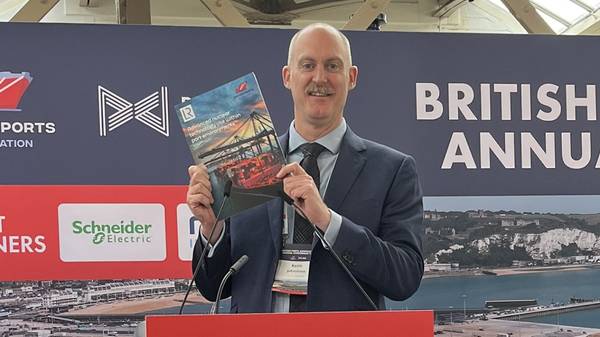
Image: Mike Kirk, Executive Chairman of Quadrise Fuels International.


Zhoushan waterfront at night. Zhoushan becomes world's third-largest bunker port  

Chinese refuelling hub overtakes Antwerp-Bruges and Fujairah to take third place in 2025.

Meyer Turku's net-zero vessel concept render. Meyer Turku completes net-zero cruise ship concept with 90% emissions cut  

Finnish shipbuilder’s AVATAR project vessel design exceeds IMO targets using technologies expected by 2030.

Uni-Fuels Logo. Uni-Fuels renews ISCC certification after first biofuel delivery  

Singapore-based marine fuel supplier completes inaugural ISCC-certified biofuel delivery, supporting EU regulatory compliance.

Close-up of a vessel bow at port. Iberian Peninsula poised to overtake the Netherlands as Europe’s top LNG bunkering hub  

Spanish and Portuguese ports quadrupled ship-to-ship LNG supply in two years, data shows.

FOBAS Fuel Insight Fuel Quality report H2 2025 cover. Lloyd’s Register reports sharp rise in marine fuel quality failures in late 2025  

December recorded the highest monthly off-specification cases, driven by sulphur, catalytic fines and flash point issues.

Bio-LNG bunkering infrastructure. Bahía de Bizkaia Gas launches bio-LNG loading service after ISCC certification  

Spanish regasification terminal begins offering renewable fuel loading for trucks and vessels in January 2026.

Grande Michigan vessel. Grimaldi takes delivery of eighth ammonia-ready car carrier Grande Michigan  

The 9,000-ceu vessel features 50% lower fuel consumption and 5 MWh battery capacity.

Graphic of the ABS logo with a blue background and light effects over a globe. ABS consortium delivers ammonia fuel safety report for EMSA  

Report expands on IMO interim guidelines and highlights need for comprehensive understanding of ammonia properties.

Green Future vessel. NYK operates methanol-fuelled bulk carrier for BHP, claims 65% emissions cut  

Green Future becomes first oceangoing bulk carrier to use low-carbon methanol fuel.

Genesis Sea vessel. Ulstein Verft completes sea trials for Genesis Sea CSOV ahead of spring delivery  

The 89.6-metre vessel features hybrid battery propulsion and preparations for green methanol operation.