Tue 26 Jul 2016, 08:55 GMT

Gulf Petrochem launches physical supply operation in Rotterdam


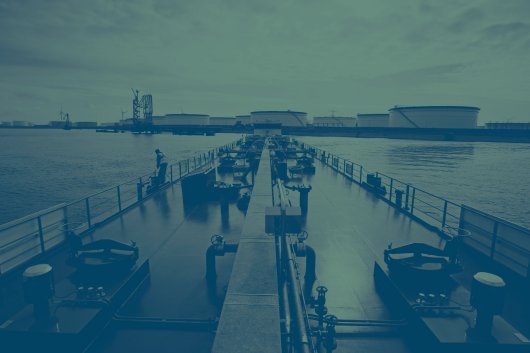
Deliveries are to be carried out using two time-chartered barges, the Virage and the Arctic.


UAE-headuartered bunker firm Gulf Petrochem Group has today announced that it has launched a new physical bunker supply operation in the port of Rotterdam, out of its new office based in Dordrecht.

In a statement, the company confirmed that it would be providing its clients with "a wide portfolio of marine fuel products such as 380cst and LSGO". Deliveries are to be carried out using two time-chartered barges, the Virage and the Arctic.

Both barges have a deadweight tonne (dwt) capacity of 3,000 and a pumping capacity of 960 cubic metres per hour (cbm/hour) and 800 cbm/hour respectively.

In addition to its physical supply activities, the Dordrecht office will also be carrying out worldwide bunker trading and cargo trading, Gulf Petrochem said.

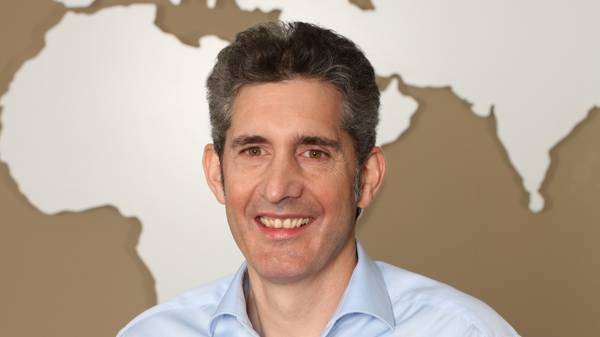
Commenting on the new Rotterdam operation, Neil Lamerton [pictured] - Global Head of Bunkering at Gulf Petrochem Group, remarked: "We know that the market situation is volatile, and in this risk conscious market we are pleased to have achieved a long term strategic objective of the group to be able to offer physical bunker supplies to our customers out of the port of Rotterdam.

"Our experienced and dedicated team in Rotterdam, supported by our global offices will continue to supply our customers with consistently high quality products and customer service to match. This expansion is indicative of our prudent risk management practices especially considering current market conditions. Our group continues to be unaffected with further expansion plans for Rotterdam in place for 2016."

The launch of physical supply operations in Rotterdam will complement Gulf Petrochem's existing activities in the UAE, Gulf of Kutch, Indian ports of Kandla, Sikka and Vadinar.

Full contact details for the new office are as follows:

Gulf Petrochem
2nd Floor, Aventurijn 300
Dordrecht
Netherlands

Phone: +31 786 182 193
Email: arabunkers@gulfpetrochem.com
Web: www.gulfpetrochem.com


UEC60LSJ ammonia-fuelled engine render. J-ENG secures orders for four ammonia-fuelled engines under Japanese PCTC project  

Vessels form part of plan to build four ammonia-fuelled car carriers, a dedicated bunkering vessel and supply chain.

Hanwha Power receives ABS AiP for battery-powered containership design. ABS grants AIP to Hanwha Power for 1,700-TEU battery-powered container ship  

Design uses roughly 151 MWh of swappable battery storage for fully electric propulsion on a container vessel.

Peter Krahenbuhl, WinGD. WinGD signs first licence deal with HD Hyundai Marine Engine to expand Korean production  

Mid-bore engine portfolio gains new production route into Korea's bulk carrier and tanker newbuild markets.

ONE Symphony naming ceremony. Ocean Network Express names ammonia- and methanol-ready newbuild ONE Symphony  

Vessel features conventional diesel main engine, with concept designs approved for possible future conversion to methanol or ammonia.

Sing Fuels logo. Sing Fuels seeks Asia-based supply trader to bolster bunker procurement team  

Singapore bunkering firm is recruiting a supply trader to manage marine fuel purchasing across Asia.

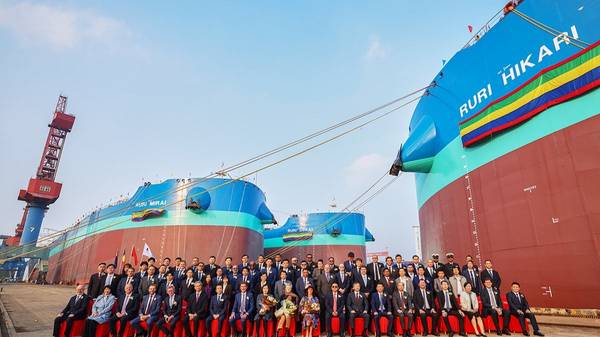
MOL joint naming ceremony. MOL names world's first ammonia-fuelled Capesize bulk carriers  

Naming of Ruri Mirai, Ruri Sekai and Ruri Hikari signals ammonia's arrival as a marine fuel for large bulk carriers.

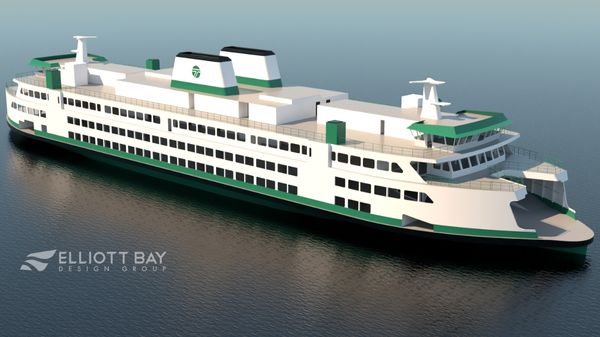
Washington State Hybrid-Electric 160-Auto Ferry vessel render. ABB wins Washington State Ferries' third hybrid-electric vessel order  

ABB extends its role in the US ferry operator's electrification programme, which targets emission-free operations by 2050.

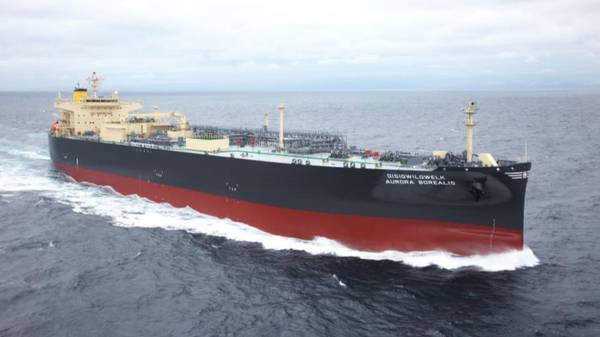
Aurora Borealis vessel. Kawasaki Heavy Industries delivers LPG-fuelled carrier Aurora Borealis  

Ship could also be modified in future to allow for ammonia-fuelled operation.

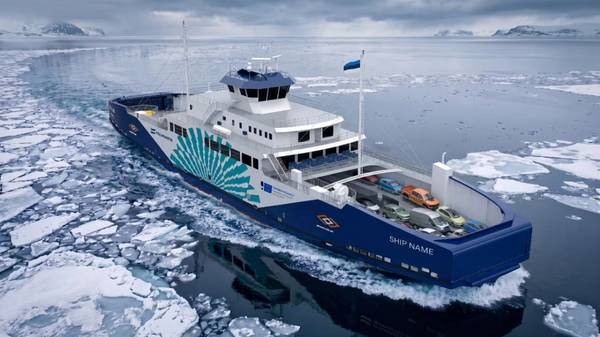
Rendering of Estonia's first shore-charged electric ferry. Estonian State Fleet's shore-charged electric ferry completes model testing in Germany  

Hull and propulsion tests show the vessel's energy consumption remains within contracted limits with room to spare.

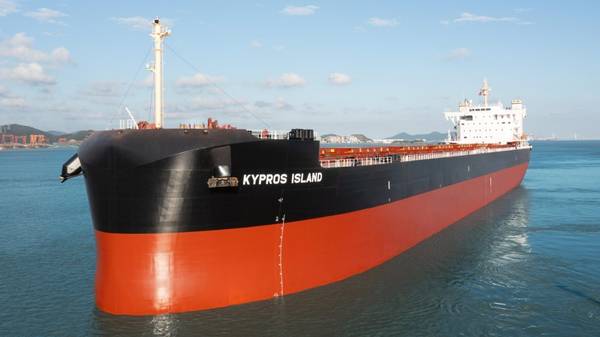
Kypros Island vessel. Tsuneishi delivers first methanol dual-fuel Kamsarmax bulk carrier from Chinese yard  

Shipbuilder claims progress towards establishing a mass-production system for vessels designed to reduce environmental impact.