Mon 11 Aug 2014, 12:31 GMT

NAMEPA members rewarded for their commitment to sustainability


North American Marine Environment Protection Association (NAMEPA) members have been awarded an automatic positive adjustment towards their vessels' RightShip Environmental Rating.


In recognition of their strong commitment to sustainability, North American Marine Environment Protection Association (NAMEPA) members have been awarded an automatic positive adjustment (+5 points) towards their vessels’ RightShip Environmental Rating.

"NAMEPA is one of only eight organizations worldwide to secure this high standing in our system," commented Warwick Norman, CEO of RightShip. "We believe it is important to acknowledge and reward those who have invested time and effort to operate above compliance, and who demonstrate dedication to environmental sustainability."

RightShip's Existing Vessel Design Index (EVDITM) and GHG Emissions Rating enables charterers to select the most energy-efficient vessel. This is achieved by estimating the theoretical amount of carbon dioxide (CO2) emitted per tonne nautical mile travelled, based on the ship design characteristics at the time of build. Unlike the International Maritime Organization (IMO) Marine Environment Protection Committee's (MEPC) Energy Efficiency Design Index (EEDI), RightShip’s EVDITM can be applied to existing ships and allows relative comparison of a ship’s CO2 emissions to vessels of a similar size and type.

"Major charterers and shippers are taking a leadership position in sustainability, driving industry change through market-based solutions," RightShip said. "As of June 2014, 22 charterers – or 23% of global non-containerized trade – factor energy efficiency into their decision making. This accounts for 1.8 billion tonnes of cargo, or 21,500 annual vessel movements. A growing number of terminals recognize RightShip’s Environmental Rating and are now offering financial incentives to ship owners based on their environmental performance."

"We are delighted with this recognition from RightShip," said NAMEPA’s co-founder and Executive Director, Carleen Lyden-Kluss. "This is a further reward for our members’ demonstrated individual commitment to preservation of the marine environment."


Bermuda Container Line (BCL) logo. Bermuda Container Line imposes emergency bunker surcharge citing Iran War fuel price spike  

Shipping operator to add $150 per TEU charge from 1 May amid geopolitical fuel cost pressures.

China flag. Zhejiang’s first methanol-powered container ship launches in Jiaxing  

Vessel uses methanol propulsion technology to reduce carbon dioxide emissions by 90%.

TES flag with a model vessel in the background. TES joins SEA-LNG coalition to advance e-methane as marine fuel  

Green energy company targets 1m tonnes annual e-methane production by 2030 for shipping decarbonisation.

Ethanol and methanol workshop graphic. IBIA to host workshop on ethanol and methanol marine fuels during Singapore Maritime Week  

Half-day event will examine alcohol-based fuel pathways and integration into shipping’s multi-fuel landscape.

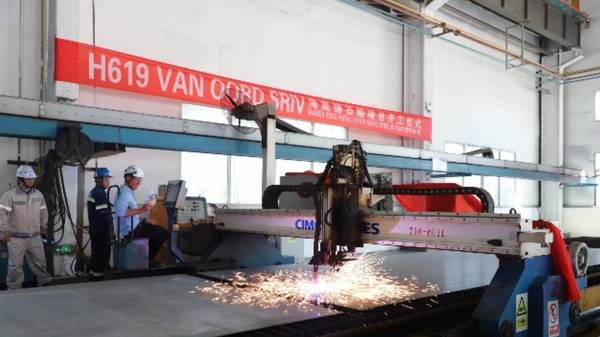
Steel-cutting ceremony for 13,000-dwt vessel. ROC begins construction of second chemical tanker for Essberger  

Chinese shipbuilder holds steel-cutting ceremony for 13,000-dwt methanol-ready vessel with ice class capability.

Norsepower and CHIC sign agreement. Norsepower and Cosco Shipping Heavy Industry Equipment sign wind propulsion cooperation agreement  

Wind propulsion technology provider partners with Chinese shipyard to scale rotor sail production.

Wärtsilä logo. Shipping firms struggle to prioritise decarbonisation investments amid regulatory uncertainty, Wärtsilä survey finds  

Survey of 225 maritime executives reveals 70% say uncertainty hinders investment decisions despite regulatory pressure.

IMT Isca G-Flex vessel render. Longitude Engineering unveils IMT Isca G-Flex PSV design with alternative fuel capability  

Naval architecture firm launches adaptable platform support vessel design based on the IMT-984 G-Class hull.

Philippos Ioulianou, EmissionLink. Shore power infrastructure is key to cutting ferry emissions in European cities, says EmissionLink  

Port electrification is needed to enable vessels to switch off engines at berth, reducing urban pollution.

Maritime and Port Authority of Singapore logo. Singapore prioritises maritime resilience amid geopolitical uncertainty, eyes digitalisation and green fuels  

MPA chief outlines the sector’s adaptation to supply chain disruptions while advancing automation and alternative fuels.