Finnish firm
Wärtsilä has announced that both its X72 and X62 two-stroke engines have recently successfully passed "important milestone tests" that verify various performance criteria.
The Type Approval Test (TAT) for the Wärtsilä X72 are said to have taken place at the premises of Wärtsilä's licensee, Doosan Engine Co. Ltd, in Changwon, South Korea. This was followed by a sea trial carried out by Dalian Shipbuilding Industry Corporation (DSIC).
"In passing the TAT, the engine is verified as having fulfilled all classification society requirements, and is therefore fully introduced to the market," Wärtsilä said.
An important feature of the testing was meeting the
SOLAS (Safety of Life at Sea) standards. With a single engine powering the propeller, the engine must be capable of continuous operation under all conditions.
Also, the first Wärtsilä X62 engine is said to have successfully passed its Factory Acceptance Test (FAT). This verifies that the engine fulfils the design criteria for performance and functioning, and that it has been accepted by both the customer, Kyklades Maritime Corporation, as well as by the classification society Det Norske Veritas (DNV).
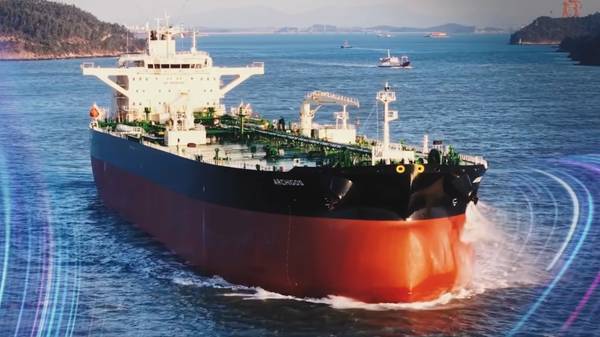
The tests were carried out at the Hyundai Heavy Industries Engine and Machinery Division (HHI - EMD) factory in South Korea, where a series of four engines is being produced under license from Wärtsilä for Kyklades. The engines have been ordered to power four 115k Aframax Product Carriers being built by the HHI Gunsan shipyard.
Both the Wärtsilä X72 and X62 engines feature Wärtsilä's second-generation version of its electronically controlled common rail system with time-controlled fuel injection. This is designed to provide
fuel efficiency and reliability, as well as lower operational costs.
The Wärtsilä Generation X engines also feature a higher stroke to bore ratio than the RT-flex engines, thus achieving lower engine speed and lower brake specific fuel consumption (BSFC). The fuel injection and cylinder lubrication are controlled by a single electronic module, part of the state-of-the-art UNIC-flex control system, which is based on Wärtsilä's UNIC (Unified Controls) platform.
"As expected, the TAT validation of the Wärtsilä X72 procedure has been passed successfully. The key value adding feature of this engine is that its high level of efficiency lowers the operational costs for owners, operators and charterers. In the current market conditions, this is extremely important," said
Martin Wernli, Managing Director, Wärtsilä Switzerland and Vice President, 2-stroke, Wärtsilä Ship Power.
The Wärtsilä X72 and Wärtsilä X62 engines cover the mid-bore end of the market. Typical applications include Panamax to Capesize bulk carriers (60,000 to 210,000 dwt), Aframax to Suezmax tankers (80,000 to 200,000 dwt), and container feeder vessels (1600 to 4500 TEU).
Image: Wärtsilä X72 engine.