Thu 17 Oct 2013, 14:31 GMT

Global Vision Market Report


Crude oil futures were lower on Thursday after the U.S. Congress passed a bill to reopen the government and avoid a U.S debt default as concerns over the economic impact of the shutdown weighed. On the New York Mercantile Exchange, light sweet crude futures for delivery in November traded at USD101.73 a barrel during European morning trade, down 0.59%.

New York-traded oil futures held in a range between USD101.65 a barrel, the daily low and a session high USD102.31 a barrel. The November contract ended 0.49% lower at USD101.13 a barrel on Wednesday. Oil futures were likely to find support at USD100.78 a barrel, Wednesday’s low and resistance at USD102.58 a barrel, the high from October 14. Oil prices also remained under pressure after a report by the American Petroleum Institute on Wednesday showed that U.S. crude stockpiles rose by 5.9 million barrels in the week to October 11, more than double forecasts for a build of 2.25 million barrels. On the ICE Futures Exchange, Brent oil futures for December delivery were down 0.40% to trade at USD110.13 a barrel, with the spread between the Brent and crude contracts standing at USD8.40 a barrel.

Oil futures at ICE and NYMEX embarked on a rather calm trading session Wednesday. Although they tested first supports in the course of the day, these proved to be strong. The uncertainty regarding the U.S. budget crisis paralysed financial markets because it still was not clear whether or not both parties would really find agreement after House Republicans had presented a counterproposal to the Senate's draft. But at the opening of Wall Street in the late afternoon, stocks, the dollar as well as oil prices climbed. John Boehner (R), Speaker of the House of Representatives, had announced to bring to the House floor whatever the Senate passes to open the government and lift the U.S. debt ceiling. At night, both chambers of the U.S. Congress agreed on raising the country's borrowing authority, and thus averted default. Consequently, traders increasingly placed long positions after this positive news, pushing oil prices to their day's highs. With the breach of several resistances, technical buying orders kicked in. When the API released its weekly data on U.S. oil stockpilesm showing a massive build in crude reserves, the bearish effect failed to materialize.

ICE Gasoil contract for November delivery settled at 945.00 USD on Wednesday. This was 4.75 USD below Tuesday's settlement. With some 88,500 deals, the traded volume was above average.

The Stochastic is bullish for WTI as well as for G.Oil and has given off a buying signal. At the Brent chart, however, the indicator's signal is not as strong yet. But in return, the upward trend channels at ICE charts, which formed last week, are still intact. From a mere technical perspective, we consider the current market situation as neutral to bullish as the Stochastic's buying signals have been triggered close to the 50%-line and are thus not as strong as if they were given off in oversold territory. Still, technical indicators point to further price movements within the ICE uptrend.

U.S.

Nymex bullish: Market players now have to digest the Congress' preliminary deal to end the budget standoff in the USA and to raise the country's borrowing authority. They also need to pin down last night's bearish API report while waiting for market liquidity to increase again. The traded volume at NYMEX is below average for this time of day. Investors are now eying the performance of European markets, new signals from forex trading and today's economic indicators. It is not clear yet which U.S. indicators are going to be released shortly after the shutdown has ended.

Houston (ex-wharf indications 17-10)
380cst $608
180cst $665
MGO $1004

New Orleans (ex-wharf indications 17-10)
380cst $611
180cst $657
MGO $1007

Singapore (closed due to bank holiday)

380cst $617
180cst $622
MGO $935

Fujairah (delivered indications 17-10)

380cst $618
180cst $675
MGO $1005

ARA (Amsterdam - Rotterdam - Antwerp)

Indications for delivered bunkers:
380cst : $588
(1.0 %) :$610
180cst: $618
(1.0 %):$ 640
MGO 0.1%S: $ 912

MGO  

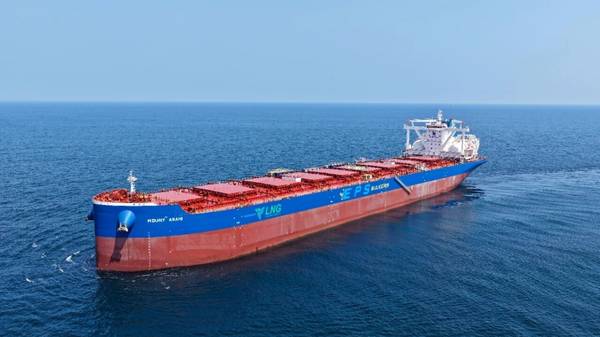
Mount Asahi vessel. CSSC delivers LNG dual-fuel bulker to Eastern Pacific nearly four months early  

210,000-tonne Mount Asahi handed over ahead of contract schedule.

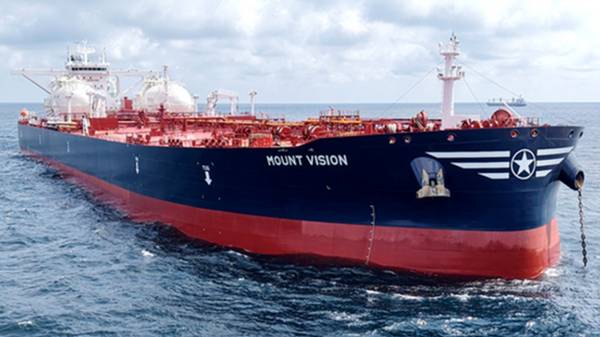
Mount Vision vessel. New Times Shipbuilding delivers three LNG dual-fuel tankers in four days  

Chinese yard hands over one VLCC and two Aframax-size crude tankers within a single week.

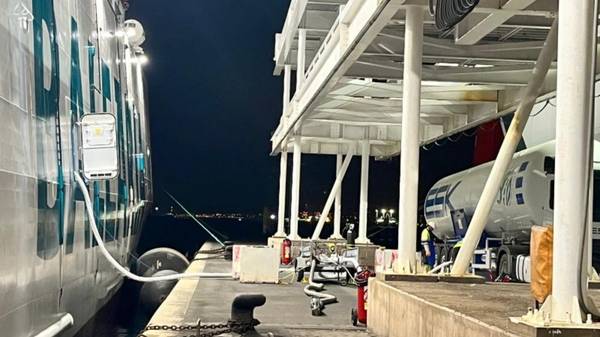
Mercedes Pinto vessel TTS LNG bunkering. Baleària ferry completes LNG bunkering at regular berth in Las Palmas for first time  

LNG refuelling of Mercedes Pinto set to take place weekly without changing berth.

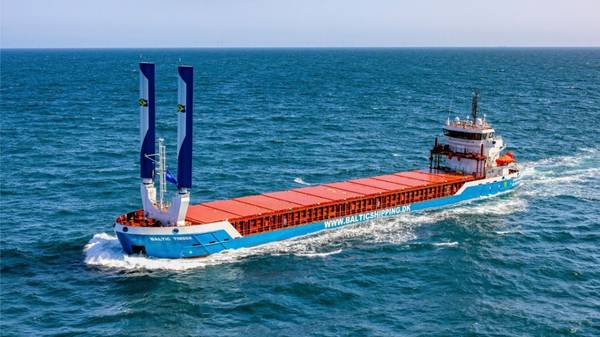
Baltic Timber vessel. Baltic Shipping Company takes delivery of wind-assisted hybrid coaster  

3,550-dwt vessel is fitted with Econowind VentoFoils and a battery package.

Pakistan flag. Vitol Bunkers launches first commercial bunkering service at Gwadar Port  

Company begins offering HSFO, VLSFO and LSMGO at the Pakistani deepwater port.

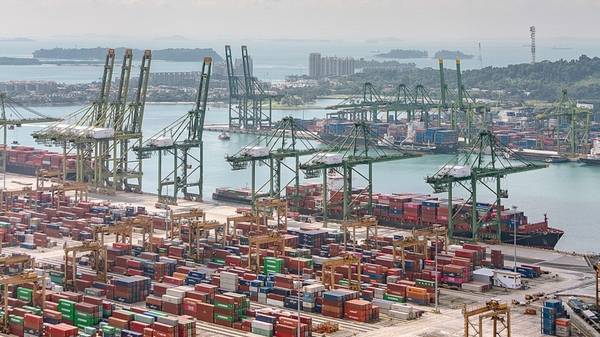
Port of Singapore. Trailing 3-month bunker sales fall to lowest since April 2025 in Singapore  

Bunker volume of 13.569m tonnes sold between April and June was worst result in 14 months.

Glander International Bunkering logo. Glander International Bunkering reports $23.4m pre-tax earnings amid volatile shipping markets  

Bunker trading company says new fuels volumes doubled over the past year, driven by client demand.

Aerial view of tanker vessel at sea. ISO-compliant fuels increasingly causing operational problems, Lloyd’s Register warns  

Latest FOBAS report finds fuel quality risk shifting beyond off-specification fuels.

Bioethanol bunkering at the Port of Santos. Bunker One completes Latin America’s first bioethanol bunkering of a deep-sea container vessel  

500,000-litre delivery at Santos marks a first for bioethanol as a marine fuel.

Maritime Technologies Forum (MTF) logo. MTF issues safety management guidelines for methanol-fuelled ships  

New MTF report offers recommendations for developing and strengthening safety management systems for methanol as a fuel.