Wed 15 Aug 2012, 14:51 GMT

Survey: SO2 levels fall in EU ports


Survey finds that average concentrations of sulphur dioxide fell significantly in EU harbours after January 2010.


Scientists at the European Commission's Joint Research Centre (JRC) measured key air quality parameters in Mediterranean harbours before and after the entry into force of the low sulphur requirements in January 2010.

In European harbours they found an average decrease of 66 percent in concentrations of sulphur dioxide. Measurements taken in a non-EU port showed that levels of this noxious substance remained the same.

The air quality measurements were carried out using an automated monitoring station on the cruise ship Costa Pacifica, which followed a fixed weekly route in the Western Mediterranean between 2009 and 2010.

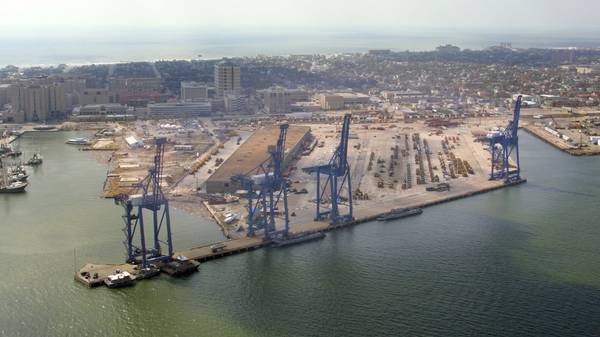
The concentrations of sulphur dioxide were found to decrease significantly in three out of the four Mediterranean EU harbours that were investigated: Civitavecchia, Savona and Palma de Mallorca. The daily mean concentrations in all of the harbours decreased on average by 66 percent.

JRC measurements in the harbour of Barcelona were said to be inconclusive because of large day-to-day concentration variations. However, independent measurements from monitoring stations in the harbour of Barcelona and in the vicinity of the harbour of Palma de Mallorca showed a strong decrease in sulphur dioxide concentrations from 2009 to 2010.

In contrast, no decrease in sulphur dioxide was observed in the Mediterranean harbour of Tunis, and there was no reduction in any of the other air pollutants that were measured in all four harbours (Civitavecchia, Savona, Palma de Mallorca and Tunis).

"This shows that the decreases in sulphur dioxide are a direct consequence of the application of the EU requirements. The study also confirms a correlation between sulphur dioxide and chemical elements typically emitted from ship stacks which demonstrates that ships were the main source of sulphur dioxide in the harbours," JRC said.

The logistics for the automated ship-borne monitoring station for air pollutants were provided by Costa Crociere and the measurements were performed in collaboration with scientists from the Universities of Genoa and Florence, the INFN-LABEC Laboratory in Florence as well as from the Institute of Environmental Assessment and Water Research in Barcelona.

Background

The 2005 amendment of Directive 1999/32/EC required that, as of January 2010, all ships at berth or at anchor in European harbours use fuels with a sulphur content of less than 0.1% by weight, while previously, outside of Sulphur Emission Control Areas, a sulphur content of up to 4.5% was allowed.

Ships traditionally use heavy fuel oil which, from 2012, can have a sulphur content of up to 3.5% for cargo vessels (before 2012 this limit was 4.5%). The average sulphur content of heavy fuel oil is about 2.4%. By comparison, the sulphur content of fuels used in road vehicles must not exceed 0.001%.

In line with the broader environmental protection objectives of the EU and strengthening a parallel agreement reached by the International Maritime Organisation, the European Parliament and the Council have come to an agreement to be submitted to formal vote after the summer on an amendment to the 1999/32/EC directive to further reduce sulphur content of fuels used outside of harbours. The maximum allowed sulphur content of ship fuels will go down from 3.5% to 0.5% in 2020, and in the Sulphur Emission Control Areas (the Baltic Sea, the North Sea and the English Channel) the current limit of 1,5% sulphur content for ship fuels will be reduced to 0.1% in 2015.

The results of the study, entitled 'Impact of a European directive on ship emissions on air quality in Mediterranean harbours', have been published in the scientific journal Atmospheric Environment1.


WinGD methanol and ethanol webinar invitation. WinGD to host webinar on methanol- and ethanol-flexible fuel engine technology  

Engine manufacturer will discuss market outlook, regulations and operational experience with alcohol-based marine fuels.

Peninsula graduate programme group photo. Peninsula opens applications for 2026 graduate programmes in marine fuels trading  

Two-year scheme offers positions across six global locations starting in September, combining hands-on experience with structured development.

Collin She, Oilmar DMCC. Oilmar DMCC promotes Collin She to key account manager role  

She will lead strategic customer relationships and drive growth opportunities in Singapore and the wider region.

CM Hong Kong alongside Gang Rong vessel. Hong Kong completes first green methanol bunkering with CCS support  

China Classification Society provides technical oversight for methanol-fuelled vessel's inaugural Hong Kong refuelling operation.

Areion vessel. Dorian LPG takes delivery of dual-fuel VLGC capable of carrying ammonia  

The 93,000-cbm Areion can run on LPG or fuel oil and transport ammonia cargoes.

FSRU Toscana alongside Green Zeebrugge vessel. RINA awards ISCC EU certification to OLT Offshore LNG Toscana for bio-LNG supply  

Certification enables bio-LNG use in the EU as a renewable fuel under RED II and RED III directives.

World Shipping Council at IMO meeting. WSC calls for safe maritime corridor as 20,000 seafarers remain trapped in the Persian Gulf  

Industry body urges IMO member states to establish safe passage and supply access.

Graphic promoting Auramarine webinar titled 'Sustainable Fueling Part 3: Ammonia - next alternative fuel in marine'. Auramarine to host webinar on ammonia as marine fuel in April  

Finnish firm will explore ammonia’s role in maritime decarbonisation at its third spring webinar.

Front cover of study by WinGD and Envision Energy titled 'Renewable Fuel Economics: An OPEX illustration based on current costs'. Green ammonia could reach cost parity with VLSFO and LNG by 2050, study finds  

WinGD and Envision Energy study projects green ammonia operational costs competitive with conventional marine fuels.

Elenger Marine's LNG bunkering vessel Optimus alongside Brittany Ferries’ Saint-Malo. Bureau Veritas verifies methane emissions on Brittany Ferries’ LNG vessels  

Verification enables ferry operator to report measured methane slip instead of regulatory default values.