
 |
RINA has published a new white paper examining how low-carbon fuels are reshaping decarbonisation strategies in the aviation and maritime sectors as regulatory timelines accelerate faster than market readiness.
The paper addresses the shift of biofuels, hydrogen and synthetic e-fuels from niche alternatives to what RINA describes as structural solutions for sectors that cannot rely on large-scale electrification.
According to RINA, regulatory initiatives such as FuelEU Maritime, ReFuelEU Aviation and the Renewable Energy Directive III (RED III), alongside global frameworks led by the International Maritime Organization and aviation’s CORSIA scheme, are advancing more rapidly than fuel production capacity and infrastructure development.
The organisation notes that compliance is increasingly becoming a strategic factor influencing investment decisions and market access.
The white paper highlights the interdependence between feedstock supply, fuel production, infrastructure readiness and harmonised certification systems. RINA identifies digital traceability and interoperable verification platforms as key enablers for scaling low-carbon fuels across borders in a cost-effective way.
It also examines the longer-term role of synthetic fuels, outlining the significant industrial transformation required to deploy e-fuels at commercial scale.
In order to read the white paper, please click here.
|
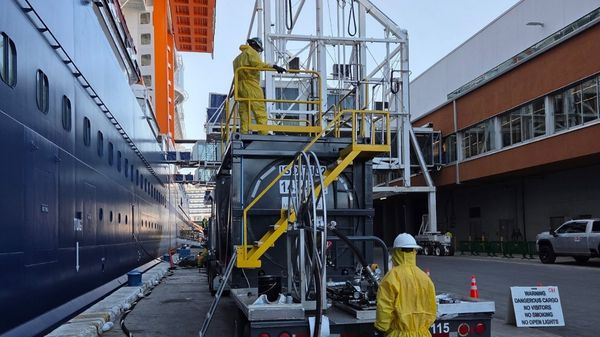
World Fuel Services and West Coast Clean Fuels launch methanol bunkering across US ports
First over-the-water methanol delivery completed in South Florida with Coast Guard-approved procedures. |
|
|
|
||

|
Burando Energies appoints Valerie Ahrens as global head of methanol
Ahrens brings more than 30 years of energy sector experience to the marine fuels supplier. |
|
|
|
||
|
New Sea Generation seeks junior bunker trader in Greece
Greek bunker firm advertises role requiring commitment to demanding work schedule and operational responsibilities. |
|
|
|
||

|
IINO Lines secures sustainable shipping finance for methanol dual-fuel VLCC
Japanese shipowner signs impact financing agreement with Mizuho Bank for alternative-fuel tanker. |
|
|
|
||
|
Fluxys Belgium reports EUR74.9m profit as LNG flows surge and hydrogen infrastructure begins
Belgian gas infrastructure operator’s 2025 net profit fell 8.8% amid hydrogen and CO₂ investments. |
|
|
|
||

|
Shale oil components detected in Singapore marine fuel | VPS
VPS testing identifies 90,000 mt of delivered VLSFO containing Estonian shale oil compounds. |
|
|
|
||

|
IBIA chair completes two-year term, citing expansion in regulatory engagement and membership
Outgoing chair to remain on Global Board and lead Future Fuels and Bunker Buyers’ working groups. |
|
|
|
||

|
LNG and methanol investments risk becoming 'dead ends' for shipping decarbonisation, UCL study finds
Research warns transitional marine fuels may lock in fossil infrastructure rather than enabling an ammonia pathway. |
|
|
|
||

|
Protasov: Renewable fuel supply could meet shipping demand, but offtake agreements remain a barrier
GENA Solutions CEO highlights project pipeline growth but warns regulatory uncertainty hampers investment decisions. |
|
|
|
||
|
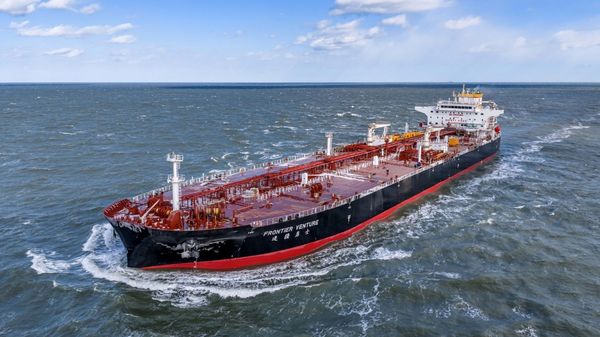
Wah Kwong takes delivery of first LNG-ready LR2 tanker with Bureau Veritas SMART notation
Frontier Venture is first in newbuild series to achieve Group 3 'augmented ship' capabilities. |
|
|
|
||
| RINA approves design for Clippership's 24-metre autonomous wind-powered cargo vessel [News & Insights] |
| RINA grants approval for Chinese nuclear-powered Arctic icebreaker design [News & Insights] |
| GES and RINA partner to develop hydrogen battery prototype for marine applications [News & Insights] |
| Study claims biofuels emit 16% more CO2 than fossil fuels they replace [News & Insights] |
| Wärtsilä to supply biodiesel-capable engines for AMAGGI's two new Amazon pusher tugs [News & Insights] |
| Lloyd’s Register reports sharp rise in marine fuel quality failures in late 2025 [News & Insights] |
| Alternative fuel vessel orders maintain momentum despite softer 2025 market [News & Insights] |
| Avenir LNG begins construction of second 20,000 cbm bunkering vessel in China [News & Insights] |
