
 |
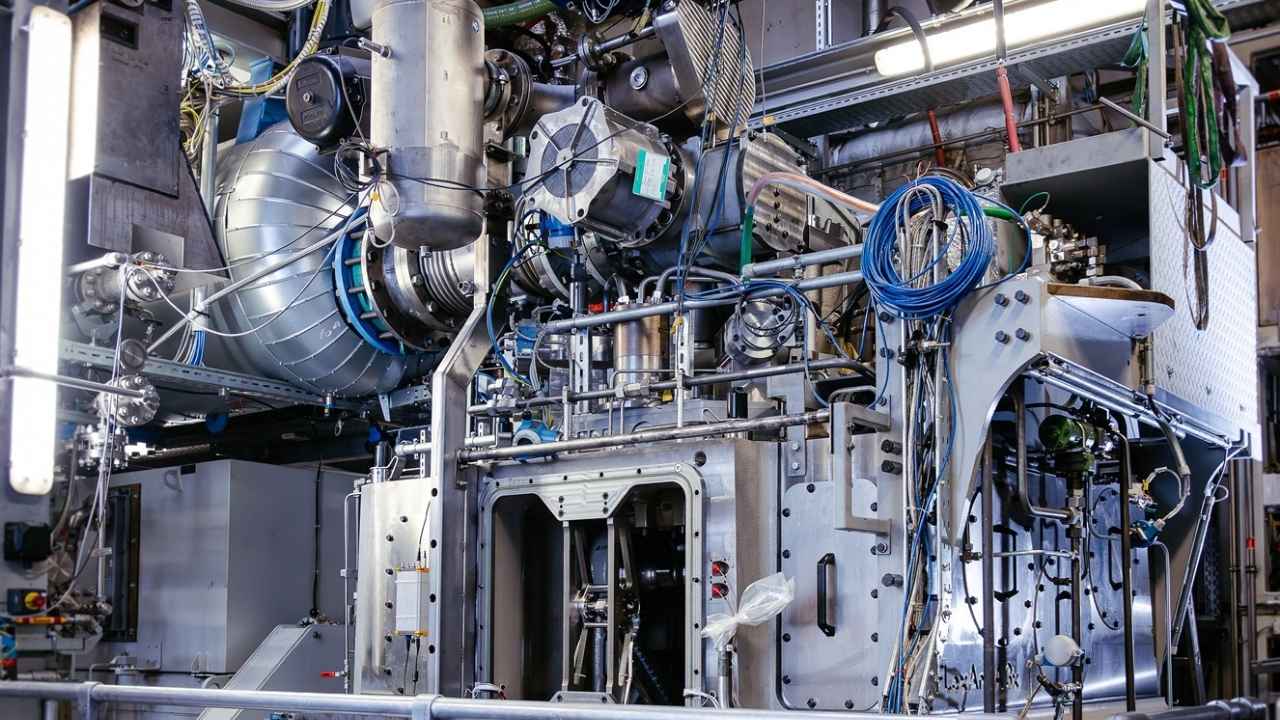
Everllence has upgraded a research-engine test bench at its Augsburg site to enable hydrogen combustion, the company announced on Thursday, 26 February.
The development was carried out under the ‘HydroPoLEn’ project, an Everllence partnership with industry leaders and research institutes. The project is supported by funding from the German Federal Ministry for Economic Affairs and Energy within the framework of the Maritime Research Programme.
Project partners include Everllence, WTZ GmbH, NMA at the Technical University of Munich and Tenneco, with Carnival Maritime acting as an associated partner. HydroPoLEn is focused on developing sustainable propulsion solutions for the maritime sector.
According to Everllence, investigations conducted under the project have led to the design and successful testing of a combustion process, along with mechanical components and parts specifically adapted for hydrogen operation. The company states that the newly developed combustion process enables a significant increase in power density when operating on hydrogen.
Dedicated hydrogen infrastructure has also been established at the Augsburg site to support research, positioning the facility as a hub for future hydrogen-related engine development.
Dr Cornelius Wagner, HydroPoLEn project manager, commented: "We are still at an early stage in terms of developing a complete propulsion solution for the market, but this news augurs well for the future. Hydrogen poses significant challenges for engine operation and requires optimal adaptation of safety systems and components for it to reach maximum potential. With these key challenges now addressed, hydrogen is moving closer to becoming a long-term solution for the defossilisation of passenger ships."
Dr Matthias Auer, head of performance and emissions for four-stroke R&D at Everllence, said: "In the race for future propulsion technologies in the maritime sector, hydrogen has a decisive role to play alongside ammonia and methanol. Since no single technology will likely prove optimal for all applications in the foreseeable future, companies must remain flexible and evaluate all options. Hydrogen will be an essential consideration in this context."
Dr Alexander Knafl, senior vice president of R&D four-stroke at Everllence, remarked: "With HydroPoLEn, we are taking another major step forward toward climate-neutral maritime transportation. Our hydrogen engine demonstrates that ingenious engineering is a key element for sustainable, carbon-free propulsion, providing the foundation for the next generation of marine mobility. We are extremely proud to drive forward solutions that unite environmental responsibility with strong industrial innovation."
The HydroPoLEn project focuses on developing propulsion solutions for the maritime sector.
|
FuelEU pooling drives surge in bio-LNG demand, Titan analysis finds
Clean fuel supplier's modelling shows pooling mechanism turning overcompliance into tradable value for LNG-fuelled ships. |
|
|
|
||
|
Ports told to prepare now for advanced nuclear power
Joint paper sets out a readiness pathway for ports facing nuclear-powered vessels, floating reactors and small modular units |
|
|
|
||
|
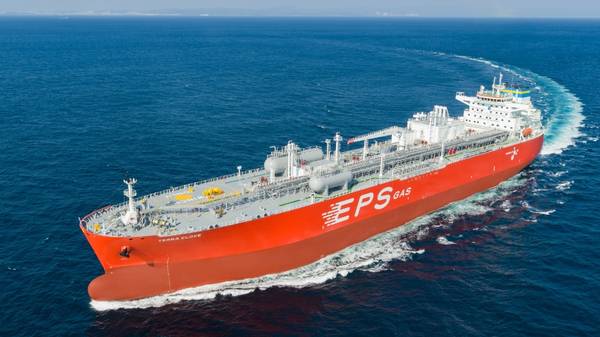
Eastern Pacific Shipping takes delivery of first ammonia dual-fuel VLAC
Terra Clove powered by first Everllence B&W 6G60ME-C10.5-LGIA ammonia dual-fuel two-stroke engine. |
|
|
|
||
|
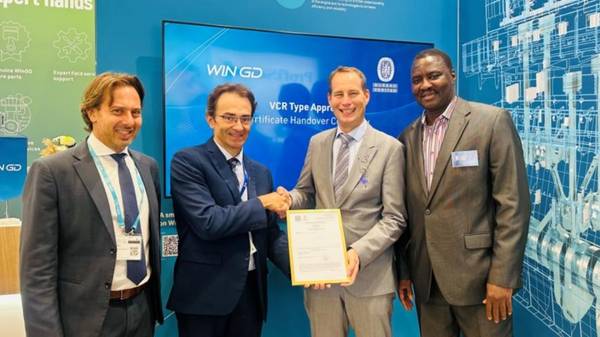
Bureau Veritas approves WinGD's variable compression ratio technology for dual-fuel engines
Classification society grants type approval to engine technology enabling compression ratio adjustment across different marine fuels. |
|
|
|
||
|
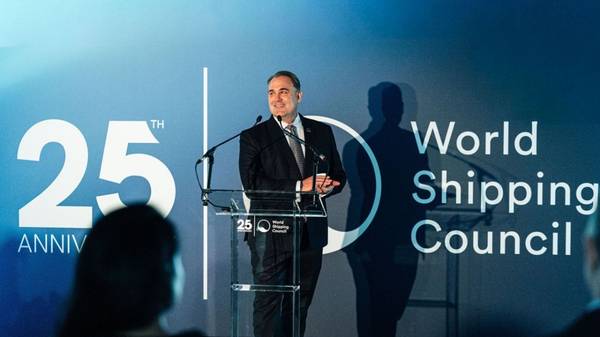
Dual-fuel fleet passes 500 ships as investment tops $200bn
World Shipping Council data shows dual-fuel container ships and vehicle carriers growing fast, with IMO rules uncertain. |
|
|
|
||
|
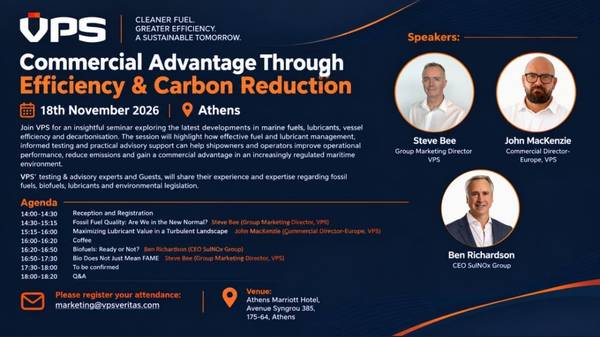
VPS to host Athens seminar on fuel efficiency and carbon reduction
VPS's final European round table of 2026 will cover marine fuels, lubricants and decarbonisation in Athens. |
|
|
|
||
|
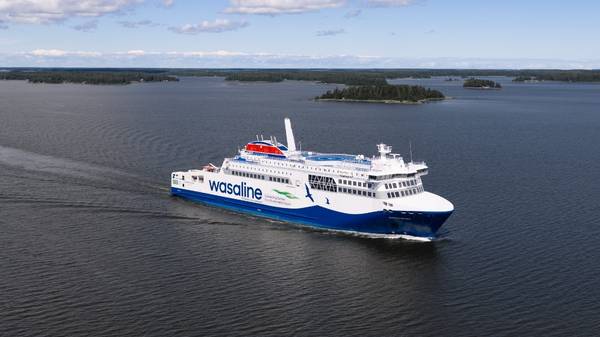
Wasaline secures locally produced biogas supply from St1 Biokraft for Vaasa–Umeå ferry
Agreement will supply 42 GWh of liquefied biogas annually, with deliveries due to start in January 2028. |
|
|
|
||
|
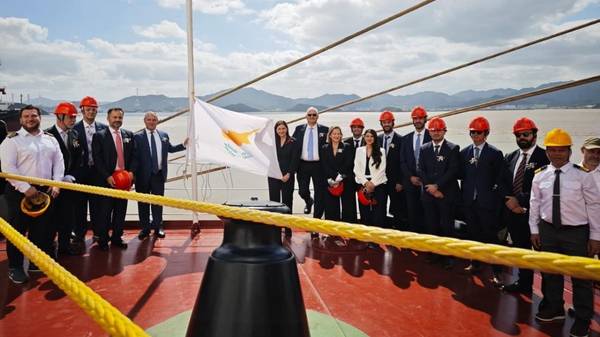
Safe Bulkers takes delivery of first dual-fuel methanol Kamsarmax newbuild
Kypros Island becomes the first dual-fuel bulker to enter the Cyprus Registry. |
|
|
|
||

|
PetroChina seeks LNG bunker trader to expand Asian marine fuel business
Role requires five to ten years of commercial experience in LNG, bunker trading, marine fuels, commodities, or energy trading. |
|
|
|
||
|
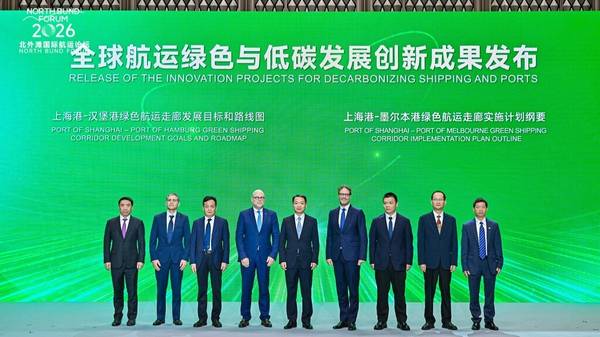
Shanghai and Melbourne ports move green shipping corridor into delivery phase
Ports launch implementation plan targeting green methanol, biofuels and shore power by 2035. |
|
|
|
||
| Everllence and Vale partner on ethanol-powered marine engine development [News & Insights] |
| Everllence to host webinars on ammonia-fuelled two-stroke engine development [News & Insights] |
| Everllence common-rail technology surpasses 20 million operating hours [News & Insights] |
| Everllence receives 2,000th dual-fuel engine order from Cosco [News & Insights] |
| Eastern Pacific Shipping takes delivery of first ammonia dual-fuel VLAC [News & Insights] |
| Bureau Veritas approves WinGD's variable compression ratio technology for dual-fuel engines [News & Insights] |
| WinGD signs ten-year service deal for six COSCO LNG carriers [News & Insights] |
| WinGD signs five-year service deal for NYK LNG carrier fleet [News & Insights] |
| WinGD engine completes first in-service ethanol voyage on Maersk container ship [News & Insights] |
