
 |
Retrofitting existing vessels to run on alternative fuels can deliver net-zero emissions cost-effectively, but stronger policy support is needed to make the business case more compelling, according to Swiss marine power company WinGD's latest Fuel Economics Report.
The report models the conversion of a 16,000-TEU container vessel in 2030 to operate on alternative fuels using WinGD's high-pressure dual-fuel engines for LNG (X-DF-HP), methanol (X-DF-M) and ammonia (X-DF-A). Core costs — including conversion investment, fuel and carbon costs — were modelled under a global pricing regime similar to the IMO's Net Zero Framework as currently drafted.
Under these assumptions, all three retrofit pathways are said to outperform continued very low-sulphur fuel oil (VLSFO) operation over the vessel's lifetime, in terms of both cost and emissions reduction. LNG delivers the strongest and earliest financial return, while ammonia and biomethanol offer deeper emissions reductions but require longer payback periods. The best-performing pathway — LNG transitioning to low-greenhouse-gas (GHG) LNG — would, according to the report, pay for itself within six years.
The study also calculates the level of subsidy that would allow a payback within five years, which it puts at between $126 and $330 per tonne of CO₂ equivalent emissions. WinGD says this indicates that a reward mechanism for zero or near-zero emissions fuels under the IMO's Net Zero Framework would need to be at a comparable level to the $100–380 remedial units already under consideration for excess emissions.
A further finding from the modelling is that retrofit capital expenditure is not the dominant factor in the business case. Across the scenarios modelled, fuel cost and regulatory treatment are said to have a considerably greater influence on lifetime economics than the difference in conversion investment.
Carmelo Cartalemi, WinGD's Head of Strategic Marketing, said: "The important finding is that retrofit technology is increasingly not the limiting factor. The commercial outcome is determined far more by fuel price, fuel GHG intensity and the regulatory signal. Shipowners and operators need visibility not only on what a retrofit costs, but on what every tonne of fuel will cost and how its emissions will be treated by regulations over the vessel's remaining life."
Cartalemi added: "The valuable insight for operators is that cost-effective options for retrofitting already exist, although the case is far from settled. For regulators, the modelling shows that without strong policy, the most cost-effective options are unlikely to include the fuels that contribute most to shipping's decarbonisation trajectory."
The alternative fuel retrofits study is the latest in WinGD's Fuel Economics Report series. An earlier edition examined a potential pathway to cost-effective green ammonia uptake, drawing on real bunkering prices and life-cycle emissions analysis from fuel supplier Envision Energy. The series is intended to provide ship operators with data and methodologies to evaluate decarbonisation investments across different fuel choices.

|
Wind-assisted propulsion 'no longer just a concept', ICS panel says
Shipowners weigh wind power as a practical, low-risk route towards decarbonisation targets. |
|
|
|
||
|
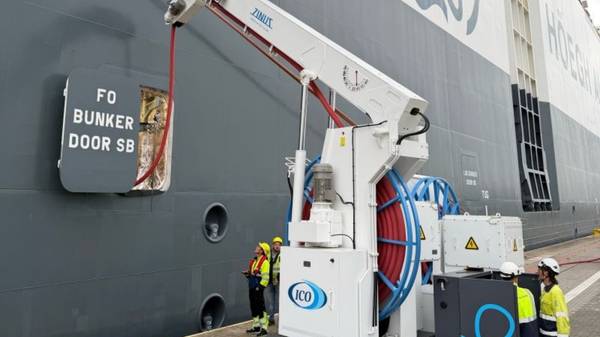
Höegh Autoliners vessel connects to shore power for the first time in Europe
Höegh Starlight used 11 kV shore power in Zeebrugge, allowing it to switch off its auxiliary engines while alongside. |
|
|
|
||
|
Chinese shipbuilder ROC signs deal for up to eight methanol-ready CSOVs
Contract signed with European shipowner for vessels designed for offshore wind farm maintenance work. |
|
|
|
||
|
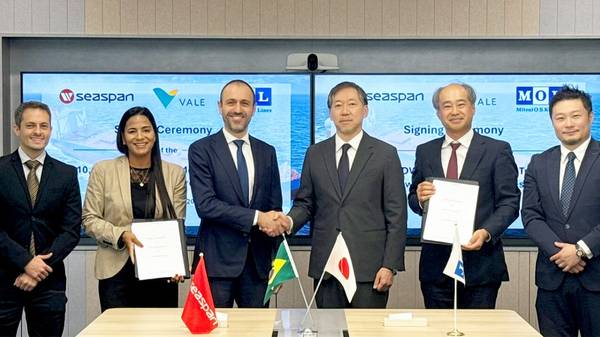
MOL and Vale sign 25-year deal for tri-fuel ore carriers
New vessels will be able to run on ethanol, methanol or heavy fuel oil, offering fuel flexibility. |
|
|
|
||

|
ScanOcean appoints Lars Malmbratt as senior commercial manager
Swedish firm strengthens commercial team with experienced industry executive based in Gothenburg. |
|
|
|
||
|
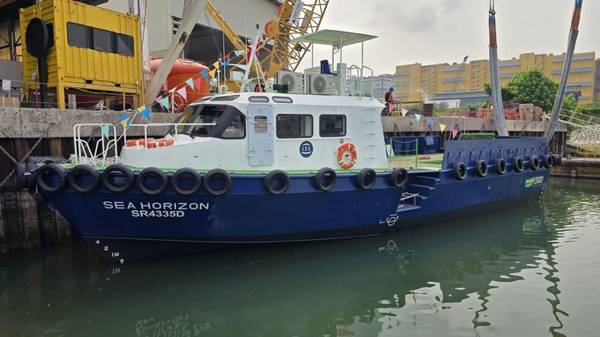
Pinnacle Marine launches second B100-compatible harbour craft for Les Star
Sea Horizon joins Singapore’s harbour craft fleet. |
|
|
|
||
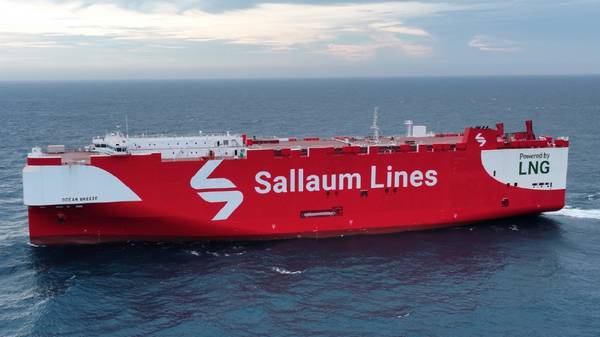
|
Sallaum Lines orders LNG-fuelled, ammonia-ready PCTCs from Chinese yards
Operator signs shipbuilding agreements for new generation of 8,600-CEU vessels, taking its newbuild investment past $1bn. |
|
|
|
||
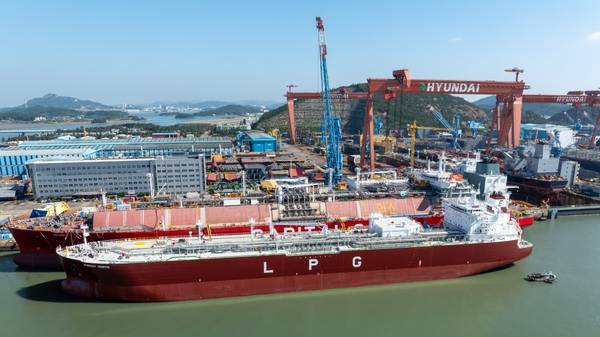
|
Nakilat takes delivery of dual-fuel carrier in South Korea
Ammonia-ready design positions vessel to play key role in future low-carbon energy supply chains, says Qatari firm. |
|
|
|
||
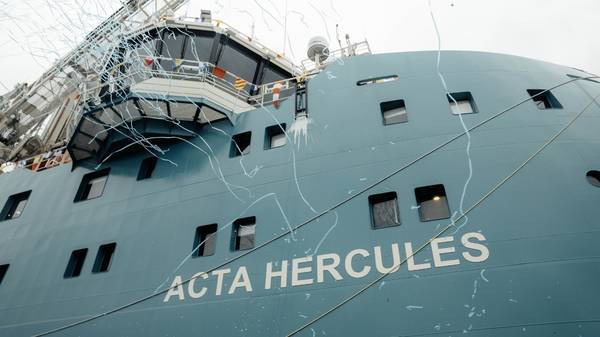
|
Acta Marine christens methanol dual-fuel vessel Acta Hercules in IJmuiden
Dutch operator marks the christening of its second newbuild CSOV. |
|
|
|
||
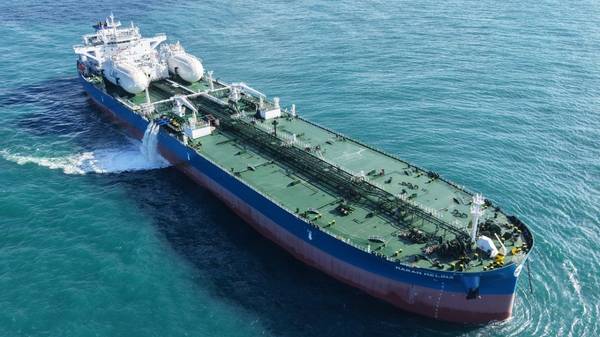
|
Angelicoussis Group takes delivery of fifth dual-fuel Suezmax tanker
Maran Tankers Management adds the 155,500-DWT Maran Melina to its fleet. |
|
|
|
||
| Nuclear-powered LNG carriers cost more upfront but cut lifetime fuel bills, ABS-backed study finds [News & Insights] |
| Electric and hybrid ferries could cut Sea of Marmara emissions by 63%, IMO study finds [News & Insights] |
| Electric and hybrid ferries could cut Sea of Marmara emissions by 63%, IMO study finds [News & Insights] |
| Batumi Sea Port officials study decarbonisation practices in Hamburg [News & Insights] |
| NYK names dual-fuel LNG carrier for Cameron LNG project [News & Insights] |
