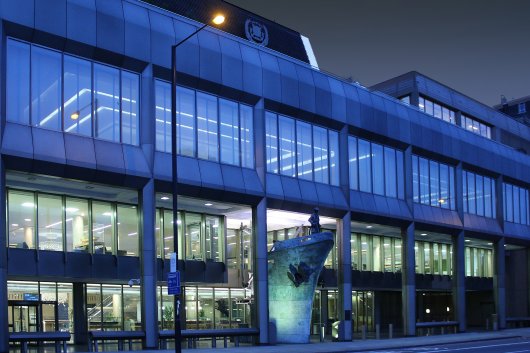
The International Maritime Organization's (IMO) 78th Marine Environment Protection Committee (MEPC) has approved draft amendments to MARPOL Annex VI to designate the Emission Control Area (ECA) for sulphur oxides (SOx) and particulate matter for the Mediterranean Sea, with a view to adoption at MEPC 79 towards the end of the year.
The latest development follows December's 22nd Meeting (COP 22) of the Contracting Parties to the Convention for the Protection of the Marine Environment and the Coastal Region of the Mediterranean (Barcelona Convention), where delegates agreed to adopt the decision on the designation of the Mediterranean SOx ECA, thus clearing the way for submission of a joint and coordinated proposal to last week's MEPC 78.
The Mediterranean Sea is one of the world's busiest shipping lanes. In 2019, it saw around 24 percent of the global fleet of ships and more than 17 percent of worldwide cruises.
Around 507m people in the Mediterranean region live in areas with air pollution at levels exceeding respective national ambient air quality standards, and/or levels which are unhealthy, according to the World Health Organization (WHO). As regards the number of deaths, more than 228,000 people are calculated to have died prematurely from exposure to air pollution in 2016, a State of the Environment and Development in the Mediterranean (SoED) report states.
Experience with ECAs implemented in Europe, North America and the US Caribbean area have already demonstrated local air quality improvements.
Work is also set to continue to further investigate nitrogen oxide (NOx) emissions for the future implementation of a combined SOx and NOx ECA in the Mediterranean.
The Med SOx ECA could come into force in January 2025, lowering the maximum sulphur content of marine fuel to 0.1 percent from the current global limit — implemented in January 2020 — of 0.5 percent.
Zero 2050 GHG target
Discussions on the revision of the existing IMO GHG target of 50 percent by 2050 (set in 2018) also took place during MEPC 78, with a general acceptance amongst member states that the shipping industry must achieve net zero or absolute zero GHGs by 2050 at the latest. Notably, there was support for a 50 percent reduction by 2030, which Dr Sian Prior, Lead Advisor to the Clean Arctic Alliance, contends is needed if we are to reach a trajectory that is in line with the Paris Agreement's goal of maintaining global heating below 1.5°C.
However, despite improved GHG ambitions, NGO Seas At Risk argues that total decarbonization of the maritime industry should instead be reached by 2040. The nonprofit commented: "States are now talking about ending ship climate emissions by 2050, but years of inaction mean that target is no longer good enough. A failure to act earlier means the shipping industry has already burnt a large part of its 1.5°C carbon budget. Talk of enhanced ambition is welcome but having failed to act earlier, the shipping industry must now halve its emissions by 2030 and decarbonise entirely by 2040, not 2050, to keep global heating below 1.5°C."
The Clean Arctic Alliance, which is made up of 20 NGOs, expressed "dismay over the IMO's failure to make progress" at MEPC 78. The polar coalition is demanding that the maritime sector raises the Carbon Intensity Indicator (CII) requirements to a 7 percent annual improvement in carbon intensity — applied to all ships — in order to keep shipping on a 1.5°C pathway.
It is also supporting deep mandatory cuts in emissions from ships operating in and near the Arctic to protect the region from "catastrophic climate impacts".
Investment and R&D fund
Meanwhile John Butler, President & CEO of the World Shipping Council, urged authorities to play a more important role in supporting the transition to zero emissions. He noted: "Container and vehicle carriers are already investing in the development of zero GHG technologies and are committed to enabling the industry's transition to zero. Governments need to take decisive action now to provide clear regulatory structures and market signals that drive investment and support ambitious front runners."
Also on the issue of zero-carbon investment, Guy Platten, Secretary General of the International Chamber of Shipping (ICS), was especially critical of the IMO's rejection of a proposed research and development fund at MEPC 78.
"By refusing to take forward the shipping industry's proposed research and development fund, the IMO has wasted its opportunity to kick[-]start a rapid transition to zero-carbon technologies which will be vital if we are to decarbonise completely by 2050. Despite the support of many IMO States, we have been frustrated by short-sighted political manoeuvring which has led to the proposal in effect being killed. The signal this sends means that the financial risk associated with green investment will remain high, slowing down efforts to switch to zero-carbon fuels as soon as possible," Platten remarked.
|
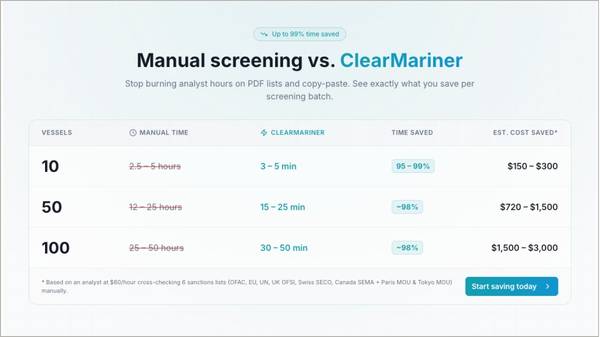
ClearMariner expands maritime sanctions screening with ESG, emissions and API support
Online service now combines sanctions checks with voyage CO₂, CII, EU ETS and FuelEU Maritime estimates. |
|
|
|
||

|
Flex Commodities adds Long Jing Xin to Singapore marine fuels team
Company appoints associate for marine fuels as part of plan for regional expansion. |
|
|
|
||
|
CMA CGM recruiting risk manager to oversee oil, gas and CO₂ exposure in energy and bunkering unit
Container line seeks senior hire for hedging, stress testing and fuel purchasing performance oversight. |
|
|
|
||
|
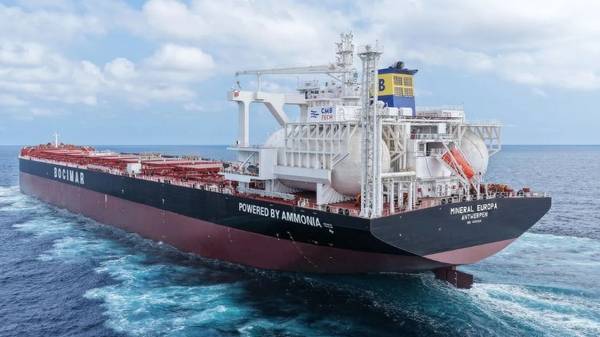
CMB.Tech's Mineral Europa starts maiden voyage as first ammonia-powered dry bulk vessel
Ship is bound for Australia, with 21 ammonia-powered vessels due to join its fleet by 2029. |
|
|
|
||
|
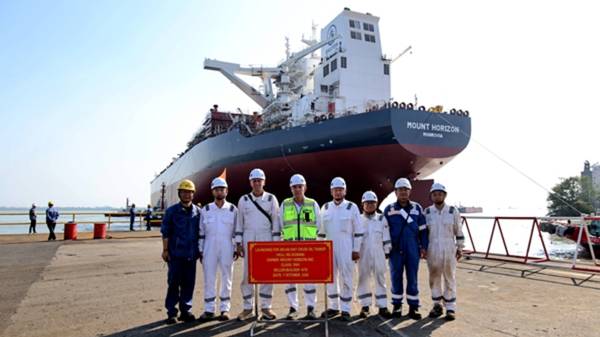
New Times Shipbuilding launches 299,500-DWT LNG dual-fuel crude oil tanker
Sixth vessel in series launched in Jiangsu province, China. |
|
|
|
||
|
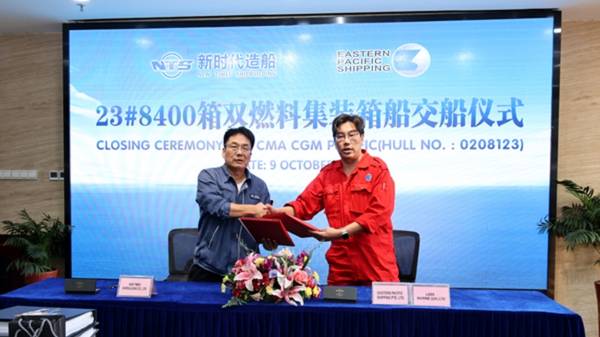
LNG dual-fuel boxship handed over to Eastern Pacific Shipping
Closing ceremony held for 8,400-TEU vessel in Jiangsu province. |
|
|
|
||
|
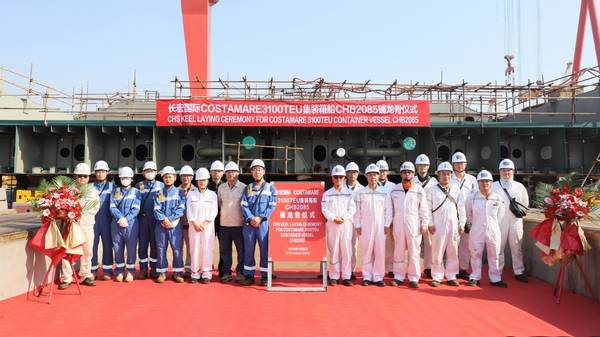
Changhong International lays keel of third 3,100-TEU boxship for Costamare Shipping
Feeder vessel to feature scrubber system, supporting the use of high-sulphur fuel oil. |
|
|
|
||
|
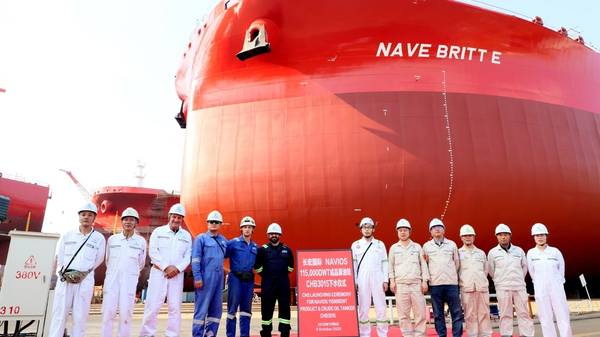
Changhong International launches fifth 115,000-tonne product tanker for Navios
Vessel is designed for future methanol or LNG use and includes provision for medium-voltage shore power. |
|
|
|
||
|
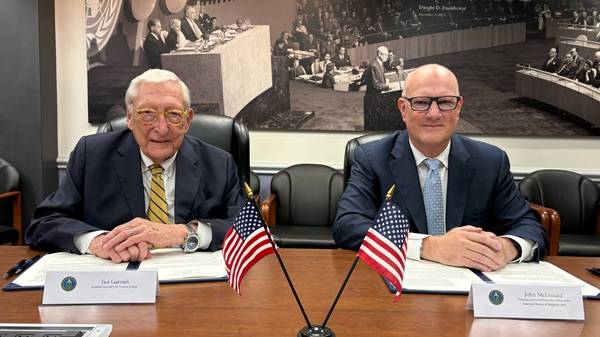
ABS and US Department of Energy sign MoU on maritime nuclear applications
Agreement covers floating nuclear power, nuclear-powered vessels and the port and shipyard infrastructure needed to support them. |
|
|
|
||
|
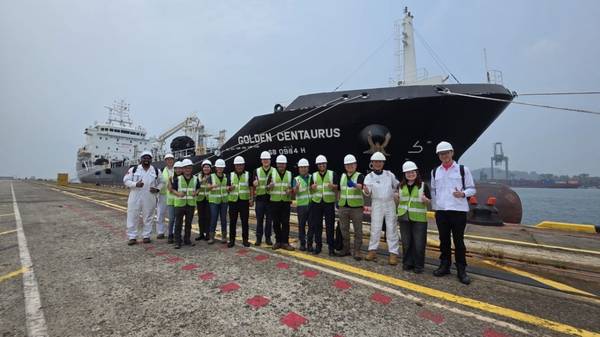
Singapore safety council inspects methanol bunker tanker Golden Centaurus
NMSSC members 'encouraged' by integration of structural and operational safety into newly commissioned IMO Type II vessel. |
|
|
|
||
| Delta Energy launches carbon credit desk for bunkers and cargoes [News & Insights] |
| Gasum commits to making biogas from ship wastewater [News & Insights] |
| GoodFuels and Itochu sign APAC biofuel accord [News & Insights] |
| Wind-assisted propulsion 'no longer just a concept', ICS panel says [News & Insights] |
| Electric and hybrid ferries could cut Sea of Marmara emissions by 63%, IMO study finds [News & Insights] |
| Why batteries still cannot power ships across oceans [News & Insights] |
| NYK shares two years of ammonia-fuelled tugboat data with IMO [News & Insights] |
| IMO and EMSA gather maritime experts to address seafarer training for alternative fuels [News & Insights] |