
 |
Belgium's Federal Public Service Mobility and Transport (FPS Mobility), gas shipping company Exmar and classification society Lloyd's Register have contributed to the approval of safety guidelines for ammonia as a fuel on IGC ships at the 111th session of the International Maritime Organization's Maritime Safety Committee (MSC 111).
The guidelines were developed through collaboration between the three organisations, with the Directorate-General Shipping of FPS Mobility taking the lead role at the IMO in drafting the framework. According to the parties involved, the guidelines draw on Exmar's and Lloyd's Register's experience in mid-size gas carrier shipbuilding, as well as operational knowledge accumulated over more than four decades.
Nathalie Deleuze, FPS Mobility's maritime expert in alternative fuels, commented: "As a public authority, we want to facilitate the energy transition by ensuring that an appropriate regulatory framework is in place in good time. Thanks to close cooperation with the industry, this framework is also tailored to the realities on the ground."
Celine Audenaerdt, head of environmental and technical affairs at KBRV, said: "Through intensive collaboration and the combination of strong in-house competence and hands-on experience, the partners have succeeded in developing robust and practical safety guidelines."
Liam Blackmore, global head of technology adoption and integration at Lloyd's Register, remarked: "The approval of these guidelines provides a clear signal that ammonia is moving from concept to a fuel with an emerging international safety framework. It demonstrates how close collaboration between industry, flag administrations and technical organisations can accelerate the safe adoption of new fuels at scale. Being part of this collaboration reinforces our role as a trusted advisor helping to turn ambition into practical, scalable solutions for the maritime energy transition."
Kristof Coppé, director fleet operations and technical business development at Exmar, stated: "Drawing on more than four decades of operational experience and the challenges encountered along the way, we jointly developed these guidelines through a strong partnership. We would like to thank the teams at FPS Mobility and Lloyd's Register for their excellent cooperation and valuable contribution throughout the process."
The IMO had previously adopted interim guidelines for ammonia as a marine fuel to support early adopters and the first vessels designed to operate on the fuel. The newly approved guidelines are intended to support the wider deployment of ammonia-fuelled vessels once the first such ships enter service, with experience gained from those operations expected to feed into the further development of the international regulatory framework.
Ammonia is considered by parts of the shipping industry to have potential as a zero-carbon marine fuel, given that it contains no carbon. However, its toxicity presents safety challenges that the new guidelines are designed to address within a controlled regulatory environment.
|
World Fuel seeks marine fuel sales executive in Singapore
Role requires more than five years' experience in bunkering, trading, energy or commodities. |
|
|
|
||
|
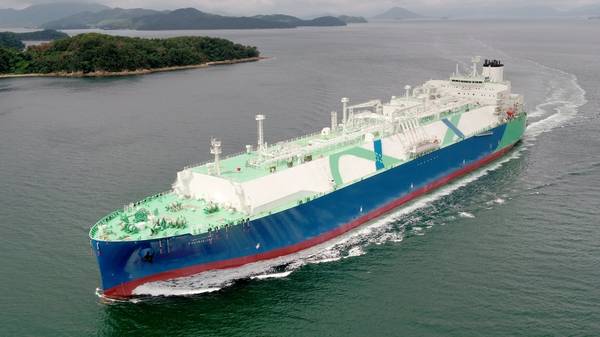
MISC names first of three new LNG carriers for QatarEnergy charter deal
Th'ailib, chartered to QatarEnergy for 15 years, extends MISC's long-term LNG fleet partnership with the energy producer. |
|
|
|
||
|
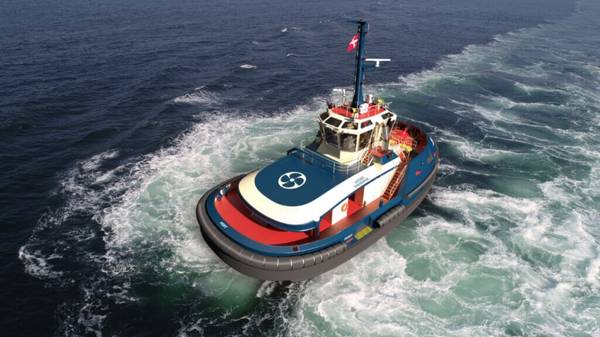
AYK Energy to supply batteries for Kongsberg Maritime’s electric Svitzer tugs
Battery maker AYK Energy expands its workboat portfolio with a deal to power four fully electric Svitzer TRAnsverse tugs. |
|
|
|
||
|
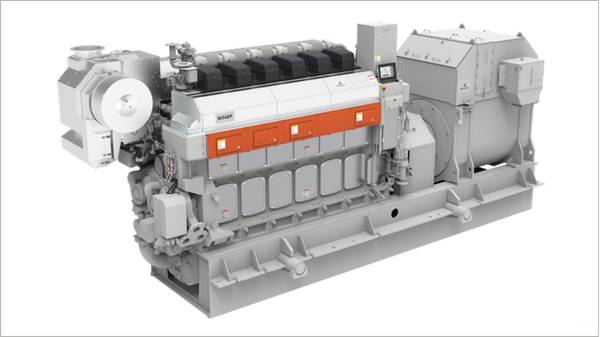
Wärtsilä to supply dual-fuel engines for 12 CMA CGM container ships
Wärtsilä will deliver 36 LNG dual-fuel engines for a dozen new 18,000-TEU container vessels being built for CMA CGM. |
|
|
|
||
|
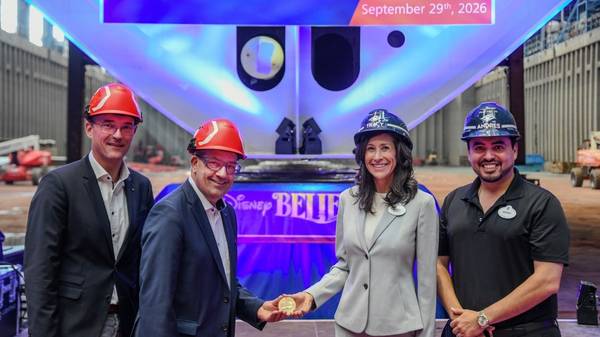
Keel-laying ceremony held for LNG-powered Disney Believe at Meyer Werft
Construction starts on second gigablock of Disney Believe, the fourth vessel in Disney Cruise Line’s Wish class. |
|
|
|
||
|
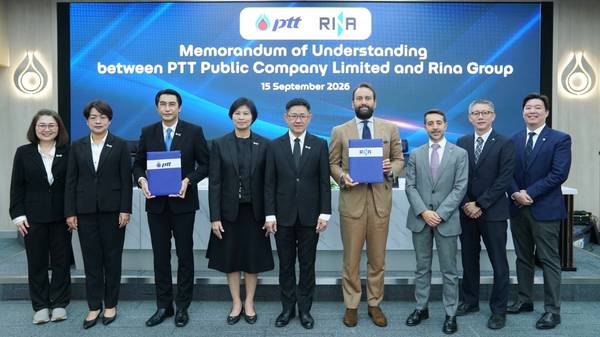
RINA and Thailand’s PTT sign MoUs to collaborate on decarbonisation technologies
Agreements establish a research and knowledge-sharing framework covering alternative fuels, hydrogen readiness and vessel electrification across the energy and maritime sectors. |
|
|
|
||
|
IBIA to host ethanol marine fuel workshop in New York
Limited-capacity session will examine ethanol’s commercial, technical and regulatory prospects as a shipping fuel. |
|
|
|
||

|
Corvus Energy’s Blue Whale NxtGen battery system gains DNV type approval
DNV approval confirms the safety and performance of Corvus Energy’s large-scale battery system for ferries, cruise ships and offshore vessels. |
|
|
|
||
|
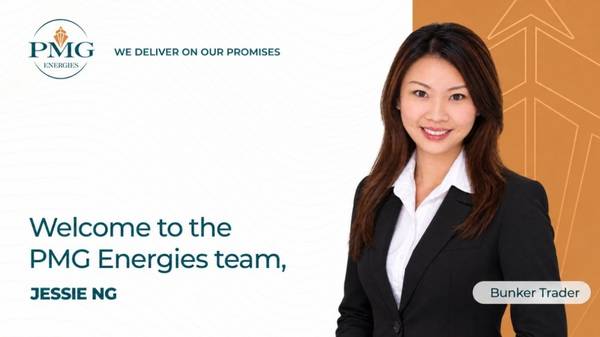
PMG Energies appoints Jessie Ng as bunker trader in Singapore
Bunker firm adds experienced trader to Singapore team. |
|
|
|
||
|
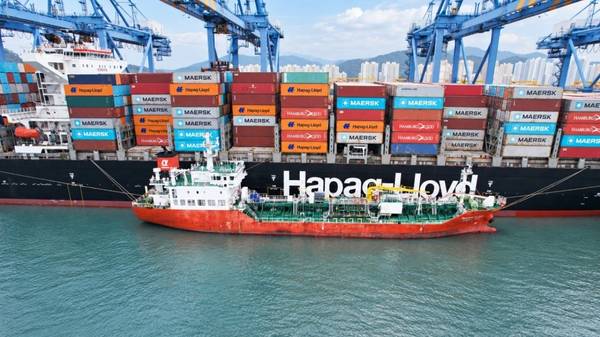
Hapag-Lloyd completes simultaneous-operations biomethanol bunkering in Busan
Container line bunkers ISCC EU-certified biomethanol from Goldwind during SIMOPS, advancing its 2024 supply agreement. |
|
|
|
||
| IBIA to host ethanol marine fuel workshop in New York [News & Insights] |
| Wind-assisted propulsion 'no longer just a concept', ICS panel says [News & Insights] |
| Electric and hybrid ferries could cut Sea of Marmara emissions by 63%, IMO study finds [News & Insights] |
| NYK shares two years of ammonia-fuelled tugboat data with IMO [News & Insights] |
| HD Hyundai completes type approval test for new LNG dual-fuel engine [News & Insights] |
