
 |
The Port of Long Beach has established a $1m award for the first oceangoing vessel to bunker methanol on a commercial scale at the California harbour, in a bid to accelerate the adoption of cleaner marine fuels on the US West Coast.
Approved on 26 May by the Long Beach Harbor Commission, the Clean Fuel Bunkering Challenge is intended to signal to the global shipping market that demand exists for methanol bunkering infrastructure in North America. Full details of the challenge rules are to be published on the port's website.
Port of Long Beach chief executive Dr Noel Hacegaba said: "We know the shipping industry is considering moving toward adopting methanol marine fuel for some great reasons — they want to reduce greenhouse gas emissions and improve air quality. Today, we're giving them $1 million more reasons to embrace clean fuels. This is about demonstrating that we're serious about creating a North American market for methanol bunkering, and giving the industry an incentive to invest. We're also seeing how rising fuel costs are strengthening the case for energy diversification and greater energy independence."
Long Beach Harbor Commission President Frank Colonna commented: "The Port of Long Beach has been advancing the commercial availability of clean technology and sustainability solutions for decades. This is the most direct and practical lever we can pull to demonstrate the feasibility of bunkering methanol fuel in San Pedro Bay."
The port notes that methanol produces fewer pollutants than conventional marine fuel, with nitrogen oxide emissions reduced by up to 50%, sulphur oxides by 95% and particulate matter by 90%. A number of major global shipping companies have been investing in dual-fuel methanol vessels, some of which already call at Long Beach. However, methanol is not currently available as a bunker fuel at the port, meaning methanol-capable vessels must depart using conventional fuel.
The port estimates that refuelling a vessel with methanol currently costs around $1.5m per call, compared with approximately $1m for conventional fuel. The $1m award is intended to offset that price differential, with the remaining $500,000 earmarked to cover additional costs, including the development of operational and safety procedures, engagement with fuel providers and distributors, and liaison with local permitting agencies.
The challenge forms part of a broader strategy by the port to encourage the uptake of cleaner vessels and marine fuels, informed by discussions with shipping partners. It was also, according to the port, inspired by the commercial availability of methanol at the ports of Shanghai and Singapore — both participants in green shipping corridors with the San Pedro Bay ports.
The Port of Long Beach also intends to update its Green Ship Incentive Programme within the next year to encourage more routine visits by cleaner vessels, which it says could further support the methanol market. Pending revisions include updated scoring and incentive metrics, developed in collaboration with other international ports.
|
IBIA to host ethanol marine fuel workshop in New York
Limited-capacity session will examine ethanol’s commercial, technical and regulatory prospects as a shipping fuel. |
|
|
|
||

|
Corvus Energy’s Blue Whale NxtGen battery system gains DNV type approval
DNV approval confirms the safety and performance of Corvus Energy’s large-scale battery system for ferries, cruise ships and offshore vessels. |
|
|
|
||
|
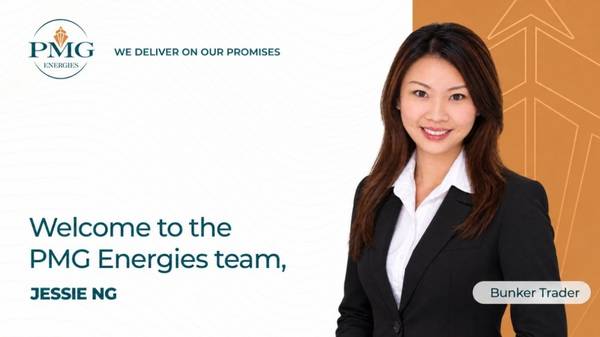
PMG Energies appoints Jessie Ng as bunker trader in Singapore
Bunker firm adds experienced trader to Singapore team. |
|
|
|
||
|
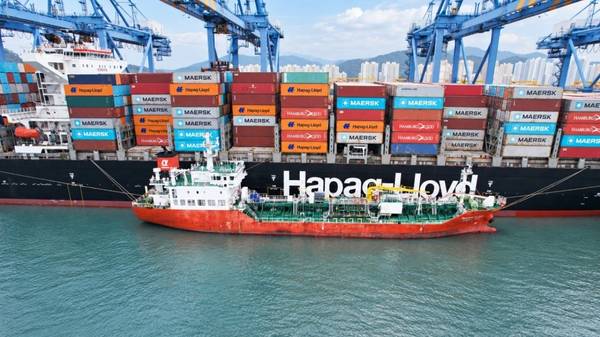
Hapag-Lloyd completes simultaneous-operations biomethanol bunkering in Busan
Container line bunkers ISCC EU-certified biomethanol from Goldwind during SIMOPS, advancing its 2024 supply agreement. |
|
|
|
||
|
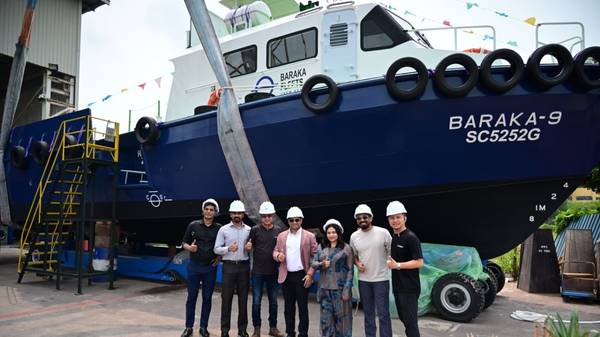
Pinnacle Marine launches B100-compatible harbour craft Baraka-9 for Trans Wave
Singapore shipbuilder adds another biodiesel-ready vessel to a fleet renewal programme aimed at harbour craft decarbonisation. |
|
|
|
||
|
Glander International Bunkering creates European commercial director role, appoints Rune Kongstein
Marine fuels firm is aligning its European operations under a single commercial leadership structure. |
|
|
|
||
|
VPS to run marine fuel management course in the Netherlands this November
Two-day training programme covers fuel quality, handling and decarbonisation regulations. |
|
|
|
||
|
Wind-assisted propulsion 'no longer just a concept', ICS panel says
Shipowners weigh wind power as a practical, low-risk route towards decarbonisation targets. |
|
|
|
||
|
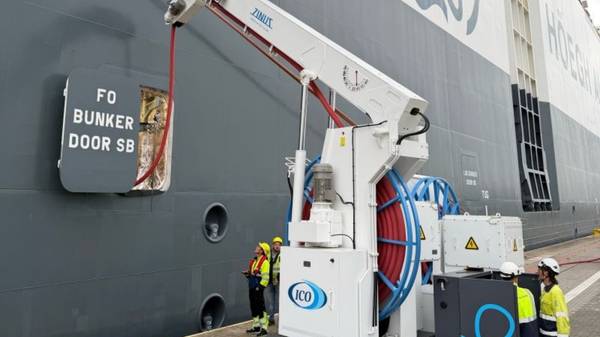
Höegh Autoliners vessel connects to shore power for the first time in Europe
Höegh Starlight used 11 kV shore power in Zeebrugge, allowing it to switch off its auxiliary engines while alongside. |
|
|
|
||
|
Chinese shipbuilder ROC signs deal for up to eight methanol-ready CSOVs
Contract signed with European shipowner for vessels designed for offshore wind farm maintenance work. |
|
|
|
||
| Hapag-Lloyd completes simultaneous-operations biomethanol bunkering in Busan [News & Insights] |
| Höegh Autoliners vessel connects to shore power for the first time in Europe [News & Insights] |
| Chinese shipbuilder ROC signs deal for up to eight methanol-ready CSOVs [News & Insights] |
| MOL and Vale sign 25-year deal for tri-fuel ore carriers [News & Insights] |
| Acta Marine christens methanol dual-fuel vessel Acta Hercules in IJmuiden [News & Insights] |
