Mon 9 Apr 2018, 11:27 GMT

Shipping 'must play its part' in controlling emissions: New Zealand


IMO strategy should be 'ambitious', with measures put in place 'as soon as possible', says Associate Minister of Transport.


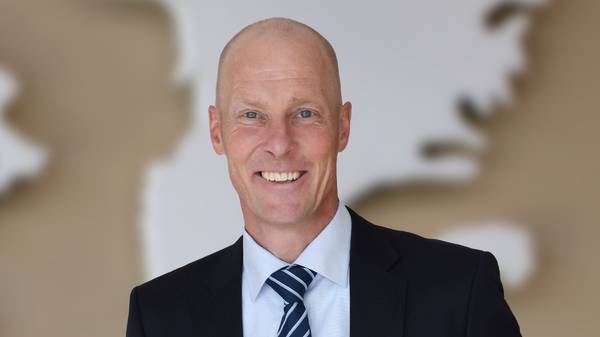
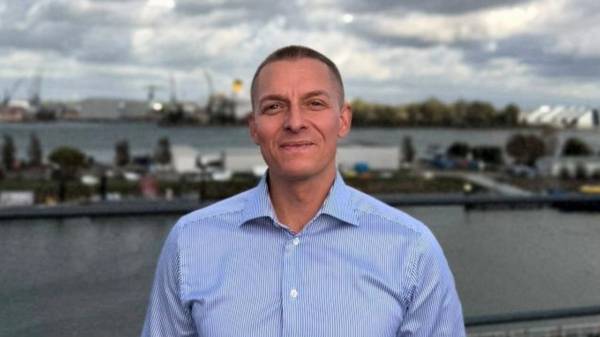
New Zealand's Associate Minister of Transport and Green Party MP, Julie Anne Genter, says IMO measures  should apply equally to all IMO member states and ships.
Image credit: Flickr
New Zealand on Monday released a statement at the International Maritime Organization (IMO) greenhouse gas reduction strategy negotiations in London, stressing that shipping "must play its part" in global effort to control emissions, and urging IMO member states to work towards a "meaningful and effective outcome" in line with the Paris Agreement on Climate Change.

"With the end of the negotiations imminent, New Zealand urges the IMO not to miss this opportunity to adopt a workable and effective strategy to bring rising greenhouse gas emissions from shipping under control," Associate Minister of Transport, Julie Anne Genter, commented today.

Green Party MP Genter also said: "The IMO strategy needs to be ambitious, with appropriate measures implemented as soon as possible, and it needs to apply to all IMO member states and all ships equally - regardless of which state a ship is registered in.

"Halting climate change and achieving the goals of the Paris Agreement requires countries to work together for fair and ambitious outcomes.

"New Zealand was proud to sign the Tony de Brum declaration at the One Planet Summit held in Paris last December, confirming that international shipping must play a part in global climate action.

"Shipping is vital for Pacific countries, including New Zealand, and we all have a part to play ensuring that maritime trade happens in an environmentally friendly way."

Minister for Climate Change, James Shaw, remarked: "The IMO strategy also needs to recognise and protect the interests of Pacific Island countries and territories.

"In particular, this means helping to hold the increase in global average temperature to well below 2 degrees Celsius above preindustrial levels and pursuing efforts to limit the temperature increase to 1.5 degrees.

"A recent report by the OECD's International Transport Forum shows that there are practical steps that can be taken now to reduce shipping emissions and shipping could be almost carbon free by 2035.

"We commend the leadership of Pacific Island states in encouraging ambitious outcomes from the IMO negotiations.

"With very little time remaining before negotiations conclude, New Zealand joins with Pacific Island states in urging all countries to redouble their efforts to ensure the IMO achieves a credible and ambitious result."

Container ship near a port. Ammonia emerges as most feasible alternative fuel for deep-sea shipping in 2050 emissions study  

Research combining expert survey and technical analysis ranks ammonia ahead of hydrogen and methanol.

Cargo vessel at sea. EMSA study examines biodiesel blend spill response as shipping adopts alternative fuels  

Research addresses knowledge gaps on biodiesel-conventional fuel blends as marine pollutants and response measures.

BIMCO ETS BARECON clause 2026 graphic. BIMCO adopts ETS clause for bareboat charters, delays biofuel provision  

BIMCO’s Documentary Committee has approved an emissions trading compliance clause while requesting further work on a biofuel charter provision.

SALEFORM 2025 standard form graphic. BIMCO and Norwegian Shipbrokers’ Association launch SALEFORM 2025 ship sale contract  

Updated agreement addresses banking changes, compliance requirements and environmental regulations affecting vessel transactions.

Everllence H2 test engine. Everllence develops hydrogen test bench for marine engines  

German engine maker upgrades Augsburg facility under HydroPoLEn project backed by federal maritime research funding.

CMA CGM Osmium vessel. CMA CGM names 13,000-teu methanol-fuelled containership in South Korea  

CMA CGM Osmium to operate on Asia–Mexico service as part of the carrier’s decarbonisation strategy.

NorthStandard logo. NorthStandard publishes biofuel guide as marine insurance claims emerge  

White paper addresses quality issues and compliance requirements as biofuel testing volumes surge twelvefold.

Clean Maritime Fuels Platform (CMFP) logo. Maritime fuel platform calls for EU shipping ETS revenues to fund clean fuel deployment  

Clean Maritime Fuels Platform urges earmarking of national emissions trading revenues for renewable fuel infrastructure.

Seatransport 73m SLV Lloyd’s Register grants approval for hybrid nuclear power design for amphibious vessels  

Classification society approves Seatransport’s concept integrating micro modular reactors with diesel-electric systems.

Everllence ME-LGIE engine. Everllence and Vale partner on ethanol-powered marine engine development  

Brazilian mining company to develop dual-fuel ethanol engines based on ME-LGI platform.