
Marine fuel supplier Monjasa has reported that Singapore became its largest supply port by volume in 2024, with deliveries exceeding 1 million tonnes at the world's largest bunkering hub.
The company released its top 10 supply areas for 2024, with Singapore claiming the number one position ahead of Balboa in Panama and Jebel Ali Port in the UAE. Monjasa noted that if the Panama Canal's Atlantic and Pacific operations at Cristóbal and Balboa were combined, the historic waterway would represent its top bunkering location.
The list includes a new entry in Walvis Bay, Namibia, which Monjasa attributes to increased activity levels due to ongoing vessel rerouting south of Africa. The company's complete top 10 comprises Singapore, Balboa, Jebel Ali Port, Cristóbal, Khalifa Port in the UAE, Houston in the US, Lomé in Togo, Walvis Bay, Cartagena in Colombia, and Callao in Peru.
According to Monjasa, the company delivered marine fuels across 788 ports during 2024. The supplier operates a fleet of 35 vessels, split approximately equally between owned and chartered tonnage.
The company highlighted several vessels in its fleet, including Monjasa Master, Monjasa Striker, Monjasa Supplier, Monjasa Ranger, Monjasa Rover, Monjasa Leader, and Zale.
Singapore's position as Monjasa's top supply location reflects the port's status as a major bunkering hub, while the inclusion of Walvis Bay demonstrates how global shipping route changes are affecting fuel supply patterns. The Panama Canal locations continue to represent key bunkering positions for the company's operations.

|
IBT Bunkering & Trading appoints Sales Support Specialist
Björn Hauschild joins from shipyard broker CombiTrade. |
|
|
|
||
|
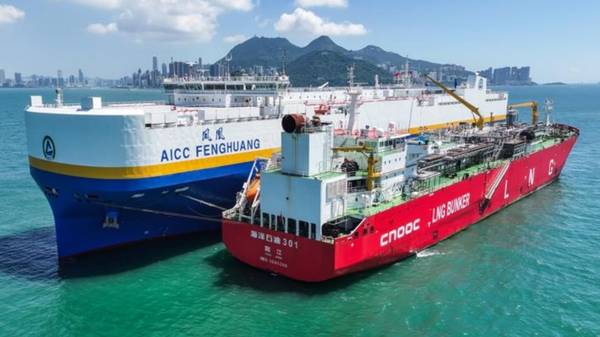
CLPe and CNOOC complete Hong Kong's first LNG bunkering of a pure car and truck carrier
Ship-to-ship operation delivered around 2,600 cbm of LNG to dual-fuel vessel AICC Fenghuang. |
|
|
|
||

|
Mercuria seeks senior sales and account manager for bunker delivery platform
Role can be based either remotely or at one of its offices in London, Geneva, Athens or Las Palmas. |
|
|
|
||
|
Molgas Energy Group appoints Riaan van Kralingen as head of clean fuels
Van Kralingen will oversee the company's liquefied biomethane and EU allowance portfolios, succeeding Caspar Gooren. |
|
|
|
||
|
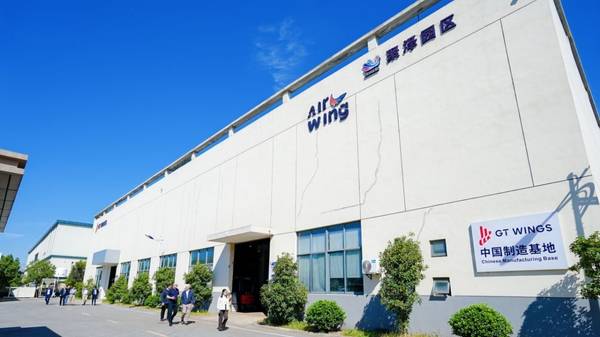
GT Wings launches compact AirWing S Jet Sail for smaller vessels
Wind propulsion developer adds lightweight unit to AirWing range as first customer-ordered AirWing20 units near completion. |
|
|
|
||

|
LR publishes retrofit guidance covering alternative fuels and energy-saving devices in one framework
New Guidance Notes address LNG, methanol, ammonia, hydrogen, wind-assisted propulsion and air lubrication retrofits for existing ships. |
|
|
|
||
|
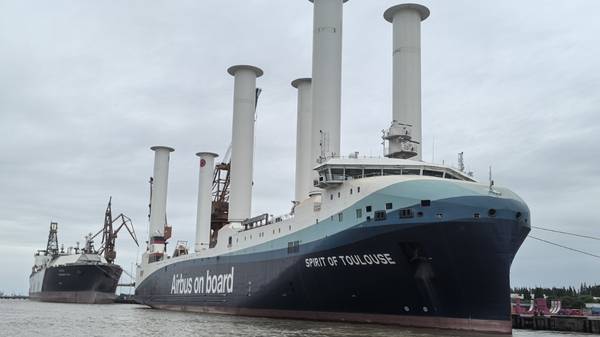
LD Armateurs' Spirit of Toulouse fitted with six Norsepower rotor sails
Six 35m rotor sails installed on the first of three methanol-capable ro-ro ships chartered by Airbus. |
|
|
|
||
|
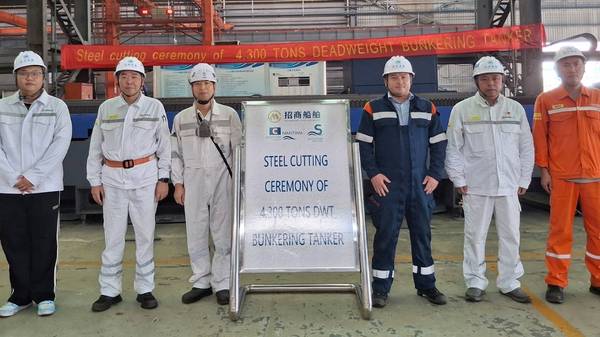
Maritima holds steel-cutting ceremony for Cap Morgiou, first of two Petroineos bunker vessels
Construction starts on bunker vessel able to carry conventional and low-carbon marine fuels, with delivery expected in early 2028. |
|
|
|
||

|
Singapore launches series of measures at SIBCON 2026
MPA announces LNG storage licences, digital bunkering grants and electric harbour craft incentives at 24th conference. |
|
|
|
||

|
VPS outlines marine fuel standards and quality data at SIBCON 2026
VPS's Rahul Choudhuri addresses Singapore's evolving fuel standards and the quality of conventional fuels and biofuels. |
|
|
|
||
| Monjasa launches app offering supply notifications [News & Insights] |
| CLPe and CNOOC complete Hong Kong's first LNG bunkering of a pure car and truck carrier [News & Insights] |
| Axpo completes first LNG bunkering in Valencia, with over half bio-LNG [News & Insights] |
| CMB.Tech's Mineral Europa starts maiden voyage as first ammonia-powered dry bulk vessel [News & Insights] |
| LNG bunkering vessel Kaguya completes 200th ship-to-ship operation in Japan [News & Insights] |
| Peninsula completes first LNG bunkering operation at Sagunto [News & Insights] |

