Tue 11 Apr 2017, 10:53 GMT

Scandlines awards 10-year hybrid ferry contract


Contract includes service and maintenance of the fleets' energy storage systems.


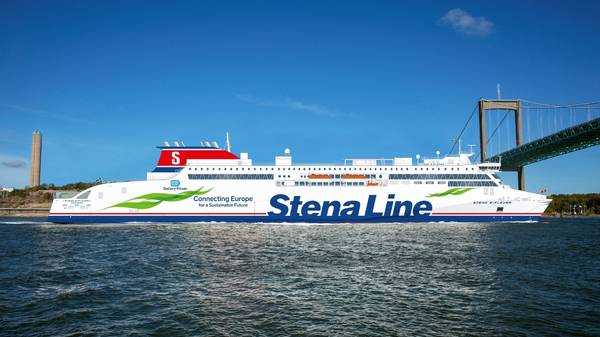
Corvus Energy has been awarded a 10-year, long-term service and maintenance agreement for the entire Scandlines hybrid ferry fleet. The comprehensive multi-year contract includes both traditional service & maintenance of the fleets' energy storage systems, plus Corvus's remote condition-based monitoring service, Watchman.

Scandlines was the first ferry operator to build and operate large roll-on/ roll off passenger (ro-pax) hybrid ferries that combine traditional diesel power with advanced battery power. Scandlines utilizes Corvus's lithium-ion-based energy storage systems throughout the entire fleet to provide the battery power.

"We thank Scandlines for their continued confidence in our products and services as they execute their ambitious environmental strategy," said Ronald Hansen, Global Head of Service & Commissioning for Corvus Energy. "Supported by our highly experienced technical experts, our strong presence in the region and working closely with Scandlines, our advanced services and maintenance solutions will help ensure the Scandlines hybrid ferries operate reliably for many years to come."

"Scandlines is very pleased to continue and expand our long partnership with Corvus Energy. Beginning with Corvus in 2012, their industry leading energy storage technology has become the standard electric battery power solution for all of our hybrid vessels," remarked Fini Hansen, Technical Superintendent of Fleet Management at Scandlines.

On 5th February, Scandlines put their two newest Corvus powered hybrid ferries, the M/V Berlin and M/V Copenhagen, into regular service on their Rostock-Gedser route between Denmark and Germany. Along with the decreased environmental impact, the fuel consumption of the vessels is said to have been reduced to almost one third per crossing per car compared to the previous ferries used on the same route.


CMAL vessel. Corvus Energy wins largest-ever contract for seven electric Scottish ferries  

Battery systems supplier secures record order from Remontowa Shipbuilding for CMAL's Small Vessel Replacement Program.

HiMSEN H32CDF-LA engine classification approval test. HHI-EMD secures type approval for 5.4MW ammonia engine  

Lloyd's Register approves H32CDF-LA dual-fuel engine following three-day testing programme in Korea.

Atticus vessel. Global Fuel Supply acquires first bunker tanker  

Company transitions from chartering vessels to ship ownership with asset to be renamed MV Blue Alliance.

ABB Generations 2025 publication on smartphone. ABB publishes 2025 maritime insights on decarbonisation and digitalization  

Technology firm compiles annual articles exploring energy efficiency, automation, and alternative fuels for the shipping industry.

ClassNK AiP handover ceremony for bulk carrier design. ClassNK grants approval for multi-fuel ready bulk carrier design by Oshima Shipbuilding  

Vessel design accommodates future conversion to ammonia, methanol, or LNG with carbon capture capability.

The Arctic and black carbon graphic. Four countries propose Arctic fuel measure to cut black carbon from shipping  

Proposal to IMO's PPR 13 meeting aims to establish fuel regulations under MARPOL Annex VI.

T&E chart 1. Spain, Norway and Denmark lead Europe's green shipping fuel production, study finds  

Regulatory uncertainty prevents most e-fuel projects from progressing beyond the planning stage, says analysis.

Charles Simon Edwin, Dan-Bunkering. Dan-Bunkering appoints Charles Simon Edwin as operations and compliance manager in Singapore  

Edwin transitions from sourcing role, bringing experience from physical supply operations and bunker trading.

Hamburg Express vessel. Hapag-Lloyd wins ZEMBA's second tender for e-methanol deployment  

Container line to deploy e-methanol on trans-oceanic route from 2027, abating 120,000 tonnes CO₂e.

Nuclear-powered multi-role icebreaker design render. RINA grants approval for Chinese nuclear-powered Arctic icebreaker design  

CSSC's multi-role vessel combines cargo transport and polar tourism with molten salt reactor propulsion.