Carnival Corporation & plc, the world's biggest cruise ferry operator, has today released its
2015 Corporate Sustainability Report detailing the progress made in 2015 against its 2020 sustainability performance goals.
The report's details show the company is on track to meet its goals in the next four years, with sustainability efforts highlighted across its 10 cruise line brands.
In 2015, Carnival announced 10 goals for reducing its environmental footprint, while enhancing the health, safety and security of its guests and crew members, and ensuring sustainable business practices among its brands, business partners and suppliers. As part of the effort to achieve these goals, the company and its 10 global brands have implemented strategic energy reduction and conservation initiatives. The most notable bunker-related progress made against these 10 goals are:
- Equipped 41 percent of fleet with exhaust gas cleaning technology to reduce sulphur compounds and particulate matter from engine exhaust.
- Reduced the company's carbon intensity rate by 2.8 percent, resulting in a 23.4 percent overall carbon dioxide emission reduction relative to the 2005 baseline.
- Improved the company's carbon footprint with order of world's first liquefied natural gas (LNG)-powered cruise ships, as well as the first cruise ship to be powered by an LNG hybrid barge.
"We know it is increasingly important to have sustainable and transparent operations, so we work hard every day to run our company in a sustainable way, and to share those practices broadly, so that our guests can feel confident that they are making a responsible decision when they book a vacation with us," said
Bill Burke, chief maritime officer for Carnival Corporation. "We are committed to providing a safe and comfortable voyage for our guests and crew members as our cruise line brands create great vacations, while at the same time maintaining our deep commitment to protecting the oceans, seas and destinations we visit."
In 2015, Carnival Corporation made progress in its focus on maintaining measured capacity growth with the delivery of more efficient ships via agreements for 15 new vessels for delivery between 2016 and 2020. Four of these will be the first cruise ships to be powered by LNG, both at sea and in port.
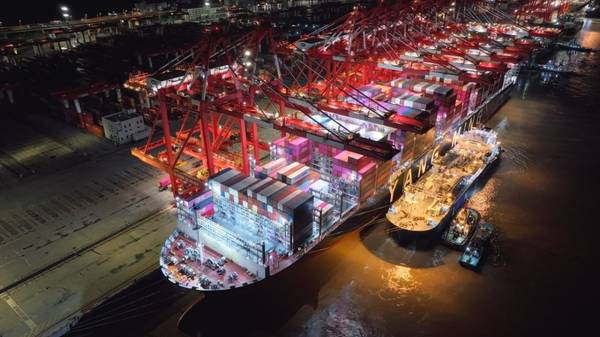
The introduction of LNG is another step Carnival has taken to reduce its carbon footprint. In 2015, the AIDAsol was the first cruise ship in the world to be supplied with power by an LNG hybrid barge while in port.
Carnival is also actively undertaking shipbuilding research and development for new abatement technologies and equipment to improve energy efficiency, including: air lubrication systems using air bubbles to reduce friction between the ship's hull and the water; exhaust gas cleaning systems (EGCS); and alternative fuels like the industry-first use of LNG.
Carnival's annual sustainability reports can be viewed at the following address:
http://phx.corporate-ir.net/phoenix.zhtml?c=140690&p=irol-sustainability_env