Wed 30 Dec 2015, 17:34 GMT

Gunvor sells stake in Novorossiysk Fuel Oil Terminal


Sale to Transneft subsidiary is said to have been given the green light by Russia's Federal Anti-Monopoly Service.


Global commodities trading house Gunvor Group is said to have reached an agreement to sell its 50 percent shareholding in Novorossiysk Fuel Oil Terminal LLC.

Russia's Federal Anti-Monopoly Service (FAS) stated on Monday that it had approved the sale to Chernomortransneft, a subsidiary of the state-owned transport monopoly Transneft.

Moscow-based non-governmental news agency Interfax cited Transneft spokesman, Igor Dyomin, as confirming that the company would be acquiring Gunvor's stake in the Black Sea fuel oil facility.

Financial details of the agreement were not disclosed.

Gunvor, one of the world's leading oil trading houses, has been reducing its presence in the Russian market since the company's co-founder, Gennady Timchenko, was hit with U.S. sanctions last year. Timchenko was reported to have sold his 43 percent stake in Gunvor to co-founder Torbjörn Törnqvist the day before his name was placed on the first U.S. sanctions list on March 20, 2014.

Novorossiysk Fuel Oil Terminal has a storage capacity of 119,000 cubic metres and a throughput of 5 million tonnes a year. It began operating in 2012.

Novorossiysk Commercial Sea Port, PJSC (NCSP/NMTP Group) controls the other 50 percent stake in the terminal. The company owns bunker supplier JSC Flot NMTP - also known as PJSC Fleet of NCSP, which is the largest private towing and tugboat company in Russia, offering a range of fleet services including tug and towing services, bunkering, water and environmental protection services.

Ust-Luga

Earlier this year, Gunvor also sold a 74 percent stake in OJSC Ust-Luga Oil, the operator of Ust-Luga Oil Products Terminal, to a company controlled by Andrei Bokarev, an investor in coal mining, transportation and industrial processes.

Gunvor purchased the Ust-Luga terminal in 2008. The facility, located on the Baltic Sea, has a capacity of more than 30 million metric tonnes per annum - including 20 million tonnes of dark oil products and 10 million tonnes of light products - and is considered to be the largest rail-to-ship terminal for petroleum products in the world.

Despite Gunvor's decision to divest, the port looks set to continue to play a key role in the transportation of oil products as it is one of the few Russian ports capable of providing access to large deadweight vessels to export processed oil products, thus removing the dependence on foreign export terminals.

World Fuel logo. World Fuel seeks marine lube operations and sales executive in Greece  

US firm is recruiting for a commercial role focused on marine lubricants, based out of its Glyfada office.

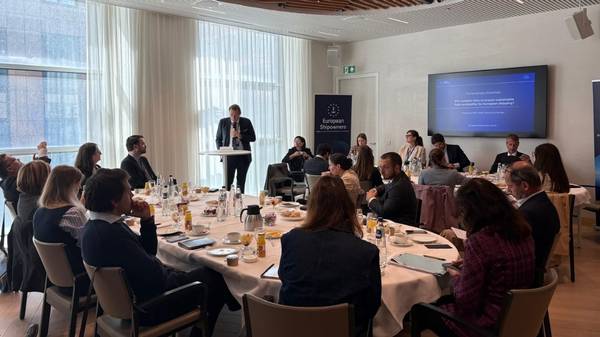
ECSA Parliamentary Breakfast event. European shipowners call for fuel supplier mandates and ETS revenue investment ahead of policy revision  

Industry body urges EU policymakers to redirect carbon revenues into clean marine fuel production.

Coral Energy vessel at Klaipeda LNG terminal. Gasum secures LNG terminal capacity at Klaipėda through 2040  

Nordic energy company locks in long-term LNG supply access to serve northwestern European markets.

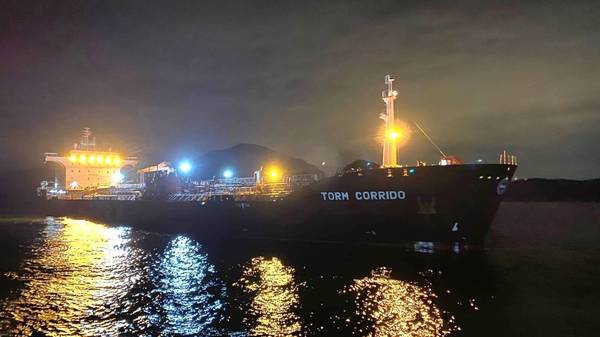
Torm Corrido vessel. Chimbusco Pan Nation extends B100 biodiesel bunkering to oil tankers as quarterly volumes triple  

Hong Kong bunker supplier CPN says Q2 B100 deliveries have exceeded Q1 totals by more than 300%.

TMD Energy Limited logo. TMD Energy extends bioenergy MOA with Double Corporate by two years  

Malaysian bunkering firm seeks to advance waste-to-energy marine fuel collaboration in EU and Asian markets.

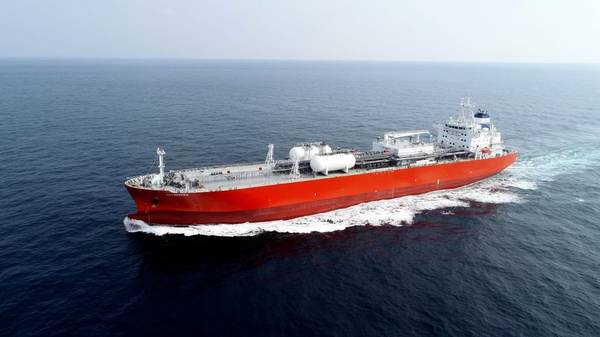
Antwerpen vessel. Exmar takes delivery of world’s first dual-fuel ammonia oceangoing vessel  

Belgian shipowner Exmar has taken delivery of what it says is the first oceangoing vessel powered by a dual-fuel ammonia engine.

Seaglider vessel render. MOL and JAL partner with Lloyd’s Register and REGENT to advance Seaglider certification in Japan  

Four organisations join forces to establish regulatory pathways for electric wing-in-ground craft ahead of a targeted 2030 commercial launch.

Geoff Wagner and Byung-Hun Kwon. ABS and HD Hyundai entities secure battery hybrid approval for 16,000-teu container vessel  

Approval in principle issued for electrical design of ultra-large container ship at Posidonia.

Steel cutting ceremony of vessel with builder's hull no. H1955A. Keel laid for world’s largest LNG carrier at China’s Hudong-Zhonghua shipyard  

Construction begins on a 271,000-cbm QC-Max vessel, the largest LNG carrier ever built.

Mercedes Pinto vessel truck-to-ship (TTS) bunkering. Port of Las Palmas completes first LNG bunkering operation  

Baleària Canarias’ new fast ferry receives LNG via tanker truck in milestone delivery.