Tue 14 Jul 2015, 12:42 GMT

Gunvor sells majority stake in Ust-Luga oil terminal


74 percent stake is sold to company controlled by billionaire investor Andrei Bokarev.


Global commodities trading house, Gunvor Group, has sold a 74 percent stake in OJSC Ust-Luga Oil, the operator of Ust-Luga Oil Products Terminal, to a company controlled by Andrei Bokarev, an investor in coal mining, transportation and industrial processes.

In a statement, Gunvor confirmed that it will retain a 26 percent stake and board positions in the company.

"Management and operational principles will be unchanged, and the terminal will remain open to serving the entire Russian market," the company said.

Financial details of the transaction were not disclosed.

Torbjörn Törnqvist, CEO of Gunvor Group, remarked: "Having a strong, independent Russian partner will ensure the export terminal continues to provide fair access for the whole of the Russian oil industry."

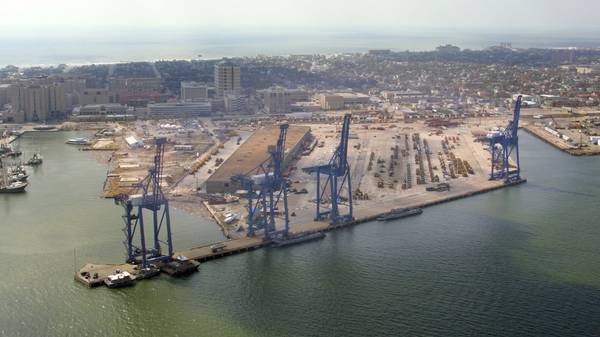
Gunvor managed the construction of the Ust-Luga Oil Products Terminal as a wholly owned greenfield project. The facility, located on the Baltic Sea, has a capacity of more than 30 million metric tonnes per annum - including 20 million tonnes of dark oil products and 10 million tonnes of light products - and is considered to be the largest rail-to-ship terminal for petroleum products in the world.

The facility has been operated by JSC Rosneftbunker, a business unit of Gunvor Group.

Gunvor purchased the terminal in 2008. It began shipping fuel oil in January 2011; the first vessel to load fuel oil from the facility was the product carrier SCF Neva, owned by Sovcomflot, on January 31, 2011.

In May 2013, Rosneftbunker began transporting light oil products. The first train, comprising 3,800 tonnes of diesel fuel spread in 63 tank wagons, arrived on April 18 from the Kirishinefteorgsintez refinery.

Ust-Luga

Situated on the Luga River, approximately 110 kilometres west of St. Petersburg, Ust-Luga is located practically on the border between the Russian Federation and the European Union.

The deep water area of the port (17 metres) together with the 3,700-metre approach canal make Ust-Luga the only Russian port on the Baltic Sea capable of admitting dry-cargo vessels with a deadweight of up to 75,000 tonnes and liquid cargo carriers with a deadweight of up to 120,000 tonnes.

The port looks set to continue to play a key role in the transportation of oil products as it is one of the few Russian ports capable of providing access to large deadweight vessels to export processed oil products, thus removing the dependence on foreign export terminals.


WinGD methanol and ethanol webinar invitation. WinGD to host webinar on methanol- and ethanol-flexible fuel engine technology  

Engine manufacturer will discuss market outlook, regulations and operational experience with alcohol-based marine fuels.

Peninsula graduate programme group photo. Peninsula opens applications for 2026 graduate programmes in marine fuels trading  

Two-year scheme offers positions across six global locations starting in September, combining hands-on experience with structured development.

Collin She, Oilmar DMCC. Oilmar DMCC promotes Collin She to key account manager role  

She will lead strategic customer relationships and drive growth opportunities in Singapore and the wider region.

Areion vessel. Dorian LPG takes delivery of dual-fuel VLGC capable of carrying ammonia  

The 93,000-cbm Areion can run on LPG or fuel oil and transport ammonia cargoes.

FSRU Toscana alongside Green Zeebrugge vessel. RINA awards ISCC EU certification to OLT Offshore LNG Toscana for bio-LNG supply  

Certification enables bio-LNG use in the EU as a renewable fuel under RED II and RED III directives.

World Shipping Council at IMO meeting. WSC calls for safe maritime corridor as 20,000 seafarers remain trapped in the Persian Gulf  

Industry body urges IMO member states to establish safe passage and supply access.

Graphic promoting Auramarine webinar titled 'Sustainable Fueling Part 3: Ammonia - next alternative fuel in marine'. Auramarine to host webinar on ammonia as marine fuel in April  

Finnish firm will explore ammonia’s role in maritime decarbonisation at its third spring webinar.

Front cover of study by WinGD and Envision Energy titled 'Renewable Fuel Economics: An OPEX illustration based on current costs'. Green ammonia could reach cost parity with VLSFO and LNG by 2050, study finds  

WinGD and Envision Energy study projects green ammonia operational costs competitive with conventional marine fuels.

Elenger Marine's LNG bunkering vessel Optimus alongside Brittany Ferries’ Saint-Malo. Bureau Veritas verifies methane emissions on Brittany Ferries’ LNG vessels  

Verification enables ferry operator to report measured methane slip instead of regulatory default values.

Map showing existing and planned Emission Control Areas (ECAs). Alliance calls for urgent black carbon action as new Arctic emission control areas take effect  

Canadian Arctic and Norwegian Sea ECAs now in force, with compliance deadline set for March 2027.