Construction of the first of two liquefied natural gas (LNG)-powered, combination container roll-on/roll-off (ConRo) ships for Crowley Maritime Corporation's liner services group reached another important milestone last week, with the installation of three LNG fuel tanks.
The double-walled, stainless steel tanks, which are 110 feet in length and 20.6 feet in diameter, weigh 225 metric tonnes and are able to hold more than enough LNG fuel for two round-trip voyages between the vessel's future ports of call - Jacksonville, Florida, and San Juan, Puerto Rico.
"While we are all excitedly watching these ships take shape, we are particularly proud of the role we, as a company, are playing to bring the most modern, technologically advanced and environmentally friendly ConRo ships in the world to the Jones Act market of Puerto Rico," said
Tom Crowley, company chairman and CEO. "There are no other ships of their kind being built anywhere else in the world today, and they are being constructed right here at home - in the United States of America. Having that shipbuilding capability here is essential to our national defense and an important reason we as a country need the Jones Act to be maintained and strengthened."
The Jones Act is a federal statute that provides for the promotion and maintenance of a strong American merchant marine. It requires that all goods transported by water between U.S. ports be carried on U.S.-flag ships constructed in the United States, owned by U.S. citizens, and crewed by U.S. citizens and U.S. permanent residents.
Crowley's two Jones Act ships, which are to be named
El Coquí and
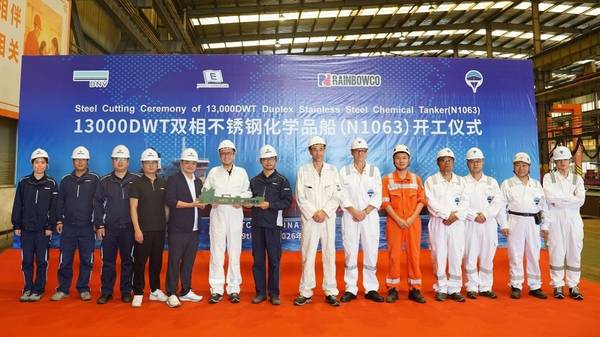
Taíno, are currently under construction at VT Halter Marine, Inc., a subsidiary of VT Systems, Inc. The ceremonial first steel plate cutting was celebrated with a ceremony held at VT Halter in October 2014. El Coquí and Taíno are scheduled for delivery second and fourth quarter 2017 respectively.
"It's very impressive to see these new state-of-the-art Commitment Class ships take shape," said
John Hourihan, senior vice president and general manager, Puerto Rico services. "Seeing those LNG tanks being placed into El Coquí really resonates with me because we are setting a new standard for environmentally responsible shipping."
The Commitment-class ships have been designed to maximize the carriage of 53-foot, 102-inch-wide containers, which offer the most cubic cargo capacity in the trade. The ships will be 219.5 metres long, 32.3 meters wide (beam), have a deep draft of 10 meters, and an approximate deadweight capacity of 26,500 metric tonnes. Cargo capacity will be approximately 2,400 TEUs (20-foot equivalent units), with additional space for nearly 400 vehicles in an enclosed ro/ro garage. The main propulsion and auxiliary engines will be fuelled by environmentally friendly LNG. The ship design is provided by Wartsila Ship Design in conjunction with Crowley subsidiary Jensen Maritime, a Seattle-based naval architecture and marine engineering firm.
"These new ships will offer customers fast ocean transit times, while accommodating the company's diverse equipment selection and cargo handling flexibility - benefits customers have enjoyed for over 60 years," said Hourihan.
Designing, building and operating LNG-powered vessels is very much in line with Crowley's overall 'EcoStewardship' positioning and growth strategy. The company formed an LNG services group last year to bring together the company's resources to provide LNG vessel design and construction management; transportation; product sales and distribution, and full-scale, project management solutions.
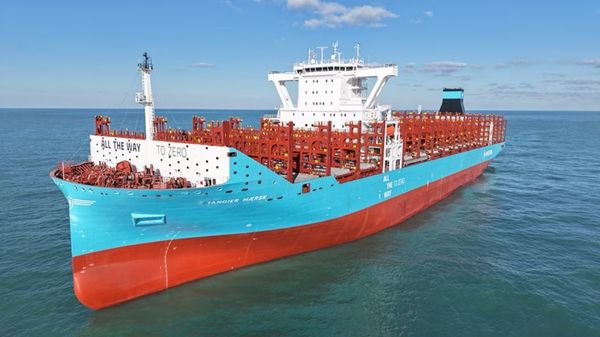
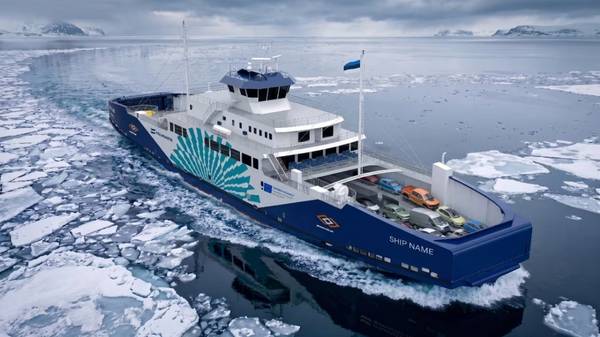
Image: Crowley LNG-powered combination container roll-on/roll-off (ConRo) ship.