Tue 7 Jul 2015, 14:13 GMT

Asia's first LNG-powered tug delivered


Vessel is the first of two tugs for China National Offshore Oil Corporation (CNOOC).


China National Offshore Oil Corporation (CNOOC) has taken delivery of Asia's first tugboat, Hai Yang Shi You 525, designed to operate solely on liquefied natural gas (LNG) as a marine fuel.

Hai Yang Shi You 525, the first of two tugs under contract to be built by Zhenjiang Shipyard for CNOOC, features a propulsion package based on twin Rolls-Royce Bergen C26:33L9PG engines and a pair of Rolls-Royce US 205 CP azimuth thrusters, which are designed to ensure the tugs have rapid manoeuvring and strong bollard pull capabilities.

Richard Wang, Rolls-Royce, Senior Vice President - Commercial Marine, said: "We are proud to be powering Asia's first gas-powered tug so shortly after delivering Borgøy, the world's first LNG-powered tug, to Norwegian owner Buksèr og Berging.

"This order marks a new era for tugboat propulsion technology in China. As its shipbuilding industry shifts focus from standard designs to more sophisticated tonnage, more owners and operators will see the benefit of using cleaner, more efficient fuelling solutions for their vessels."

John Knudsen, Rolls-Royce, President - Commercial Marine, remarked: "We congratulate CNOOC and the Zhenjiang shipyard on the completion of Asia's first gas-powered tug. China is one of the world's largest importers of natural gas and already has the LNG infrastructure in place. This is a pioneering project in Asia and its success has been dependent on the excellent cooperation between CNOOC, Shanghai Bestway Engineering, Zhenjiang Shipyard and Rolls-Royce."

The decision by CNOOC to operate on LNG follows the Chinese government's 2011 plan to strengthen its maritime base with the manufacture of high-end, ecologically-efficient ships and technology.

According to Rolls-Royce, the Bergen C26:33 gas engines reduce CO2 emissions by 25 percent and NOx emissions by up to 90 percent. Oxides of sulphur and particulate are also removed, minimising emissions along coasts and inland waterways.

Image: Hai Yang Shi You 525 vessel


Flag of Brazil. Petrobras resumes bunkering operations at Rio Grande Terminal after power restoration  

Brazilian supplier restarts marine fuel supply after completing an inspection following an electricity outage.

Stena E-Flexer vessel render. Stena RoRo orders battery-ready E-Flexer 2.0 ferries from Chinese yard  

Vessels include diesel engines capable of running on biodiesel and are methanol-ready.

BW Gemini vessel. Nord Gas Solutions to supply cargo and fuel systems for eight BW LPG VLGCs  

Gas-handling systems specialist awarded contract for new 90,000-cbm vessels.

Kingston Trader vessel. TFG Marine fits mass flow meter to Jamaica-bound bunker barge  

Kingston Trader becomes the first Caribbean bunkering vessel with mass flow metering as TFG Marine’s fleet coverage nears 90%.

Sebastian Vasquez and Camilo Angulo Ferrand, Monjasa. Monjasa announces full-chain marine fuel operations in Cartagena  

Monjasa says it now covers the entire marine fuel supply chain in Colombia, from oil wells to ship-side deliveries.

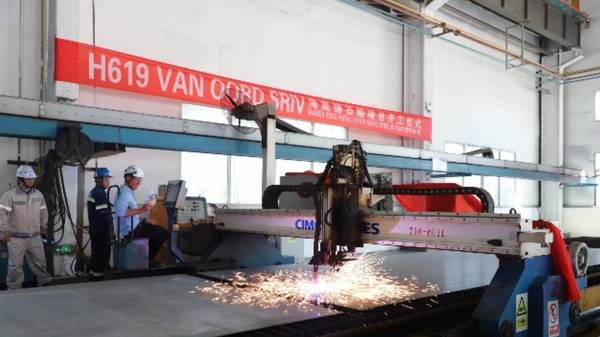
Steel-cutting ceremony for vessel with builder's hull no. H619. Ceremonies held for Van Oord’s methanol-hybrid rock installation vessels  

Two ships advance through parallel construction at China’s CIMC Raffles shipyard.

WK NatPower and AREL MoU signing. Wah Kwong NatPower signs MoU to explore Hong Kong marine electrification  

Venture will examine shore power, vessel charging and electric vessel deployment around Aberdeen’s waterfront.

Vard 4 39 design render. Dong Fang Offshore orders CSOV with battery-hybrid propulsion  

Vard secures fifth newbuild contract from Taiwanese firm, with delivery scheduled for 2028.

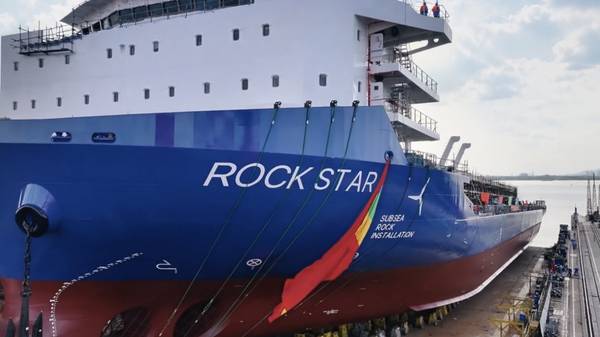
Rock Star vessel. CSL and OWL launch first subsea rock installation vessel for offshore wind  

MV Rock Star can run on MGO and methanol and is designed to support scour protection and cable burial for offshore wind projects.

François Michel and Andy McKeran. Lloyd’s Register study backs 200,000-cbm LNG carriers for fleet renewal  

Analysis finds larger LNG carriers could cut transport costs while retaining access to most major terminals.