The County Administrative Board in Västra Götaland has granted
Swedegas and
Vopak LNG Holding a permit under the Environmental Code to develop a liquefied natural gas (LNG) terminal at Gothenburg's Energy Port.
Once completed, the facility will be capable of supplying shipping, industry and heavy transport with gas as fuel as they make the switch from oil.
"We are currently in the process of clearing the area at the port and having secured the environmental permit we can now move into the next development stage of the project," said
Lars Gustafsson, President of Swedegas.
The permit comes into effect immediately and covers LNG storage of up to 33,000 cubic metres and the handling of up to 500,000 tonnes of LNG each year.
"It is gratifying to know that we had the entire environmental impact assessment approved. We have met with considerable interest and involvement from all parties concerned," commented Gustafsson.
The LNG will arrive at the Port of Gothenburg by sea. It will then be discharged at the quayside and transferred to road tankers or rail trucks for onward distribution, mainly to industrial facilities throughout the country, Swedegas and the Port of Gothenburg explained in a joint statement.
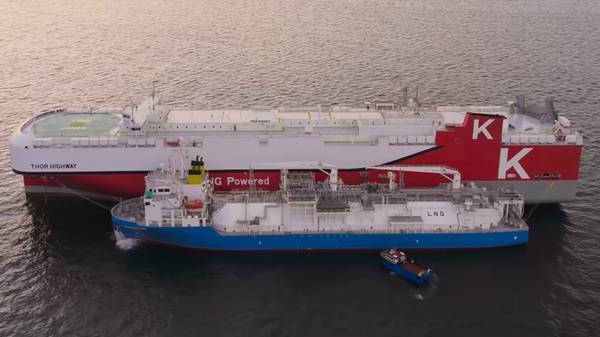
"It will also be possible for ships to bunker LNG as fuel. In time, the terminal will have the capacity to supply the existing gas grid with gas," the statement added.
The LNG terminal is to be constructed in collaboration with the Port of Gothenburg, which is investing in the development of its port infrastructure.
The Gothenburg facility is also part of a project being run together with the
Port of Rotterdam and
Gasunie to create an efficient LNG infrastructure between Sweden and the Netherlands. The common project,
LNG Rotterdam Gothenburg, is co-financed by the European Union's
TEN-T programme.
"There are considerable environmental benefits to be gained from using LNG in shipping, industry and heavy transport instead of oil-based fuels. Sulphur and particle emissions are reduced to almost zero, nitrogen emissions by 85-90 percent and carbon dioxide emissions by 25 percent," the joint statement concluded.