Tue 29 Apr 2014, 07:26 GMT

Gothenburg LNG project moves to next phase


Demolition activities have commenced to make way for the new LNG terminal in Gothenburg.


At the Port of Gothenburg, construction of the terminal for liquid natural gas (LNG) has moved to the next phase. The City of Gothenburg has approved the detailed plans and demolition activities have now commenced to make way for the LNG facility. A new company that will run the terminal has also been established.

The aim is to be able to offer LNG by 2015 when shipping will need to switch to more eco-friendly fuels when operating in Swedish waters. Industry will also require LNG as it makes the change from oil and coal.

The Swedish gas infrastructure company Swedegas and the Dutch company Vopak have set up a joint company to construct and operate the terminal. The project is being run in collaboration with the Port of Gothenburg, which will invest in the necessary port infrastructure. With effect from 2015, the port authority will reward vessels that use LNG in the form of reduced port charges.

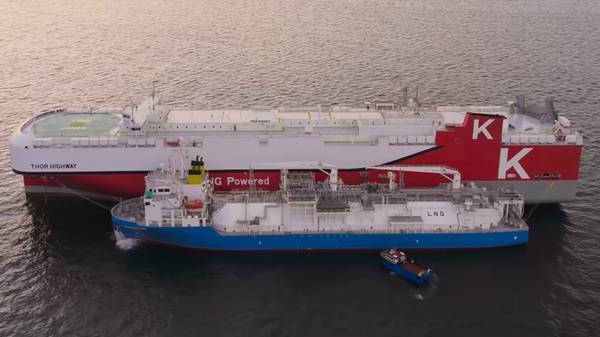
The terminal will be built at Skarvik, which is located at the Port of Gothenburg Energy Port. Tankers carrying LNG will discharge at the quayside and the gas will be stored temporarily at the terminal. It can be used to load LNG bunker vessels and it can be transferred to road tankers or rail trucks for onward distribution throughout the country. The location also provides for the potential future connection to the Swedish gas grid.

The terminal is part of a collaborative venture between Rotterdam and Gothenburg, where the aim is to build up an LNG infrastructure. The EU Commission considers this to be one of the most prioritised infrastructure initiatives in Europe and is supporting the project financially with a grant of EUR 34 million.

There are environmental benefits to be gained from using LNG in shipping and industry, as, in comparison with traditional oil-based fuels, nitrogen oxide emissions and carbon dioxide emissions are reduced significantly (85-90% and 25% respectively) , while sulphur and particle emissions are reduced to almost zero, without creating any undesired by-products.



Hapag-Lloyd and DSV logo side by side. Hapag-Lloyd and DSV sign 18,000-tonne CO2e reduction agreement for sustainable marine fuels  

Two-year framework allows inclusion of alternative fuels beyond biofuels in shipping decarbonisation partnership.

Bangkok city skyline. Uni-Fuels opens Thailand office as part of Southeast Asia expansion  

Marine fuel supplier establishes Bangkok entity, appoints managing director with 15 years’ industry experience.

Washington State Hybrid-Electric 160-Auto Ferry vessel render. Corvus Energy to supply battery systems for Washington State Ferries hybrid vessels  

ABB selects Corvus for two new 160-vehicle ferries as part of $3.98bn electrification plan.

Vinssen and Mana Engineering sign MoU. Vinssen, Mana Engineering partner on hydrogen fuel cell retrofit for 800-teu feeder vessel  

South Korean and Dutch firms to pursue Lloyd’s Register approval for hybrid retrofit concept.

Hercules Elisabeth vessel. Hercules Tanker Management takes delivery of second Ultra-Spec vessel in China  

Hercules Elisabeth is the second of 10 hybrid-ready tankers designed for alternative fuels.

Wolf 1 vessel. Petrol Ofisi launches fuel supply tanker Wolf 1  

Turkish bunker supplier adds 1,750-dwt vessel with alternative fuel infrastructure to fleet.

BIMCO meeting. BIMCO to convene for adoption of biofuel clause and ETS provisions at February meeting  

Documentary Committee to consider new contractual frameworks for alternative fuels and emission trading scheme compliance.

Sea Change II vessel render. Incat Crowther and Switch Maritime develop 150-passenger hydrogen ferry for New York  

Design work begins on 28-metre vessel with 720 kg hydrogen capacity and 25-knot speed.

Aerial view of a container vessel. HIF Global signs heads of agreement with German eFuel One for 100,000 tonnes of e-methanol annually  

Deal covers supply from HIF’s Uruguay project, with e-methanol meeting EU RED III standards.

Welcoming of Kota Odyssey at Jordan’s Aqaba Container Terminal. PIL’s LNG-powered vessel makes maiden call at Jordan’s Aqaba port  

Kota Odyssey is Pacific International Lines’ first LNG-fuelled ship to call at the Red Sea port.