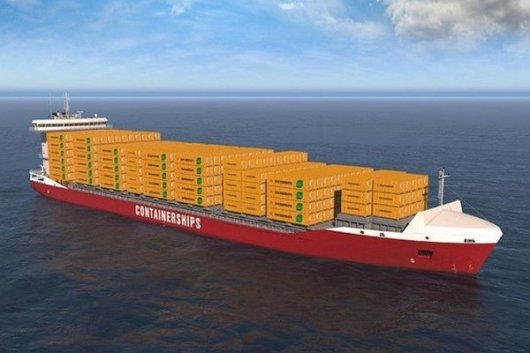
CMA CGM has signed an agreement with Container Finance Ltd Oy to acquire the firm's entire shipping, harbour and terminal holdings, including
Containerships Plc.
The move will see the joining together of two boxship operators that have both strongly backed LNG as a fuelling option. CMA CGM recently
signed a landmark contract to build
nine 22,000-TEU containerships - the first ultra-large container vessels (ULCVs) to be fuelled by LNG - whilst Containerships Plc has
four LNG-powered boxships nearing completion.
Containerships' presence in northern Europe and the Baltic Sea will also strengthen CMA CGM's short sea network and bolster the position of both businesses in the European logistics market.
The restructuring will first need to be approved by Europe's competition authorities, and the entire process is expected to take between three and six months.
Containerships' fuelling strategy
Containerships
explained only last month that its current planning perspective for LNG-fuelled vessels is 25-30 years, and that during this period it expects "a significant change in technology used in the maritime and logistics industry will take place".
Before selecting LNG as its preferred fuelling option, the Finnish firm said it also looked at several long-term solutions, including electric power and biofuels. But, in the end, LNG was chosen because it "tackles all the known emission constraints as well as enables building a platform for the future with possible biofuels."
Additionally, the company noted that its LNG strategy is designed to cover the entire supply chain - not only ships.
The boxship operator claims it will be the first firm in Europe to offer a fully LNG-enabled supply chain comprising trucks, vessels and refuelling stations, providing it with a first-mover advantage of "2-3 years".
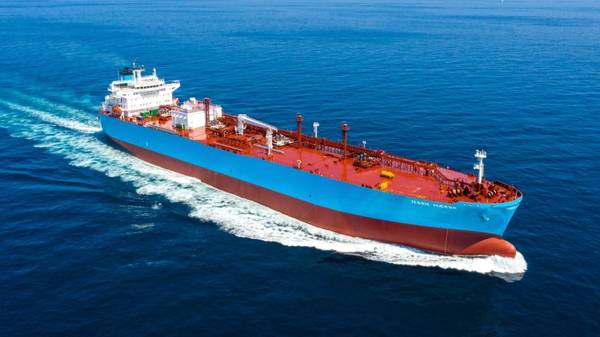
Containerships has four new dual-fuel container vessels under construction in Guangzhou Wenchong Shipyard in China. Production started with the first vessel, M/S Containerships Nord, in December 2016. By September 2017, all four ships were in production.
The new short sea vessels hold a capacity of 1,400 TEU and up to 639 45-foot container units. The first LNG-fuelled vessel,
Nord, is due to be launched this August, and all four ships are expected to be in operation - in the Baltic and Nordic seas - from early 2019.
Containerships' key partner to bunker LNG for its ships is
Shell, and the main refuelling location will be Rotterdam.
CMA CGM's nine LNG-fuelled ULCVs
CMA CGM announced its decision to build nine LNG-fuelled mega-container ships in November 2017. The vessels are due to be delivered in 2020.
LNG bunker supplier
Total has already signed an agreement with CMA CGM covering the supply of approximately 300,000 tonnes of LNG a year for 10 years, starting in 2020. Total's affiliate, Total Marine Fuels Global Solutions, will be responsible for performing the deliveries.
Additionally, Total and CMA CGM have an agreement in principle on the potential supply of lubricants for the nine newbuilds.
Containerships' bunker buying and financials
As Bunker Index
previously reported in March, when Containerships' results for 2017 were released, the company bunkered
78,900 metric tonnes in the Baltics and Med last year.
In the Baltics, the group bought
62,600 tonnes of marine fuel, which was
79.3 percent of the total amount ordered.
In the Mediterranean, meanwhile,
16,300 tonnes were purchased, which was
20.7 percent of total vessel fuel costs.
In its key financial results for 2017, Containerships posted a net income of
EUR 0.2m, which was an improvement on the previous year's loss of
EUR 1.4m.
Earnings before interest, taxes, depreciation and amortization (EBITA) rose by EUR 1.3m, or
9.3 percent, to
EUR 15.2m.
Net sales for the period grew by EUR 28.8m, or
14.6 percent, to
EUR 226.7m.
The improved results were achieved despite an operating environment in which "the sharp increase in bunker prices during the last quarter of 2017 impacted directly on the Group's operating expenses", Containerships said.
DOOR2LNG
Containerships Plc also forms part of the DOOR2LNG project with terminal operators RST in Rotterdam, PD Ports in Teesport, MLT in Helsinki, and Nordic Hamburg - the technical ship management partner in the construction of new LNG vessels. The initiative has received EUR 17 million funding from the EU Connecting Europe Facility (CEF) programme.
The project, which aims to build eco-friendly logistics infrastructure between the core Trans-European Transport (TEN-T) network ports of
Helsinki,
Teesport and
Rotterdam, consists of two parts: firstly, upgrading the current vessels on the route to the aforementioned four newbuild LNG-fuelled vessels; secondly, developing infrastructure at ports by removing efficiency bottlenecks and investing in container and cargo handling capacity.