Tue 1 May 2018, 10:27 GMT

Nissan 'enthusiastically supports' Containerships' LNG bunkering strategy


Car manufacturer backs decision to use LNG fuel on routes between UK and Russia.


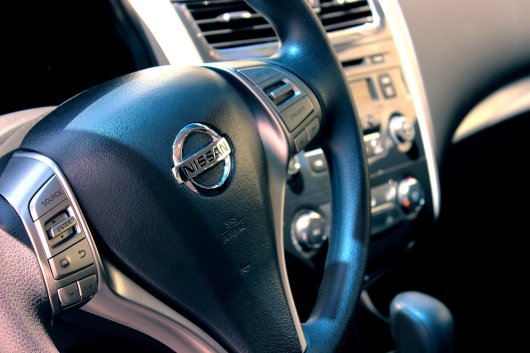
Image credit: Pixabay
Japanese vehicle manufacturer Nissan Motor Corporation has given the thumbs up to the LNG bunkering strategy of logistics partner Containerships plc in northern Europe.

Discussing its business relationship with Containerships in the Finnish firm's annual report, issued on Tuesday, Nissan was described as being "excited to take advantage of Containerships' LNG strategy on the Great Britain-Russia lanes".

Containerships is one of Nissan's key logistic partners in Russia, providing a supply of components to the company's plant in St. Petersburg. The current cargo transportation volume with Containerships exceeds 3,500 20-foot containers per year, and the lanes between Great Britain and Russia make up 25 percent of the import container flow for Nissan St. Petersburg.

"Nissan enthusiastically supports Containerships' initiative to introduce environmentally friendly LNG-fuelled vessels on the Great Britain-Russia lines," Igor Boytsov, Managing Director of Nissan Manufacturing RUS, stated.

"Cooperation with Containerships completely satisfies both the high standards of the Nissan service and the aspiration of Nissan to continuous improvement and focusing on the customers' demands," Boytsov added.

According to Containerships, an LNG-fuelled supply chain enables the reduction of CO2 emissions by 50 percent compared to road transportation, and 25 percent compared to a traditional multimodal supply chain.

Containerships has four new dual-fuel container vessels under construction in Guangzhou Wenchong Shipyard in China. Production started with the first vessel, M/S Containerships Nord, in December 2016. By September 2017, all four ships were in production.

The new short-sea vessels hold a capacity of 1,400 TEU and up to 639 45-foot container units. The first LNG-fuelled vessel, Nord, is due to begin operating this summer, and all four ships are expected to be in operation - in the Baltic and Nordic seas - from early 2019.

Containerships' key partner to bunker LNG for its ships is Shell, and the main refuelling location will be Rotterdam.

DOOR2LNG

Containerships also forms part of the DOOR2LNG project with terminal operators RST in Rotterdam, PD Ports in Teesport, MLT in Helsinki, and Nordic Hamburg - the technical ship management partner in the construction of new LNG vessels. The initiative has received EUR 17 million funding from the EU Connecting Europe Facility (CEF) programme.

The project, which aims to build eco-friendly logistics infrastructure between the core Trans-European Transport (TEN-T) network ports of Helsinki, Teesport and Rotterdam, consists of two parts: firstly, upgrading the current vessels on the route to the aforementioned four newbuild LNG-fuelled vessels; secondly, developing infrastructure at ports by removing efficiency bottlenecks and investing in container and cargo handling capacity.

Financial results

As Bunker Index previously reported in March, when Containerships' results for 2017 were released, the company bunkered 78,900 metric tonnes in the Baltics and Med last year.

In the Baltics, the group bought 62,600 tonnes of marine fuel, which was 79.3 percent of the total amount ordered.

In the Mediterranean, meanwhile, 16,300 tonnes were purchased, which was 20.7 percent of total vessel fuel costs.

In its key financial results for 2017, Containerships posted a net income of EUR 0.2m, which was an improvement on the previous year's loss of EUR 1.4m.

Earnings before interest, taxes, depreciation and amortization (EBITA) rose by EUR 1.3m, or 9.3 percent, to EUR 15.2m.

Net sales for the period grew by EUR 28.8m, or 14.6 percent, to EUR 226.7m.

The improved results were achieved despite an operating environment in which "the sharp increase in bunker prices during the last quarter of 2017 impacted directly on the Group's operating expenses", Containerships said.


Lapis Ace ship-to-ship LNG bunkering operation. MOL signs first annual LNG bunkering contract for car carriers in Vancouver  

Japanese shipping company secures year-round fuel supply with Seaspan Energy at Canadian port.

Gasum's LNG bunkering vessel Coralius. Gasum’s maritime bio-LNG sales surge from 0.8% to 12.3% in 2025  

Nordic energy company attributes growth to FuelEU Maritime regulation introduced in 2025.

Port Authority of Valencia board meeting. Valenciaport gives LNG bunkering go-ahead to Shell and Axpo Iberia  

Port authority approves two LNG bunkering authorisations as part of its decarbonisation strategy.

Northern Purpose naming ceremony. BSM enters LCO₂ carrier segment with management of dual-fuel Northern Purpose  

Bernhard Schulte Shipmanagement takes over first liquefied carbon dioxide carrier for Northern Lights project.

Anna Cosulich vessel. Fratelli Cosulich takes delivery of methanol-ready bunker tanker Anna Cosulich  

Vessel built in China will head to Singapore to support group's bunkering operations.

Nave Equator vessel. Navios Partners takes delivery of dual-fuel-ready Aframax tanker  

Nave Equator is equipped with LNG- and methanol-ready capability plus shore power connectivity.

EmissionLink logo. EmissionLink completes FuelEU pooling submissions for over 600 vessels  

Emissions management service says 90% of shipowners opted to pool in the first compliance cycle.

Dong Fang Qing Gang vessel. China's first inland hydrogen fuel cell container ship enters commercial service  

Dong Fang Qing Gang operates in Jiaxing with 64-teu capacity and zero emissions.

Damen ASD Tug 2713 Fuel Flexible (FF) vessel graphic. Damen receives methanol approval for ASD Tug 2713 fuel-flexible design  

Bureau Veritas and Dutch flag state grant approval, enabling construction of methanol-ready tugs.

Sing Fuels hiring graphic. Sing Fuels seeks supply trader for China-focused marine fuel procurement role  

Singapore-based firm recruiting for position involving supplier negotiations and market tracking across Asia.