This is a legacy page. Please click here to view the latest version.
Mon 18 Dec 2017, 14:13 GMT

Verifavia becomes first non-class provider of CSI verification


Company expands offering to include global verification services for the Clean Shipping Index.


Emissions verification company Verifavia on Monday announced that it has expanded its offering to include global verification services for the Clean Shipping Index (CSI).

Formally established in 2011, CSI is an independent rating system of the environmental performance of ships and shipping companies. It seeks to deliver market incentives for clean shipping, with a view to encouraging shipping practices that are sustainable and environmentally responsible in the long term.

The CSI verification service is an extension of Verifavia's portfolio of services for the shipping sector, which includes EU MRV (Monitoring, Reporting, and Verification), IMO DCS (Data Collection System), and CCWG (Clean Cargo Working Group) verification.

Process

Under the new agreement, Verifavia will offer its verification services to shipowners anywhere in the world who wish to have their company and vessels verified according to CSI requirements.

To obtain CSI verification, shipowners must complete a short questionnaire on the environmental performance of their ship, or ships, against the clean shipping criteria. The questions cover general information about the shipping company as well as vessel-specific information to determine how environmentally friendly the ship is in relation to its CO2, NOx, SOx, and particulate matter emissions, as well as the procedures in place to handle operational discharges resulting from chemicals, water, and waste.

Based on the information gathered, a ranking system of between 0 and 150 is used to determine how environmentally friendly the vessel is, beyond legal compliance. The higher the points achieved, the better the environmental performance of the vessel.

Financial incentive

In addition to possible customer preference, there is a financial incentive for CSI certified shipping companies. Shipowners whose ships obtain full CSI verification can benefit from lower port fees at participating ports, including the Port of Vancouver and the Port of Prince Rupert.

From January 1, 2018, the Swedish Maritime Administration will introduce differentiated fairway tax fees for vessels that are more environmentally friendly than their counterparts, solely based on the CSI rating. Vessels with a verified performance of three or more CSI stars will benefit from reduced fairway dues when visiting Swedish waters - with the potential to save up to several hundred thousand euros per year for frequent visitors.

First non-class verifier

Verifavia is the first accredited verifier to verify according to the new standard set by CSI. The company says its CSI verification service also represents a "step change for the industry", as it is the first non-class provider of CSI verification.

Verifavia has already verified ships for Viking Line and Faergen, and says it has a "strong pipeline of shipping companies" looking to have their ships CSI approved, and more than 30 ships to be verified in the first quarter of 2018.

"With surveyors conveniently located in France, Denmark, Greece, India, and Hong Kong, the company remains committed to offering a top-class service which enables shipowners to achieve verification quickly, efficiently, and cost-effectively," the company said.

Merijn Hougee, Director, Clean Shipping Index, commented: "We are very pleased to have partnered with Verifavia Shipping, which shares our vision to see clean ships sailing in healthy seas. Despite being a voluntary scheme, we are seeing increasing pressure from cargo owners who are looking beyond their own factory gates to ensure that they operate in an environmentally friendly way throughout their supply chain. Shipping companies choosing to become CSI certified and obtain good environmental performance may therefore benefit from customer preference as well as reduced fairway - and port - fees."

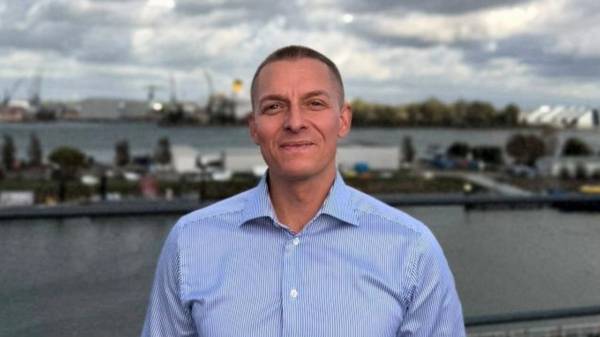
Julien Dufour, CEO, Verifavia Shipping, remarked: "We are proud that the Clean Shipping Index has entrusted Verifavia to be the first non-class verifier to perform CSI verification. We are confident that our knowledgeable and experienced surveyors, all with seafaring experience, will deliver a top-class service grounded in in-depth technical knowledge."


Christos Doulaveris, Flex Commodities. Flex Commodities appoints Christos Doulaveris as general manager for Greece  

Bunker trader strengthens its Greek operations with a new leadership appointment.

Chang Ping Yuan vessel. China delivers first domestically built VLGC under Chinese flag  

Cosco Shipping’s new 88,000-cbm gas carrier features an LPG dual-fuel main engine.

IMO, GreenVoyage2050 and Republic of Türkiye MoTI logos. Electric and hybrid ferries could cut Sea of Marmara emissions by 63%, IMO study finds  

A GreenVoyage2050 study finds that electrification could slash emissions, avoid €492 million in damage costs and support jobs.

Study visit to Hamburg, Germany, on sustainable port development. Batumi Sea Port officials study decarbonisation practices in Hamburg  

Georgian port representatives visited Hamburg to study emissions accounting, hydrogen technology and automation ahead of their 2026 recertification audit.

Nave Harmony vessel. Navios Partners takes delivery of methanol-ready MR2 tanker Nave Harmony  

Shipowner adds 49,998-DWT newbuild product tanker equipped with methanol-ready technology.

RS Atlantico vessel. Eastern Pacific Shipping delivers LNG dual-fuel PCTC to Suardiaz  

RS Atlantico is the first mid-sized 5,500-CEU car carrier built through the EPS–Suardiaz partnership.

Tangier Maersk vessel. Maersk completes first US ethanol bunkering of a deep-sea container ship  

Shipper tests US-produced corn ethanol as a marine fuel aboard the Tangier Maersk.

CMA CGM Alceste naming ceremony. CMA CGM names methanol-powered vessel after Molière’s Alceste  

Ship features a MAN B&W 8G85ME two-stroke engine configured to run on conventional marine fuel and methanol.

Cutaway illustration of a battery-electric ship. Why batteries still cannot power ships across oceans  

Battery-electric ships dominate short-sea routes, but energy-density and infrastructure constraints keep deep-sea propulsion out of reach.

VPS logo. VPS to run marine fuel management course in Singapore  

Two-day programme in November covers fuel handling, testing and decarbonisation rules, including a laboratory tour.


↑  Back to Top