Wed 11 Apr 2012, 06:56 GMT

OW Bunker appoints new trading manager


Experienced professional is the new manager of OW Bunker Malta's trading division.


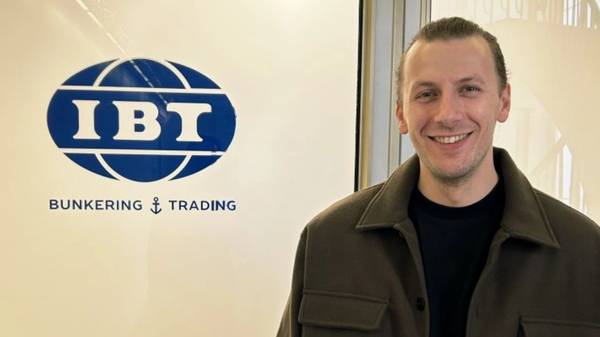
OW Bunker, one of the world's leading suppliers and traders of marine fuel, has today announced the appointment of Stathis Grafakos as the new manager of OW Bunker Malta's trading division.

Prior to joining OW Bunker, Stathis Grafakos spent 10 years in a variety of roles with ExxonMobil, including laboratory services, supply chain & logistics and sales. A Greek national, Grafakos has a particular expertise in the manufacturing and development of marine lubricants, along with extensive experience of technical and commercial operations within the marine sector. He also holds Masters Degrees in both Chemical Engineering and Management Sciences & Computer Applications.

Grafakos will be working closely alongside Panayotis Bachtis, Branch Manager of OW Bunker Malta Ltd.

Commenting on the news, Søren Christian Meyer, Global Sales Director, OW Bunker said: "We're delighted that Stathis has taken up this new role with OW Bunker Malta. Stathis' outstanding technical and commercial knowledge, coupled with his understanding of the Greek and Mediterranean markets, will significantly strengthen our marine fuel trading operations. With 20 years experience in Greece, we look forward to continuing to deliver the best products at competitive prices, wherever and whenever our customers need them."

Headquartered in Piraeus, OW Bunker has been operating in Greece since 1982 and provides marine fuel products and services for all Mediterranean ports, as well as in Egypt, the Black Sea, Red Sea and the Persian Gulf.

Stathis Grafakos' contact details are as follows:

Email: stgr@owbunker.com

Phone: +30 210 452 9467

Mobile: +30 694 329 9600

Yahoo: stgr_owbunker


A Maersk vessel, pictured from above. Maersk and Hapag-Lloyd suspend Strait of Hormuz transits amid Middle East security crisis  

Container carriers reroute services around the Cape of Good Hope as military conflict escalates.

Map of Middle East. Operations continue as normal at most Middle East ports  

Most facilities operating normally, with exceptions in Oman and Saudi Arabia.

Photograph of the 93,000-cbm very large ammonia carrier (VLAC) Gaz Ronin. Naftomar takes delivery of 93,000-cbm dual-fuel ammonia carrier  

Gaz Ronin features a MAN dual-fuel engine with high-pressure selective catalytic reduction technology.

Aurora Botnia leaving harbor. AYK Energy completes world’s largest marine battery retrofit on Wasaline ferry  

Aurora Botnia receives 10.4 MWh battery system, bringing total capacity to 12.6 MWh.

Steel cutting ceremony for an LNG dual-fuel 307,000-tonne crude oil tanker with builder's hull no. 113. Dalian Shipbuilding begins construction on LNG dual-fuel crude tanker  

Development is one of a number of milestones reported by parent company over the past few days.

Photograph of Sallaum Lines' Ocean Breeze vessel with 'Introducing The Blue Corridor' overlaid text. Sallaum Lines launches Blue Corridor sustainability initiative for Europe–Africa ro-ro trade  

Company deploys LNG-capable vessels with AI routing and eco-speed protocols on new green shipping corridor.

The platform supply vessel Viking Energy. Eidesvik Offshore signs yard contract for ammonia retrofit of PSV Viking Energy  

Halsnøy Dokk to convert platform supply vessel as part of EU-backed Apollo project.

Vanquish tanker alongside Jette Theresa oil/chemical tanker docked at terminal. North Sea Port completes risk analysis for alternative fuel bunkering operations  

Port authority says LNG, hydrogen, methanol and ammonia can be safely refuelled across its facilities.

Container ship near a port. Ammonia emerges as most feasible alternative fuel for deep-sea shipping in 2050 emissions study  

Research combining expert survey and technical analysis ranks ammonia ahead of hydrogen and methanol.

Cargo vessel at sea. EMSA study examines biodiesel blend spill response as shipping adopts alternative fuels  

Research addresses knowledge gaps on biodiesel-conventional fuel blends as marine pollutants and response measures.


 Recommended