
 |
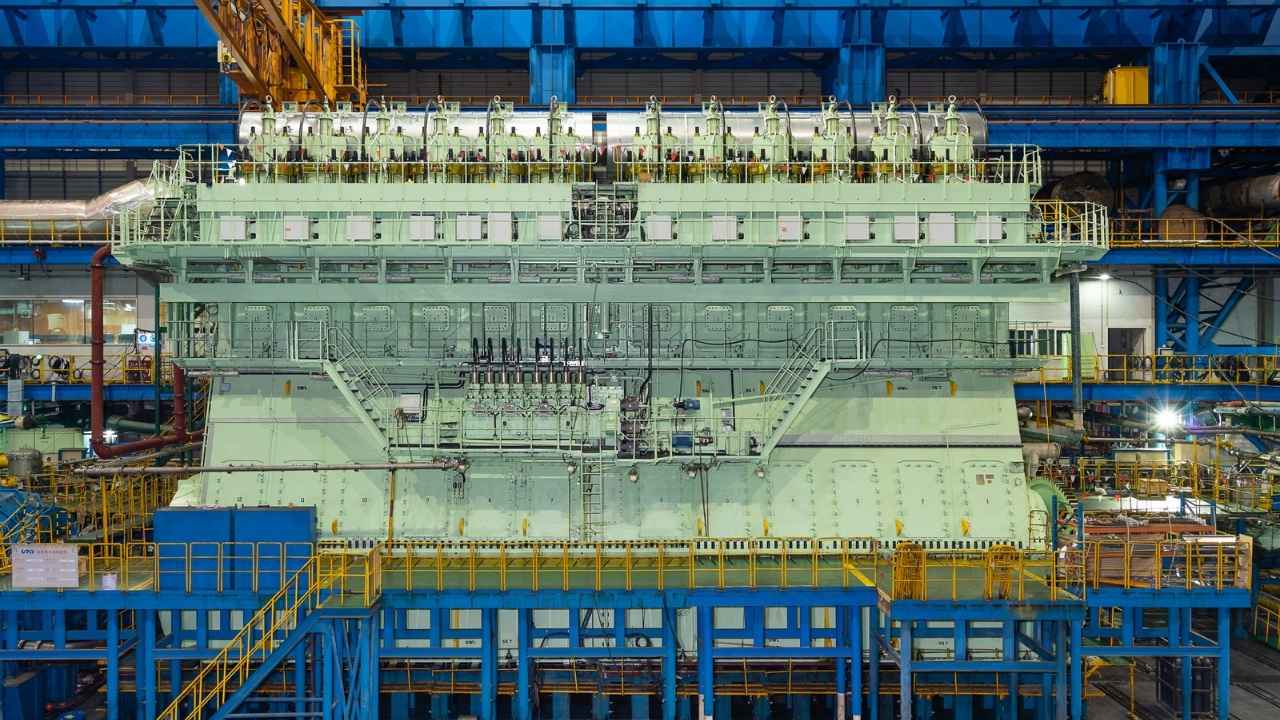
Swiss marine engine designer WinGD has announced that its X-DF dual-fuel engine series has surpassed 1,000 orders, a figure the company says reflects continued market confidence in LNG as a transition fuel for shipping.
The X-DF platform, which uses low-pressure gas admission ignited by a small volume of liquid pilot fuel, was first demonstrated on a full-scale research engine at the Wärtsilä factory in Trieste, Italy, back in September 2011 — just seven months after development work began in February of that year. WinGD introduced the engine series commercially in 2013, positioning it as a response to the IMO’s Tier III nitrogen oxide (NOx) emission limits.
The engine is said to meet Tier III NOx limits without requiring exhaust gas after-treatment systems, helping reduce both capital and operating costs for shipowners, whilst also cutting sulphur oxide (SOx) emissions, particulate matter and greenhouse gas emissions compared with conventional marine fuels.
From LNG carriers to container ships
The order book has expanded beyond LNG carriers to include ultra-large container ships, shuttle tankers and very large crude carriers. WinGD highlights that the X-DF has been the best-selling dual-fuel low-speed engine technology in the LNG carrier market since the second half of 2017.
The engine also holds a Guinness World Record, having been recognised in 2020 as the “Most powerful marine internal combustion (IC) engine (Otto cycle) commercially available.” The 12X92DF variant, first delivered in 2019, generated 63,840 kW at 80 rpm and weighed 2,140 tonnes. It was installed aboard one of the 23,000-teu LNG-fuelled container ships operated by French shipping group CMA CGM.
Methane slip and regulatory compliance
A key area of ongoing development has been the reduction of methane slip — uncombusted methane that escapes during engine operation — which has been identified as a challenge associated with LNG propulsion given methane’s potency as a greenhouse gas.
WinGD says the introduction of its X-DF2.0 platform, combined with its internal combustion engine reformer (iCER) technology, achieved reductions in both fuel consumption and methane slip compared with the first-generation X-DF. The company has further developed variable compression ratio (VCR) technology — to allow the compression ratio to be optimised according to operating conditions.
According to WinGD, the X72DF-2.2 engine with VCR brings methane slip down to around 0.7%, while larger-bore engines are expected to reach levels of around 0.5%, and further design and technology improvements are already being communicated to key stakeholders.
WinGD also notes that X-DF engines running on LNG can avoid penalties under the FuelEU Maritime regulation until at least 2035, offering owners a degree of regulatory certainty.
Future fuel compatibility
WinGD says the X-DF range is capable of operating on biomethane and synthetic methane derived from renewable electricity without requiring major engine modifications, a feature designed to give owners a pathway toward progressive decarbonisation as fuel markets evolve.
The company has also introduced the X-DF-HP engine platform, extending its LNG offering into high-pressure technology for larger-bore applications. Shipowners can now select between two distinct LNG combustion concepts — low-pressure and high-pressure — each said to be optimised for different vessel types, operational priorities and decarbonisation pathways.
Recent orders
Among the most recent orders, BW LNG has placed an order for two 174,000-cbm LNG carriers to be built at HD Hyundai Heavy Industries, each to be powered by WinGD 5X72DF-2.2 VCR engines manufactured by HHI-EMD. Engine delivery is expected in mid-2028.
|
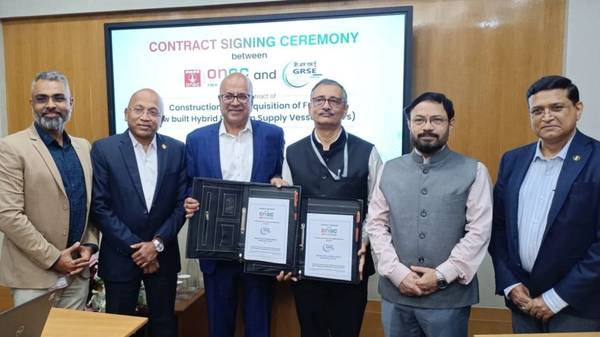
GRSE signs contract with ONGC to build four hybrid platform supply vessels
Indian shipbuilder adds offshore support vessels to its portfolio with hybrid propulsion contract for state oil firm. |
|
|
|
||
|
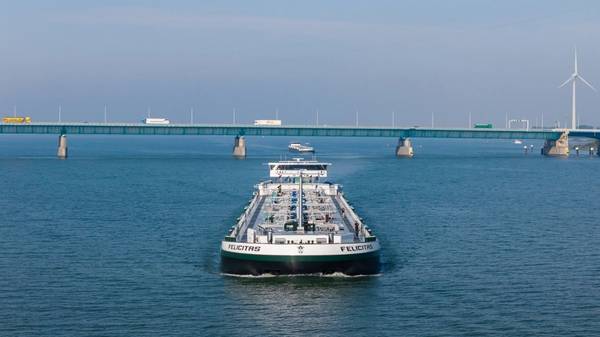
AMS Barging christens methanol-ready tanker as fleet reaches 17 vessels
Dutch inland shipping company adds 9,000-cbm diesel-electric tanker Felicitas, designed for future conversion to methanol bunkering. |
|
|
|
||
|
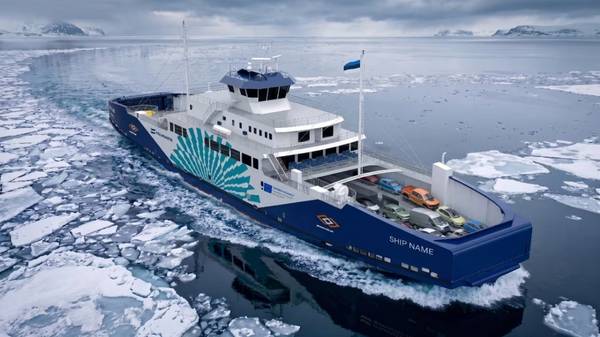
Steerprop to supply next-generation CRP units for Estonia's first electric ferry
Finnish propulsion specialist Steerprop will equip a CRIST-built electric ferry with upgraded contra-rotating propeller technology for the Estonian State Fleet. |
|
|
|
||
|
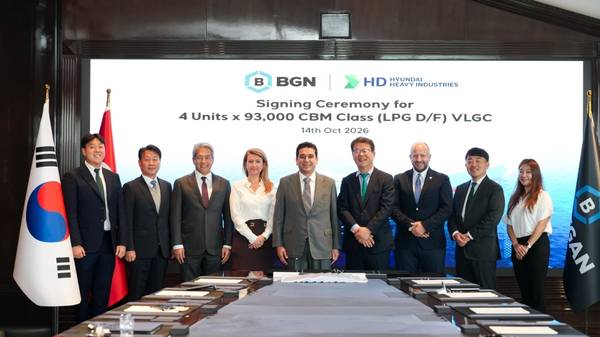
BGN orders four more dual-fuel LPG carriers from HD Hyundai Heavy Industries
New contract brings BGN's 2026 orders with HD HHI to 10 vessels and will increase its owned VLGC fleet to 23 ships. |
|
|
|
||
|
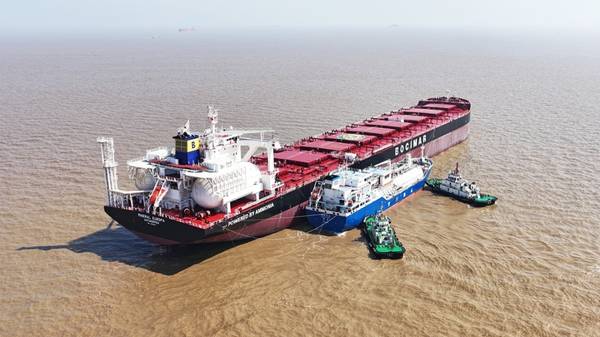
World's first ship-to-ship green ammonia bunkering operation completed in China
Shenghang Yongle supplied 1,000 tonnes of green ammonia to CMB.Tech's Mineral Europa, connecting the fuel's full supply chain. |
|
|
|
||
|
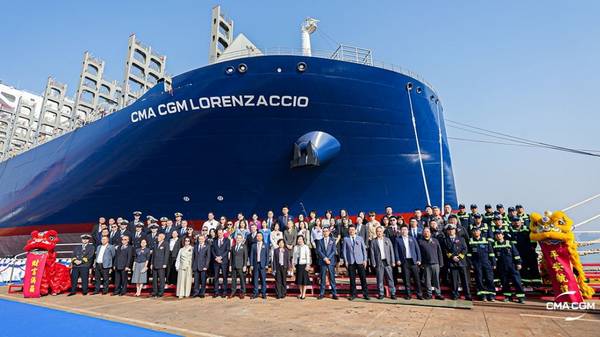
15,000-TEU methanol-powered boxship named CMA CGM Lorenzaccio
French carrier adds literature-inspired vessel to its methanol-powered fleet for deployment on the REX2 service. |
|
|
|
||
|
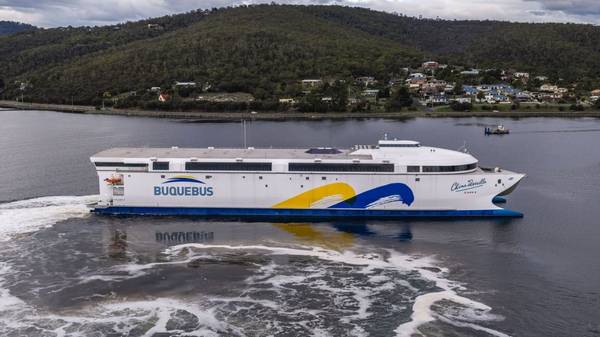
Battery-electric ferries grow in scale as aluminium multihulls gain market share
DNV highlights the rise of battery-electric aluminium ferries, spotlighting the delivery of the world's largest such vessel. |
|
|
|
||
|
IBT Bunkering & Trading appoints Sales Support Specialist
Björn Hauschild joins from shipyard broker CombiTrade. |
|
|
|
||
|
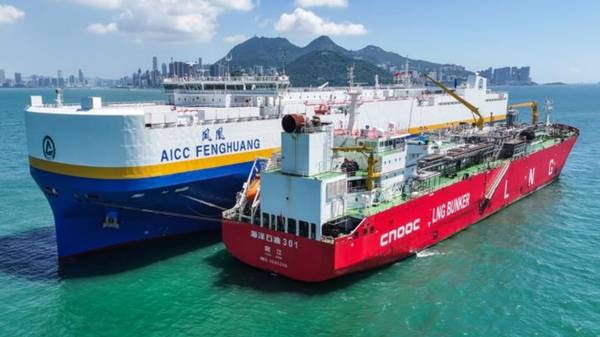
CLPe and CNOOC complete Hong Kong's first LNG bunkering of a pure car and truck carrier
Ship-to-ship operation delivered around 2,600 cbm of LNG to dual-fuel vessel AICC Fenghuang. |
|
|
|
||
|
Mercuria seeks senior sales and account manager for bunker delivery platform
Role can be based either remotely or at one of its offices in London, Geneva, Athens or Las Palmas. |
|
|
|
||
| World's first ship-to-ship green ammonia bunkering operation completed in China [News & Insights] |
| 15,000-TEU methanol-powered boxship named CMA CGM Lorenzaccio [News & Insights] |
| Matson christens Makua, first of three LNG-ready Aloha Class container ships [News & Insights] |
| NYK–MISC joint venture signs charter for 18,700-cbm LNG carrier with Malaysia LNG [News & Insights] |
| Lloyd's Register, Shell and GTT launch joint project on hybrid-electric 200,000-cbm LNG carrier [News & Insights] |
