Press Release: Source - BIMCO (the Baltic and International Maritime Council)
Small-scale LNG is still in its infancy but the pressures to extend the LNG supply chain into coastal distribution and other downstream activities are now building by the day. More and more potential customers are attuned to the environmental and cost-saving advantages that natural gas has over alternative fossil fuels.
Where previously there was hesitancy to commit due to the absence of adequate LNG supply infrastructure, the growing strength of the arguments in favour of gas and the spread of the global large-scale LNG network are poised to force a breakthrough. The additional support offered by various governments is adding to the momentum.
To date, small-scale LNG distribution using seagoing vessels has been limited to
Norway and
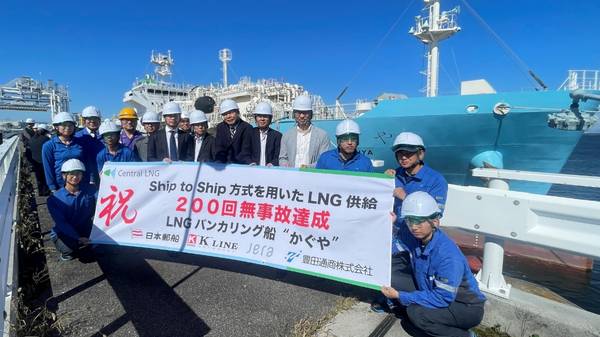
Japan. Japan utilises five small dedicated tankers in the 2,500-3,500 m3 size range to take LNG loaded at the country's main import terminals to small local communities otherwise difficult to access.
Norway employs a 1,100 m3 LNG carrier and a fleet of road tankers to distribute gas to remote locations along the country's long coastline. A principal driver of small-scale LNG is the use of LNG as a marine fuel and this has been a major factor in the strengthening Norwegian commitment.
There are now approximately 25 ferries, offshore supply vessels and coastguard craft in Norwegian coastal service that run on LNG and the fleet is growing. These vessels derive advantage from the levy imposed by Norway's government on ship emissions of nitrogen oxides (NOx).
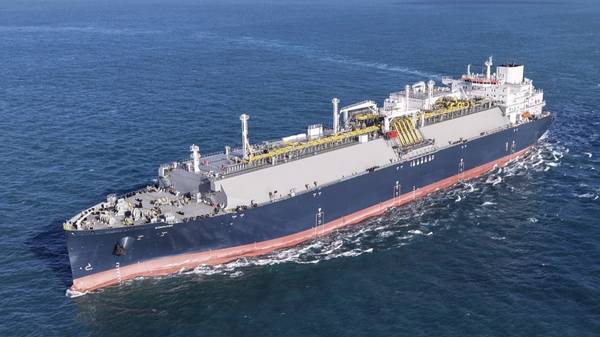
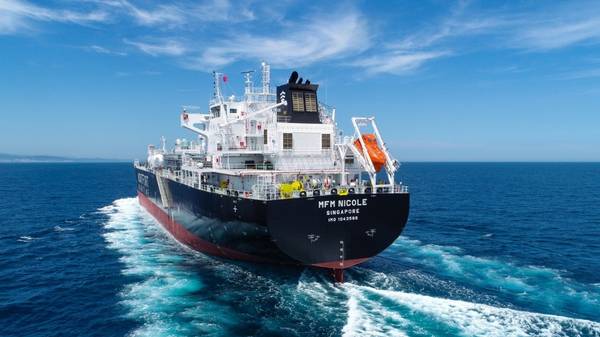
In addition to the Norwegian and Japanese coastal tankers there are seven multipurpose LNG carriers in the 7,500-12,000 m3 size range now in service. These ships have been built with the global potential for small-scale LNG in mind and their ability to also carry other liquefied gases such as ethylene will ensure that they kept employed until their LNG services are required.
One potential new market for some of these multipurpose LNG ships is
Indonesia. The country's government has recently sanctioned the establishment of 10 coastal LNG receiving terminals in the eastern part of the vast island nation. These facilities will be serviced by a fleet of small LNG carriers which load at one of the country's LNG export terminals and distribute cargoes locally on a series of "milk runs".
The Indonesian Government is keen to reduce the country's dependency on expensive oil imports and to encourage the use of clean-burning natural gas, a resource more readily available domestically. Gas will enjoy growing use as a power station fuel, in the manufacture of fertilisers and in ore smelting across the Indonesian archipelago in the years to come.
In Northern Europe the small-scale LNG concept is spreading out from Norway. A 7,500 m3 multipurpose LNG carrier is being employed to ferry cargoes from a medium-size liquefaction plant in Norway to a new LNG receiving terminal in Sweden while a dedicated 15,600 m3 LNG carrier is under construction in Germany and earmarked for distribution duties in Northern Europe and Scandinavia.
Elsewhere, the first ship to have its existing oil-burning engine converted to run on gas has been provided with an LNG fuel system in recent weeks. The vessel, a 25,000 DWT product tanker in Norwegian North Sea service, will bunker LNG directly at the aforementioned Norwegian liquefaction terminal.
Projects to run ships on LNG are proliferating across the region. Amongst many examples, a Dutch company is about to put the first inland waterway vessel, a tanker, into service and a pair of LNG-fuelled Ro/Ro cargo ships building in India for North Sea operations will be commissioned by next year. In addition, a pair of Finnish-flag Ro/Ro passenger ferries that will run on LNG are being built for cross-Baltic routes.
The special sulphur oxide (SOx) emission control areas (SECAs) established for the Baltic and North Seas in 2006 and 2007 under Marpol Annex VI are playing a major role in promoting the use of LNG. The allowable sulphur limit in SECAs came down to 1% in July 2010 as part of the process to tighten the Annex VI regime and this limit will be further reduced to 0.1% by 2015.
For ships working permanently in SECAs the use of LNG is regarded by many as the optimum route to compliance with the air emissions regime. While the widespread use of LNG as marine fuel poses challenges, it does offer advantages over the alternative means of compliance with the Annex VI requirements, i.e. the use of either exhaust scrubber systems or ultra-low sulphur diesel oil.
One of the challenges facing ship owners considering the use of LNG as marine fuel is the availability of a suitable LNG bunkering network. Handling cryogenic liquid fuel, for both delivery to a ship and on board, is difficult; it requires trained operators, insulated tanks made of special materials, regasification systems and dedicated marine engines.
The
Danish Maritime Authority (DMA) commissioned a study to get an idea of the scale of the LNG bunkering infrastructure that may be needed in northern Europe and the results have just been released. The investigation concluded that vessels operating in the region could be using up to 4 million tonnes per annum (mta) of LNG as fuel by 2020.
Distributing this volume of LNG as marine fuel would necessitate the availability of up to 11 new LNG bunkering terminals in the region as well as a fleet of small specialist LNG bunkering vessels to serve as a link between the terminals and the ships taking on the liquefied gas fuel.
The process will be facilitated by adapting some of Europe's major LNG import terminals to play a hub role. Several such facilities have already introduced jetty arrangements which permit the loading of small coastal LNG tankers and LNG bunkering vessels while others are considering introducing such a capability.
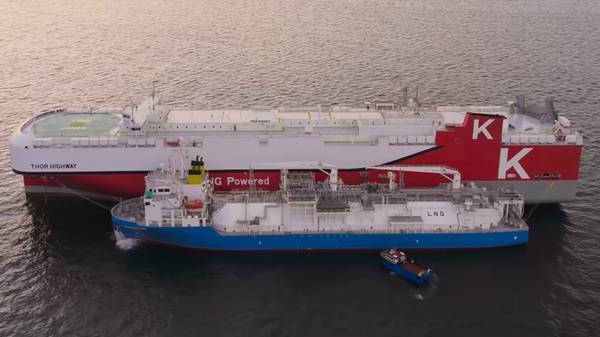
Ship-to-ship LNG transfers, a technology now established for large conventional LNG carriers, are also expected to play a role in future LNG bunkering operations. The ability to supply LNG bunkering vessels directly from coastal LNG carriers will provide an additional level of flexibility in delivering the fuel from a terminal to a ship's bunker tank.
Other regions are about to follow the European lead as regards the provision of LNG bunkering infrastructure. IMO has designated the waters around the coasts of the US and Canada as a new SECA and this North American regime will become enforceable in August 2012. Furthermore Japan and the countries bordering the Mediterranean, amongst others, are considering applying for SECA status and China is getting ready to fuel Yangtze River vessels with gas.
The first ramifications of the North American SECA initiative became apparent in September 2011 when the construction of three 5,520 DWT, LNG-powered offshore supply vessels (OSVs) for operation in the US Gulf was approved. The US-flagged OSV series will be built domestically and will begin delivering in October 2013. Elsewhere, Staten Island Ferry and other North American ferry companies as well as operators of Great Lakes vessels are considering the LNG option.
The only direction for small-scale LNG is onward and upward. Over the longer term, the lowering of the Annex VI global sulphur cap, down from the 3.5% level that will become mandatory in January 2012 to 0.5% in a decade's time, will also have a major role to play.
The local distribution of liquefied natural gas is poised where oil marketing activities were 40-50 years ago. As "gas is the new oil", look for the small-scale LNG network to grow and grow.