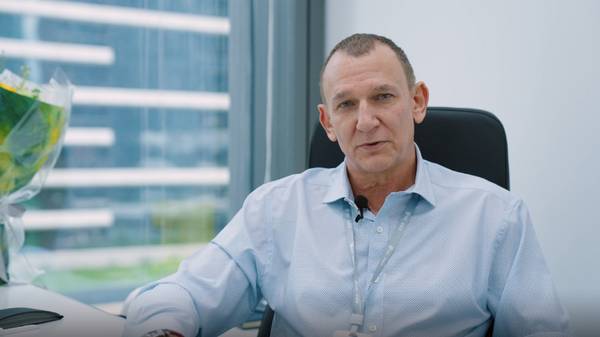
The chairman of
Braemar Shipping Services PLC has said that the rise in bunker prices is 'putting pressure' on owners’ profits.
In a statement,
Sir Graham Hearne said the recent unrest in Libya and other political tensions in the Middle East, combined with the increase in demand, have made both crude and refined oils 'the currency of speculators'.
Commenting on the effect of rising prices on ship owners and operators, Marsh said: "This has had a direct impact on the cost of fuel oil used as bunkers, which is now some US$200 per tonne higher than last year, putting pressure on owners’ returns. This, in turn, means the repayment of the capital cost of the asset comes under strain, placing further pressure on owners to consider their strategy."
Please find the full statement below:
Braemar Shipping Services Statement - Preliminary announcement year ending 28th February: Overview
Our markets in shipping and oil and gas services have had a turbulent year and against this backdrop the overall performance of the Group has been robust. This is testament to the quality of our employees, their experience, and their ability to respond in a challenging environment. Group revenues grew 6% to £126.1m; pre-tax profits before amortisation were £14.8m compared with £15.0m in 2009/10 and pre-tax profits after amortisation were £13.2m compared with £13.5m in 2009/10. Basic earnings per share (EPS) were 48.41p (2010: 47.93p) and EPS excluding amortisation were also similar to last year at 53.84p (2010: 53.22p).
We saw the continuation of the global economic recovery during the financial year and this was particularly strong in Asia. Alongside that shipping continues to enjoy a growth in demand for raw materials which has provided good support to the dry bulk sector, despite the delivery of new tonnage. Similarly the tanker market is being sustained by growing oil demand from the East at a time when the economies in the United States and Europe remain sluggish.
Asia
For some years we have been building our presence in Asia which has become the world’s most important region for international shipping. This year we successfully consolidated all our businesses in Singapore which now employs 110 staff in a single office. From this base we are expanding in the region, particularly in shipbroking where we have opened new tanker chartering and sale & purchase broking desks. One of our executive directors, Denis Petropoulos, has relocated to Singapore to lead this important development.
Operations
Over the past few years we have acquired a number of complementary technical businesses. We are announcing today the integration and re-branding of these businesses under a common name, Braemar Technical Services, with a geographic management structure. This will support the marketing of our marine surveying, engineering, energy loss-adjusting and consulting disciplines to our international client base and consequently reinforces the leading market position we have in this division.
We are also pleased to announce today the purchase of the business and certain assets of BMT Marine and Offshore Surveys Limited for a cash consideration of £2.4m. The business provides hull and machinery, P&I and Marine Warranty survey services around the globe; clients operate primarily in the insurance, shipping and offshore industries. In its last financial year it reported normalised EBITDA of £0.9 million. This acquisition enables our Technical division to deliver a truly global service to our clients.
Dividend
I am pleased to announce that the Directors are recommending for approval at the Annual General Meeting a final dividend of 17.0 pence per ordinary share (an increase of 5%), to be paid on 27 July 2011 to shareholders on the register at the close of business on 1 July 2011. Together with the 9.0p interim dividend, the Company’s dividend for the year will be 26.0 pence (2010: 25.0 pence), a rise of 4%. The dividend is covered 1.86 times by earnings. This is the eighth year in succession that the Company has increased its dividend.
Board changes
During the year, Alastair Farley was appointed to the Board, bringing with him a wealth of experience in the shipping industry.
Richard Agutter will retire from the Board later this year having completed over nine years of service. I would like to thank him for his outstanding contribution over the years.
Outlook
While economists and politicians continue to debate the speed and extent of the recovery, both in the UK and globally, we are well placed in our major markets and enter the new financial year with a healthy pipeline of business. Our estimate of the shipbroking forward order book deliverable over the course of the financial year 2011/12 stands at £23 million (US$36 million) compared with £28 million (US$42 million) at 1 March 2010. We also expect to see an improvement in the performance of our Technical division in the coming year.
Braemar, across all divisions, is a first-class company and among the leaders in its various markets. On behalf of the Board, I would like to express our thanks to all our staff throughout the world for their commitment over the past year; it is this that underlies my confidence that Braemar will continue to play a leading role in the markets in which it operates.
Chief Executive’s review of the business - Sir Graham Hearne, 9 May 2011
Overview
The Group’s strategy is to maintain and grow its international marine and energy services businesses.
Braemar is a people business built on the quality and professionalism of its staff and the strength of its client relationships. We have always made a substantial commitment to recruitment and training. I am delighted that many of our recruits have developed into skilled professionals and we are able to send them to parts of the world that do not have the same pool of available talent, where they can put their high level of professionalism to effective use.
Our global network of offices provides a strong platform from which to serve our clients. Over the past 12 months all over the world we have all seen incidents or sudden changes in circumstances, not least the BP Macondo incident, the earthquake and tsunami in Japan and the recent political turmoil sweeping North Africa and the Middle East. It is our job to help our clients respond to such events, which we do with shipbroking as well as with bespoke shipping research, marine surveying, loss-adjusting and engineering consulting.
Divisional review
Shipbroking – Braemar Seascope
Shipbroking profits (before amortisation and tax) were up 7% in a year when global freight rates have been turbulent.
On 1 March 2010 the Baltic Dry Index stood at 2,760 and by the end of our financial year (28 Feb 2011) it was 1,251 having reached a high of 4,209 on 26 May 2010 and a low of 1,043 on 4 Feb 2011. The average for that period was 2,497 and on 6 May 2011 it stood at 1,314.
Freight rates in the cape market were constrained by the continuous additions to the fleet and in our final quarter the high volume of coal shipments from Queensland, Australia was significantly disrupted by high cyclonic rainfall which damaged the mines and rail infrastructure to the ports. Supramax and handysize markets were remarkably resilient and steady, with little volatility in either the Atlantic or the Pacific basin. Underlying cargo demand remains strong but freight rates are being suppressed by the effect of new tonnage, and freight futures indicate that the market will remain soft. Our Dry Cargo teams in Australia and India have had a strong year with good support from the offices in London, Beijing and Singapore.
The influx of new tanker tonnage to the fleet continues to have an adverse effect on chartering rates. Commissions are being impacted by lower freight rates but we are pleased to see an increase in our volume of transactions, largely offsetting the lower rates. Our strategy of developing business with China and India has been beneficial and we have concluded significant VLCC business with both countries.
The refined-products shipping markets are also suffering from an over-supply of tonnage but volumes remain good. Since the terrible events in Japan, product distribution has grown, particularly in the larger sizes, and the added tonne miles have resulted in greater activity both for our London and Singapore offices.
The crude oil price has risen sharply as both Chinese and Indian demand continues to grow. The unrest in Libya and other recent tension in the Middle East, combined with the increase in demand, have made both crude and refined oils the currency of speculators, with traders anticipating further price spikes. This has had a direct impact on the cost of fuel oil used as bunkers, which is now some US$200 per tonne higher than last year, putting pressure on owners’ returns. This, in turn, means the repayment of the capital cost of the asset comes under strain, placing further pressure on owners to consider their strategy. Our dedicated projects section is often involved in assisting clients in those strategic discussions and as a result our period charter book continues to remain strong.
Our specialist chartering teams both in chemicals and liquid petroleum gas (LPG) have extended and added further contracts with large clients resulting in both desks ending this year ahead of the one before. It is also encouraging that the LPG physical product broking section has grown its client base and continues to be a valuable addition to the division.
The liquid natural gas (LNG) market is maturing and many power projects have now been completed or are nearing completion, and the vessels delivered ahead of the completion of these projects have been absorbed. This has meant that freight rates are now at a level which returns a profit, although many owners have some way to go to make up for earlier losses suffered in previous thin markets. We have been active in this sector during the year particularly in the provision of consulting services.
The market for offshore supply vessels was relatively subdued in 2010, but the rising oil price is stimulating drilling activity and investment, which we expect will lead to higher demand and better vessel use. Our offshore team, based in London, Aberdeen and Singapore has had a good year both for chartering and project business.
The process of inventory re-stocking during 2010 by many businesses fuelled a resurgence in demand for container tonnage in a quest for market share and further gains on profitable routes. The competition for market share caused a rapid increase in charter rates although the subsequent additional tonnage being pushed into the market ultimately put more pressure on freight rates, which have been steadily falling over the past quarter. Our chartering team has succeeded in transacting a good level of longer term business during this period.
The container sale and purchase market remains extremely tight, with sales candidates limited and prices very firm, due to the number of competing buyers. As a result we have seen increasing newbuilding activity and it seems likely this will remain a focus for the main players in the coming months.
Over the past year second-hand vessel values and newbuilding prices have been generally stable in most ship categories and our team has conducted a good level of business both in the wet and dry sectors.
The worldwide volume of demolition business has been lower than expected, partly due to the closure of yards in Bangladesh for some of the year, but our share remains high and demolition is an important aspect of the full service we provide.
Our newbuilding activity has been surprisingly resilient particularly with Chinese and South Korean yards which for the most part have order books covering the next three years. During the year we established new sale and purchase desks in Singapore and Monaco which allows us to serve an extended client base.
Technical
We are reorganising the companies in our Technical division to operate as a single unit, which will give a greater ability to market all of the technical services we offer to our clients across the world. This will be rolled out over the coming quarter and as part of the process we are re-establishing the business along geographical lines with two regional sub-divisions in the Far East and the West.
The financial results for the Technical division did not meet our full expectations due to lower than anticipated activity in the new ventures of cargo loss adjusting and Wavespec’s consulting business in Houston, both of which have yet to achieve profitability. However, the division has begun the new financial year well and we expect a better overall performance for the year.
Our marine engineering and marine surveying business (Braemar Falconer) posted higher revenue compared to the previous year with the offices in Singapore, Malaysia, Vietnam and Indonesia all performing well. Regional rig move and drilling activity in the Far East picked up during the year and this trend is expected to continue in 2011. Marine warranty surveys, the main revenue stream of the group, also grew by 20%. Revenue from China operations lagged behind during the year although the second half showed an improvement. The outlook for 2011 for the group is good and so far the year has begun well with opportunities for growth in geotechnical services and work from deep water drilling activity.
Our energy loss adjusting business (Braemar Steege) performed in line with expectations. Claims activity in the energy sector was below average throughout the year as most oil and gas exploration and production areas were not affected by natural disasters. Activity levels in the Gulf of Mexico dropped significantly following the BP Macondo incident and it will be some time before projects start moving again. Despite the magnitude of this incident, the impact on the insurance industry has been less than expected because of lower insurance cover. Activity in other deep water areas such as West Africa and Brazil has increased as investment has been transferred from the Gulf of Mexico. Braemar Steege has responded by establishing a new office in Rio do Janeiro and making greater use of the group’s connections in Nigeria. The Singapore office continues to grow from strong regional activity in Asia and Australia, where access to group resources throughout the region is also supporting development. Instructions on expert witness cases remain steady and provide a good source of income while new energy claims are low.
The financial year was challenging for the marine engineering and naval architecture consulting business (Wavespec). They are pre-eminent in LNG supervisory and consulting work, but over the last two years very few LNG carriers have been ordered. In Houston this was compounded by the discontinuance of several projects that the office was advising on and by the reaction to the BP Macondo incident in April 2010 which stopped all work in the Gulf of Mexico. Looking forward to 2011-12 we are starting to see a recovery in LNG carrier construction both in terms of orders placed and ex
pressions of interest. In addition, the burgeoning activity for Floating Storage and Re-gasification Units (FSRUs) and improvements in the offshore sector point to increased demand for the skill-sets in both the UK and US offices.
The economic environment in the US slowed the growth of our new cargo claims arm (Braemar Marine) which also has a presence in the UK and the Far East. As a consequence the division was absorbed into Braemar Falconer and has been restructured subsequent to this re-branding. In recent months a better base has been established from which to build.
Logistics – Cory Brothers
Cory Brothers returned to Cardiff this year by opening a new office for its Agency and Logistics businesses just a short distance from where the company was founded in 1842 and subsequently earned the right to use the Welsh Dragon as its logo.
Revenues in the Logistics division grew by 10% with forwarding, one-off projects and liner all contributing. Prospects are promising for the new financial year with an expected increase in activity from several major clients and projects on the back of business won in this year.
Port Agency continues to maintain its leading position within a depressed UK market, handling approximately 8,500 port calls annually (including hub managed calls). As anticipated, ship-to-ship operations activity continued throughout the year and are expected at least to maintain their volume in the current year. During 2010, Agency entered into agreements with a number of customers for the use of its highly-respected operational system "ShipTrak".
Overseas activity increased with the Singapore office performing well with increased volume. The establishment of new partnerships in Brazil and Gibraltar will serve to develop the global Cory brand.
Environmental - Braemar Howells
The weak UK economy and Government spending cuts constrained activity in the domestic market. However, in the latter part of the year the industrial services arm successfully undertook two large tank cleaning contracts and was also involved in a clean-up response for an oil spill. Looking ahead, the International division is gaining more enquiries and three new international projects are due to commence in the first quarter of the new financial year. These will be serviced by the company’s versatile and multi-skilled workforce.