O.W. Bunker, one of the world’s leading suppliers and traders of marine fuel, has today announced that it has launched physical operations in
Panama.
The move continues the company’s strategy of expanding its physical supply base to meet the needs of its customers and also represents O.W. Bunker’s continued focus on Latin America as a market for future growth following the recent commencement of physical operations in
Uruguay.
M/T
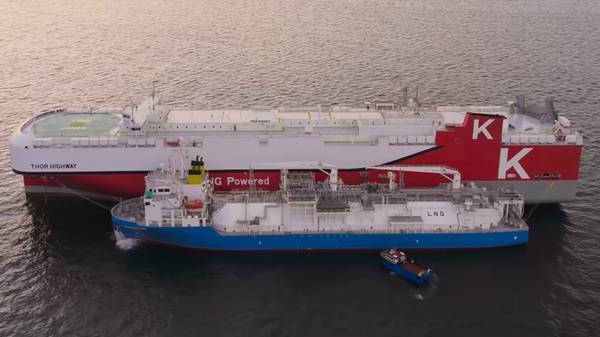
OW Otilia, a state-of-the-art double-hulled vessel from O.W. Bunker’s global fleet, will support the company’s physical operations. M/T OW Otilia is one of the largest bunker barges operating in Panama with a capacity of 8,000 metric tonnes (mt). It has a pumping rate of up to 700 cubic metres (cbm), flow meters and an electronic cargo control system.
The vessel will be supplying a full range of fuel up to 380-cst as well as distillates. It also has digital onboard blending equipment so that products can be delivered according to required specifications.
Andrew Huzzard, Branch Manager, OW Bunker Panama, commented: “We have already built a good reputation as a highly experienced, responsible and flexible trading operation in Panama. The launch of our physical presence will not only further strengthen our offering, but also consolidate our position as one of the leading suppliers in the region. Fundamentally, we know what our customers want, and have the knowledge, experience, product quality and infrastructure to deliver it.”
Götz Lehsten, Vice President, OW Bunker, added: “South America is a critical market, and we are wholly focused on ensuring that we can provide quality products and supply, and developing our physical operations as part of our ongoing commitment to our customers. It’s a rapidly expanding market, which will see an increase in demand for fuel oil and related services. Based on our knowledge and understanding of the region, combined with our global capabilities to quickly source product as well as our flexibility in pricing, we believe that we are well positioned to meet any demands or challenges that our customers might face.”