
 |
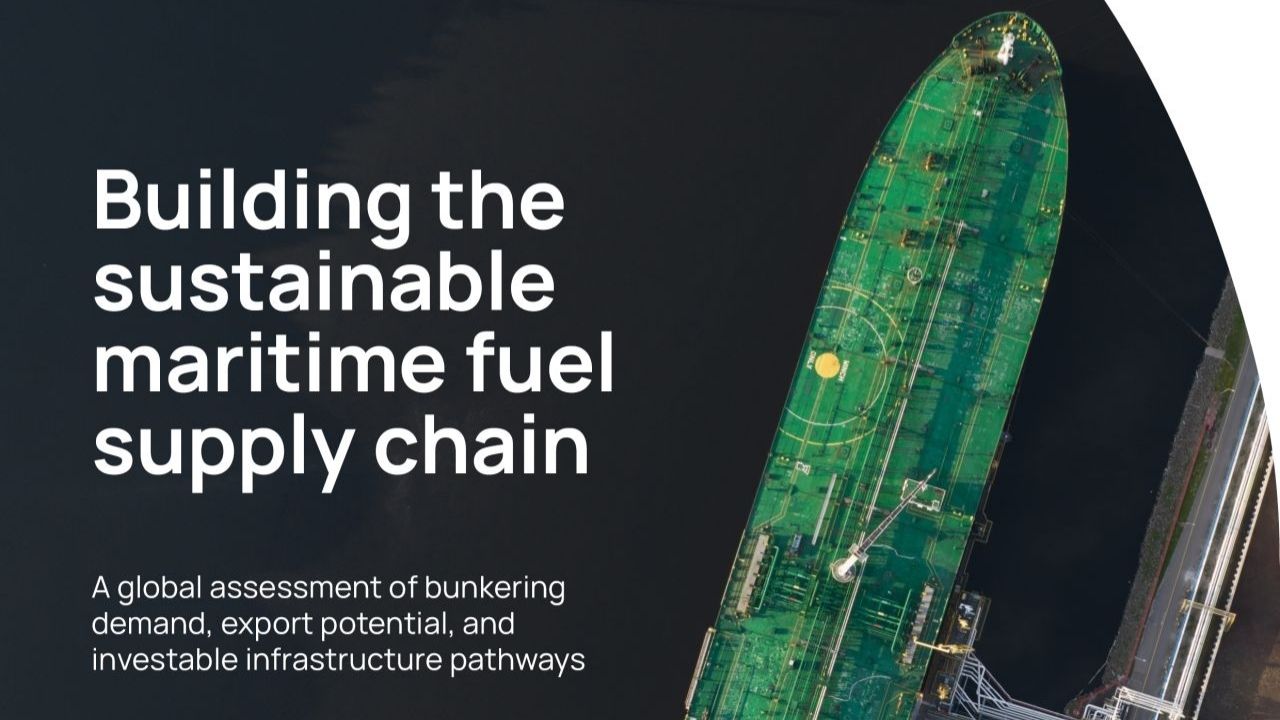
A new report from the Lloyd’s Register Maritime Decarbonisation Hub (The Decarb Hub) has identified how targeted investment in a small number of strategically positioned port hubs could accelerate the availability and uptake of sustainable maritime fuels.
The report, 'Building the sustainable maritime fuel supply chain', is the first in The Decarb Hub’s 'Maritime System in Transition' series. It provides a global assessment of where alternative maritime fuels, including e-fuels and selected sustainable biofuels, are most likely to be produced, exported and bunkered first, and what this means for near-term infrastructure investment.
According to the analysis, global bunkering demand is highly concentrated, with just 19 ports supplying around half of the world’s marine fuel. The report suggests this creates an opportunity to accelerate early adoption by equipping a small number of high-impact ports to handle multiple new fuel types.
However, Lloyd's Register highlights a growing geographic mismatch between where sustainable fuel production is emerging and where demand is currently concentrated. Most fuel production projects are located outside today’s largest bunkering hubs, meaning the first wave of supply chains will depend on linking export-oriented production regions with established demand centres through viable trade routes and infrastructure corridors.
The report found that early fuel projects overwhelmingly favour co-location with existing industrial and port energy clusters. More than 60% of e-fuel projects are located within established refineries, petrochemical hubs or energy sites, helping reduce delivery risk by leveraging existing utilities, storage, permitting and logistics infrastructure.
The document identifies three overlapping regional patterns likely to shape early markets. Asian hubs are set to depend heavily on imports, while Europe is likely to combine domestic supply with imports. In contrast, parts of the Americas, Africa and Asia could become production-led exporters, supplying both local and international markets.
According to the report, the main barriers to scaling are increasingly financial, regulatory and coordination-related, rather than technical. Coordinated investment across production, ports, bunkering infrastructure and shipping demand, supported by blended finance and risk-sharing mechanisms, will be needed to move projects from announcement to operation.
The research also introduces the Port Explorer Tool, a multi-criteria screening framework designed to help investors, ports and policymakers identify ports with potential for fuel export, bunkering or both, beyond today’s established hubs.
Dr Carlo Raucci, Director of Sustainable Fuels and Strategy at The Decarb Hub, commented: “This transition is about more than new fuels; it’s about building a resilient maritime energy system. As supply chains diversify and new trade routes emerge, ports will become the critical interface between production and global shipping demand. Our analysis helps identify the priority locations where investment and partnerships can accelerate early market formation.”
Vassia Sourtzi, Fuel Transition Lead at The Decarb Hub, said: “The biggest barrier to scaling alternative fuels is no longer identifying projects; it is enabling the full supply chain. That means aligning production, port infrastructure, shipping demand and finance. Without that coordination, projects will continue to struggle to reach final investment decision.”
The report is part of The Decarb Hub’s Fuel Adoption Programme. The 'Maritime System in Transition' series is designed to provide decision-makers with evidence and frameworks for maritime energy transition. Future publications will examine how infrastructure, finance, fleet and policy can come together to create a coherent system.

|
Uni-Fuels seeks bunker trader in Singapore as Nasdaq-listed firm expands team
Role includes managing end-to-end transactions, identifying opportunities and optimizing margins. |
|
|
|
||
|
BlackCoral Energy seeks junior bunker trader for Dubai office
Bunker firm targets fresh graduates and early-career professionals. |
|
|
|
||
|
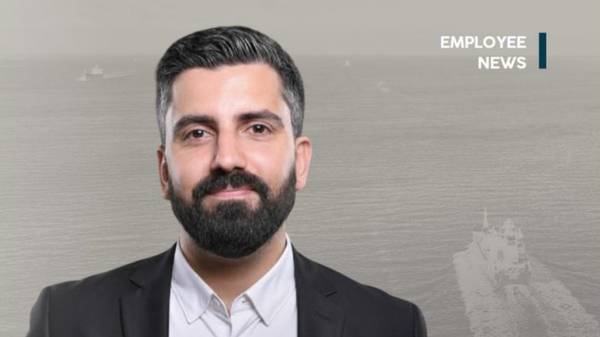
Christiania Energy appoints bunkers and lubricants specialist in Denmark
Mazlum Unutmaz joins the Danish firm’s global bunker pool operations team in Odense. |
|
|
|
||
|
Peninsula seeks junior cargo trader for Dubai supply and trading role
Marine fuels supplier Peninsula is recruiting a junior cargo trader in Dubai to manage procurement and supply. |
|
|
|
||
|
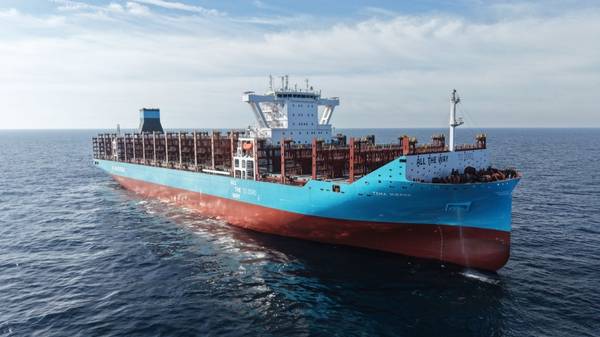
Maersk names third midsized dual-fuel vessel at Chinese shipyard
Tema Maersk joins fleet following the addition of Tangier Maersk and Tauranga Maersk. |
|
|
|
||
|
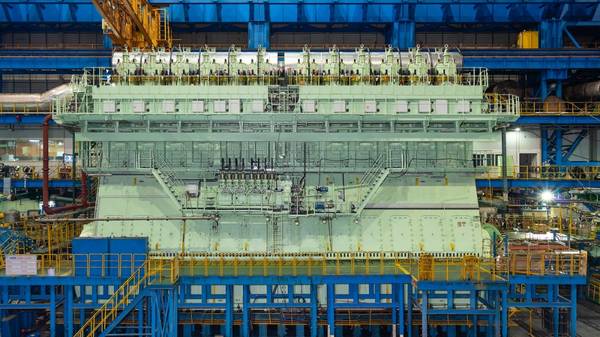
WinGD’s X-DF dual-fuel engine passes 1,000 orders
Swiss manufacturer reaches milestone 13 years after commercial launch of engine. |
|
|
|
||
|
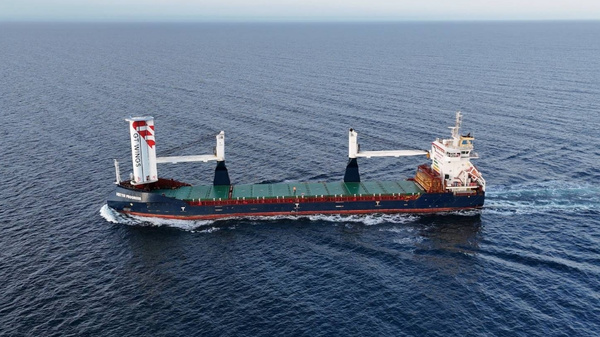
GT Wings gains RINA approval for wind propulsion performance assessment tool
RINA has granted approval in principle for a new tool assessing GT Wings’ AirWing Jet Sail system. |
|
|
|
||
|
Aderco launches 2055G+ programme linking fuel treatment to verified carbon credits
Aderco's new programme connects fuel additive technology with verified emissions data and Gold Standard carbon credits. |
|
|
|
||
|
ABS introduces nuclear-ready notation for marine and offshore assets
The classification society has released what it describes as an industry-first notation to support future nuclear conversion of vessels and offshore assets. |
|
|
|
||
|
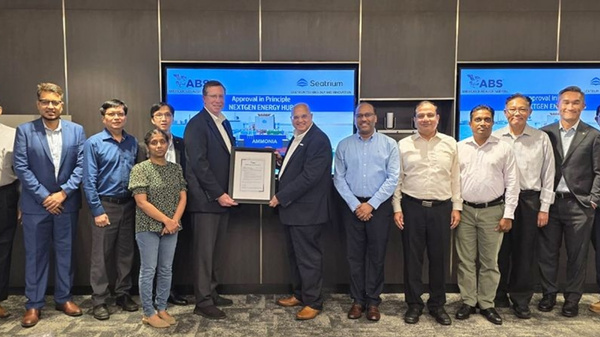
ABS grants approval in principle for Seatrium’s NEXTGEN Energy Hub design
The hub concept integrates ammonia bunkering, power generation and electric vessel charging in a single unit. |
|
|
|
||
| Swedish funding secured for e-methanol plant pre-engineering [News & Insights] |
| DHL and CMA CGM partner on 8,990-tonne biofuel purchase for ocean freight decarbonisation [News & Insights] |
| Zhoushan becomes world's third-largest bunker port [News & Insights] |
| Japanese tugboat to feature biofuel blender and ultrasonic anti-fouling system [News & Insights] |
| Swedish biomethane bunkered in Gothenburg [News & Insights] |
