
 |
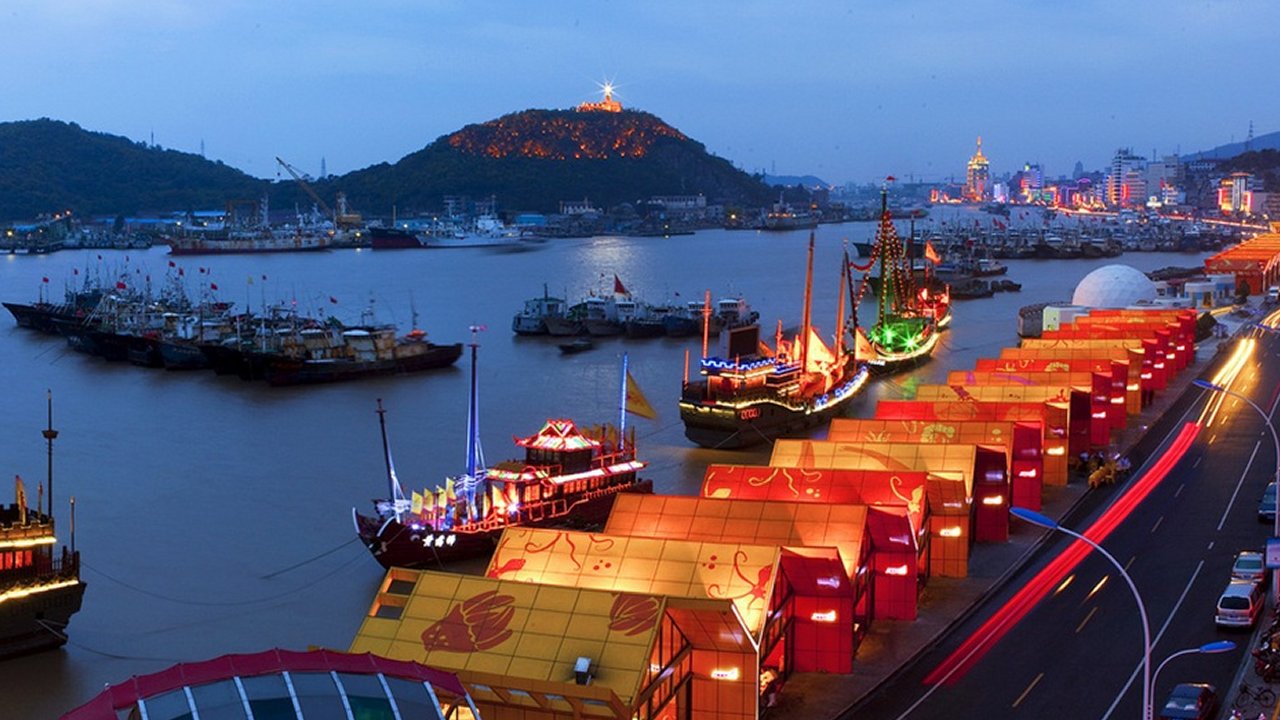
The port of Zhoushan, China, has overtaken both Antwerp-Bruges and Fujairah to become the third-largest bunker port in the world in terms of sales volume.
On 12 February, Antwerp-Bruges posted annual marine fuel sales for 2025 of 7.855 million metric tonnes, excluding marine lubricants, representing a year-on-year (YoY) rise of 297,357 tonnes, or 3.9%.
A notable increase was the 166,802-tonne YoY jump in liquefied natural gas (LNG) sales to 234,580 tonnes. Also, biofuel posted a fourfold volume rise from 35,223 tonnes to 150,597 tonnes.
However, despite the uptick in total sales, the Belgian refuelling hub was relegated to fourth place by Zhoushan, which, as previously reported, saw volumes grow 10.6% to 8.03 million tonnes, up from 7.26 million tonnes.
The UAE port of Fujairah was also overtaken by Zhoushan in 2025 as annual bunker sales declined by 2.8% to 7.4 million cubic metres (approximately 7.25 million metric tonnes).
Improvements in Zhoushan
As regards improvements, Zhoushan Municipal People's Government mentioned in January that steps had been taken at the port to improve fuelling efficiency at anchorages, including adding priority berths and extending night-time bunkering services.
Zhoushan has also opened a bonded warehouse for LNG, begun building its first methanol bunkering vessel, and brought its first liquid-ammonia fuelling company into operation.
Top two ports
Meanwhile, the world's two leading bunkering locations, Singapore and Rotterdam, both previously posted improved marine fuel sales figures in 2025. For the Asian city-state, the increase was 3.4% to 56.775 million tonnes, whilst Europe's largest port saw a modest rise of 3,374 tonnes, or 0.03%, to 9.823 million tonnes.
|
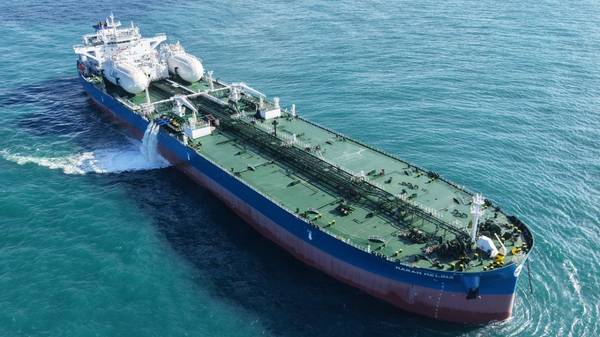
Angelicoussis Group takes delivery of fifth dual-fuel Suezmax tanker
Maran Tankers Management adds the 155,500-DWT Maran Melina to its fleet. |
|
|
|
||
|
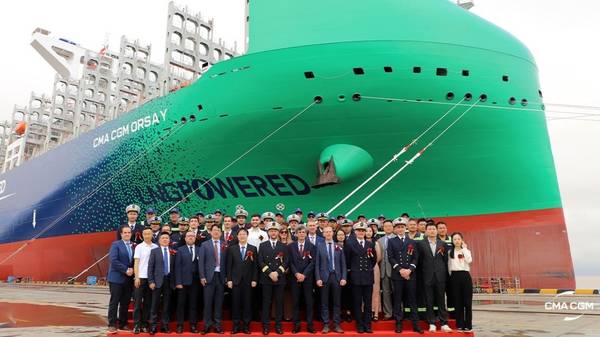
CMA CGM takes delivery of LNG-powered Orsay for Asia-Europe trade
24,212-TEU vessel joins 10-ship series, adding capacity to the carrier's FAL3 route. |
|
|
|
||
|
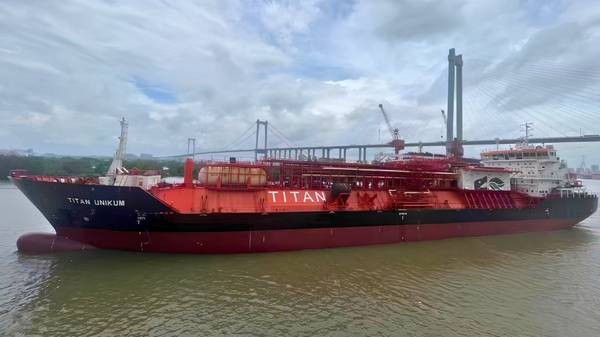
Titan Clean Fuels completes 15-year survey on LNG bunkering vessel Titan Unikum
Multi-gas carrier has undergone dry-docking work at a Chinese yard, preparing it for future upgrades. |
|
|
|
||
|
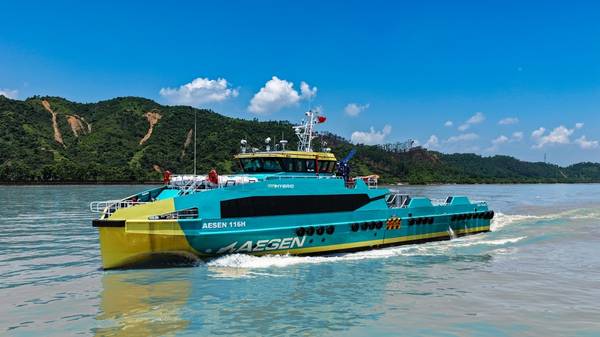
Lehmann Marine’s CUBE battery system debuts in China aboard hybrid crew boat
German battery maker’s first Chinese installation targets fuel savings on a Cheoy Lee-built vessel for a Singapore operator. |
|
|
|
||

|
Iino Lines secures transition loan from Mizuho Bank for LPG dual-fuel VLGC
Japanese shipowner finances the acquisition of Lumi Aurora through a green transition finance framework aligned with ICMA guidelines. |
|
|
|
||
|
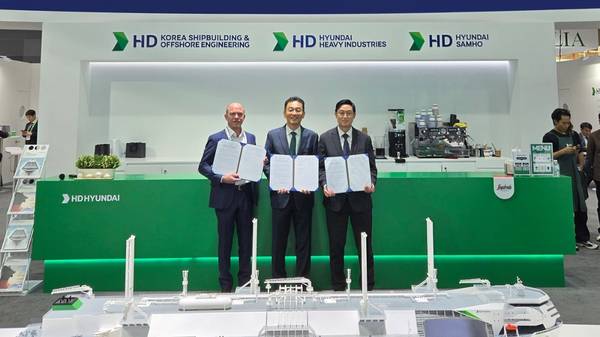
ABS, HD KSOE and Siemens partner on digital twin technology for ammonia-fuelled ship safety
Three firms will combine CFD analysis and digital twin technology to assess ammonia leak scenarios in vessel design. |
|
|
|
||
|
Nuclear-powered LNG carriers cost more upfront but cut lifetime fuel bills, ABS-backed study finds
Joint study with Blossom Energy examines the economics of a 174,000-cbm LNG carrier powered by a small reactor. |
|
|
|
||

|
Flex Commodities appoints Christos Doulaveris as general manager for Greece
Bunker trader strengthens its Greek operations with a new leadership appointment. |
|
|
|
||
|
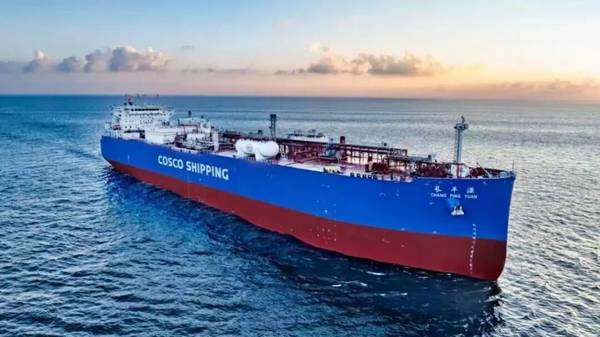
China delivers first domestically built VLGC under Chinese flag
Cosco Shipping’s new 88,000-cbm gas carrier features an LPG dual-fuel main engine. |
|
|
|
||
|
Electric and hybrid ferries could cut Sea of Marmara emissions by 63%, IMO study finds
A GreenVoyage2050 study finds that electrification could slash emissions, avoid €492 million in damage costs and support jobs. |
|
|
|
||
| China approves Zhoushan Port FTZ expansion to boost commodity trading [News & Insights] |
| Has Zhoushan just become the world's third-largest bunker port? [News & Insights] |
| China's first newbuild dual-fuel methanol bunkering vessel launched in Zhoushan [News & Insights] |
| Titan Clean Fuels completes 15-year survey on LNG bunkering vessel Titan Unikum [News & Insights] |
| Maersk completes first US ethanol bunkering of a deep-sea container ship [News & Insights] |
| Japan completes first methanol-fuelled coastal vessel and conducts inaugural bunkering [News & Insights] |
| TFG Marine fits mass flow meter to Jamaica-bound bunker barge [News & Insights] |
| TFG Marine fits mass flow meter to Jamaica-bound bunker barge [News & Insights] |
