
 |
The International Association of Classification Societies (IACS) has introduced a new Unified Requirement setting out a common safety framework for ammonia release mitigation systems (ARMS) on ammonia-fuelled vessels.
Unified Requirement H2 (UR H2) establishes harmonised expectations for the design, testing and certification of ARMS, covering both routine operations and credible abnormal scenarios. The framework is intended to support the safe adoption of ammonia as a marine fuel as alternative fuel uptake accelerates.
IACS said the requirement aligns with IMO guidance under MSC.1/Circ.1687 and clarifies how mitigation systems should be assessed and approved by classification societies. The approach focuses on identifying potential ammonia release scenarios and defining appropriate mitigation measures, while allowing flexibility in how those measures are engineered.
UR H2 recognises multiple technical solutions, including dissolution tanks, scrubbers, combustion units and dilution systems, provided they meet defined safety objectives and exposure limits. The requirement avoids prescribing specific technologies, instead setting consistent safety outcomes across different design approaches.
The framework also establishes expectations for workshop testing, onboard trials, certification and operational readiness, with the aim of ensuring mitigation systems remain effective throughout a vessel’s service life.
Eva Peno Jimenez, chair of IACS's Safe Decarbonisation Panel, noted: "This publication represents an important step towards harmonised global standards for ammonia-fuelled ships. By providing a common technical reference, the UR supports designers, shipowners, equipment manufacturers and regulators, and facilitates consistent implementation across the IACS membership."
IACS represents twelve classification societies whose rules and standards cover the majority of the world’s cargo-carrying fleet.
|
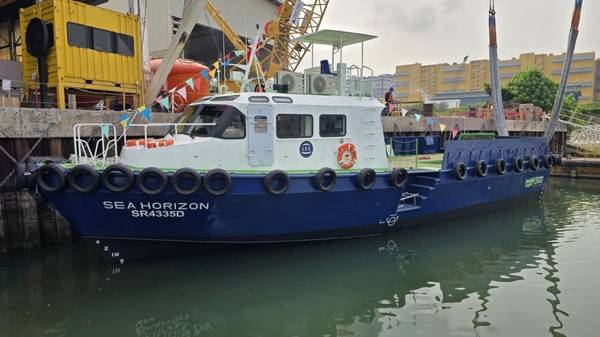
Pinnacle Marine launches second B100-compatible harbour craft for Les Star
Sea Horizon joins Singapore’s harbour craft fleet. |
|
|
|
||
|
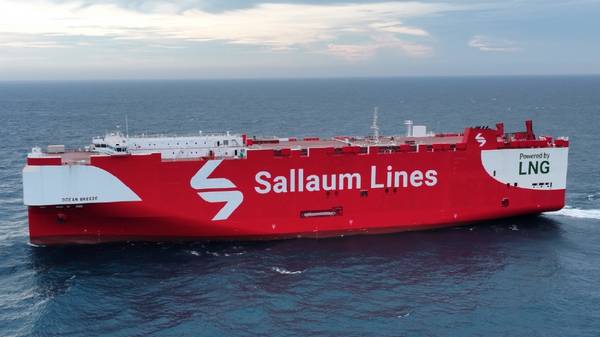
Sallaum Lines orders LNG-fuelled, ammonia-ready PCTCs from Chinese yards
Operator signs shipbuilding agreements for new generation of 8,600-CEU vessels, taking its newbuild investment past $1bn. |
|
|
|
||
|
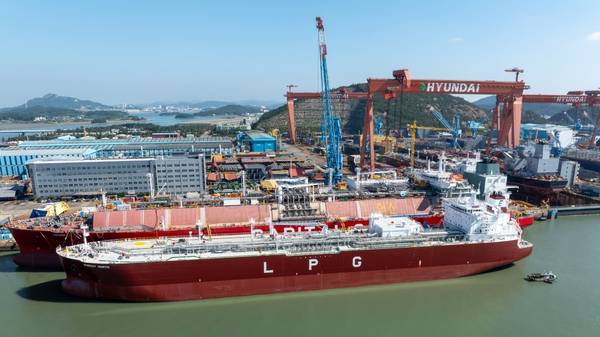
Nakilat takes delivery of dual-fuel carrier in South Korea
Ammonia-ready design positions vessel to play key role in future low-carbon energy supply chains, says Qatari firm. |
|
|
|
||
|
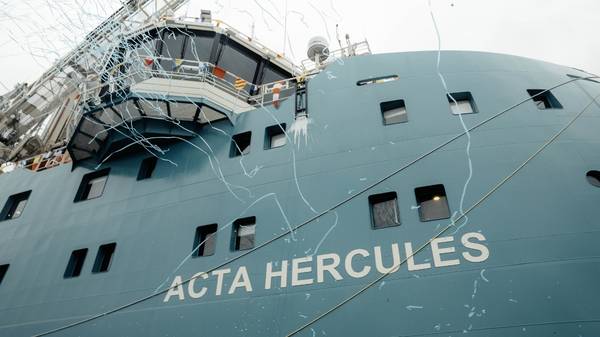
Acta Marine christens methanol dual-fuel vessel Acta Hercules in IJmuiden
Dutch operator marks the christening of its second newbuild CSOV. |
|
|
|
||
|
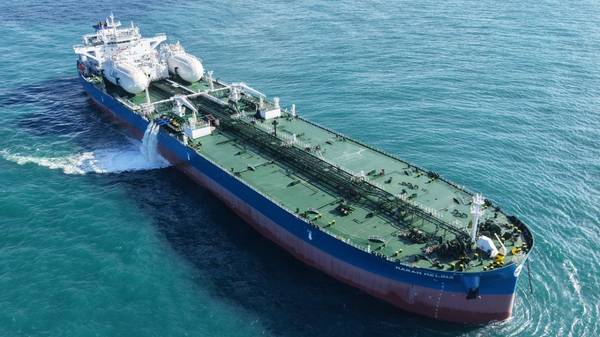
Angelicoussis Group takes delivery of fifth dual-fuel Suezmax tanker
Maran Tankers Management adds the 155,500-DWT Maran Melina to its fleet. |
|
|
|
||
|
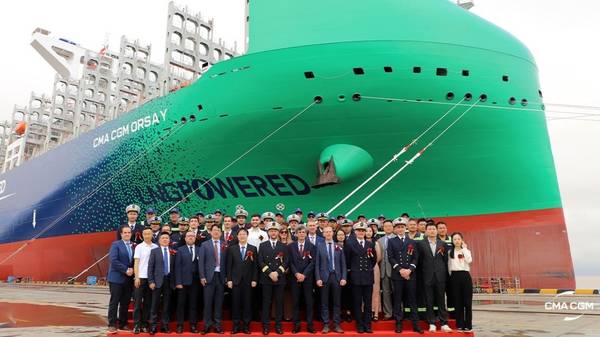
CMA CGM takes delivery of LNG-powered Orsay for Asia-Europe trade
24,212-TEU vessel joins 10-ship series, adding capacity to the carrier's FAL3 route. |
|
|
|
||
|
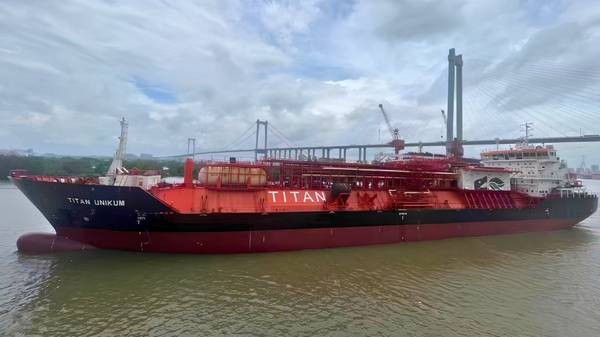
Titan Clean Fuels completes 15-year survey on LNG bunkering vessel Titan Unikum
Multi-gas carrier has undergone dry-docking work at a Chinese yard, preparing it for future upgrades. |
|
|
|
||
|
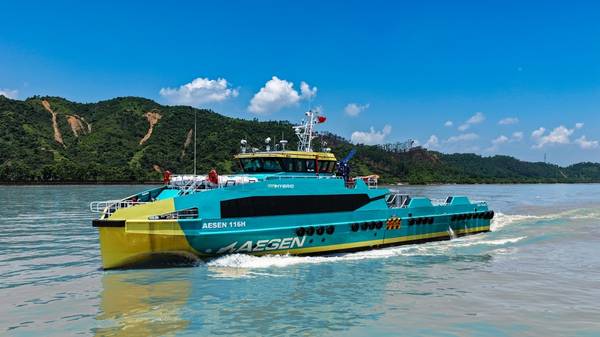
Lehmann Marine’s CUBE battery system debuts in China aboard hybrid crew boat
German battery maker’s first Chinese installation targets fuel savings on a Cheoy Lee-built vessel for a Singapore operator. |
|
|
|
||

|
Iino Lines secures transition loan from Mizuho Bank for LPG dual-fuel VLGC
Japanese shipowner finances the acquisition of Lumi Aurora through a green transition finance framework aligned with ICMA guidelines. |
|
|
|
||
|
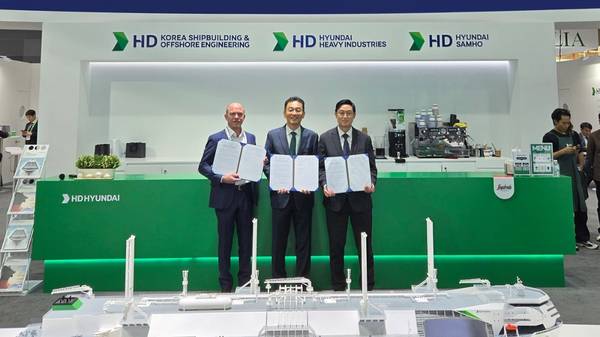
ABS, HD KSOE and Siemens partner on digital twin technology for ammonia-fuelled ship safety
Three firms will combine CFD analysis and digital twin technology to assess ammonia leak scenarios in vessel design. |
|
|
|
||
| Anglo-Eastern completes pilot training course for ammonia-fuelled vessels [News & Insights] |
| Tug becomes world's first ammonia-fuelled vessel to receive environmental credit certification [News & Insights] |
| J-ENG completes world's first commercial ammonia-fuelled engine [News & Insights] |
| Sallaum Lines orders LNG-fuelled, ammonia-ready PCTCs from Chinese yards [News & Insights] |
| Nakilat takes delivery of dual-fuel carrier in South Korea [News & Insights] |
| ABS, HD KSOE and Siemens partner on digital twin technology for ammonia-fuelled ship safety [News & Insights] |
| Changhong International launches eighth LNG dual-fuel container ship for MSC [News & Insights] |
| RCL names first three of eight dual-fuel-ready 4,488-TEU vessels in China [News & Insights] |
