
 |
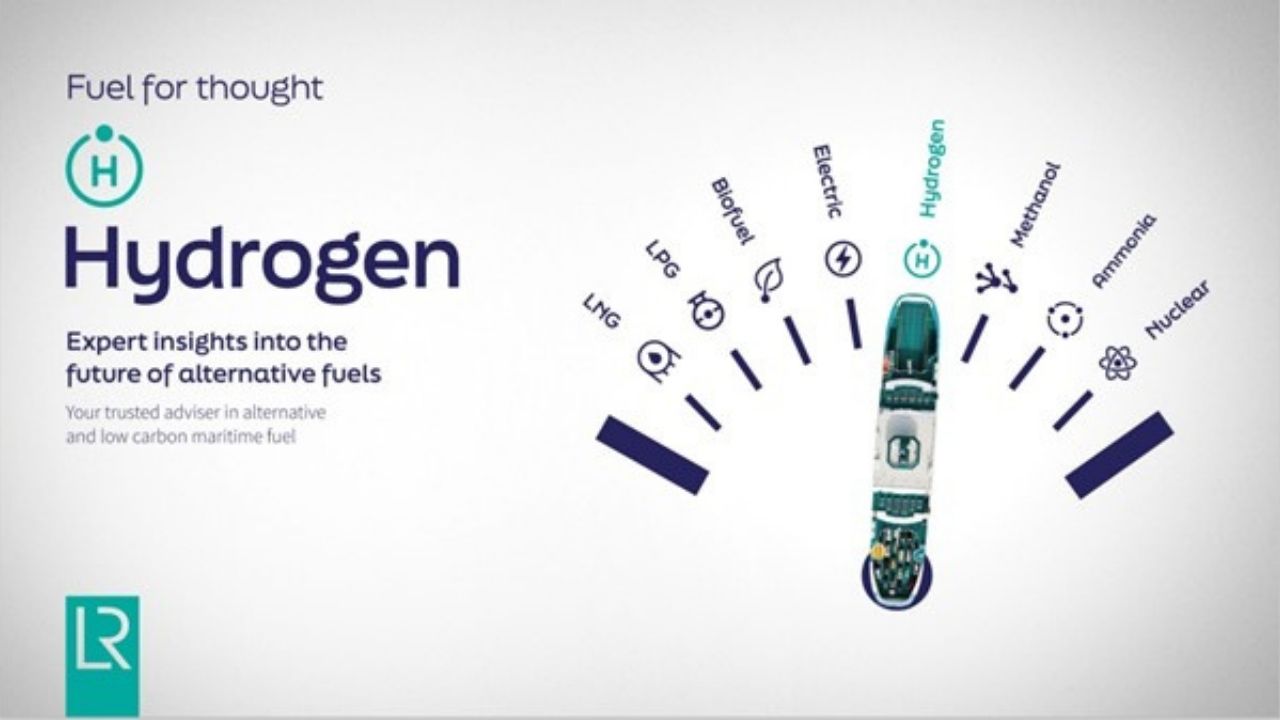
Lloyd's Register (LR) has published a report examining hydrogen's potential role in maritime decarbonisation, highlighting both opportunities and the barriers currently restricting its adoption in shipping.
The report, Fuel for Thought: Hydrogen, examines the fuel from production and supply through to onboard use, addressing advantages alongside safety, infrastructure, and cost challenges.
According to the report, green hydrogen can deliver zero tank-to-wake greenhouse gas emissions when used in fuel cells and serves as a building block for e-fuels such as ammonia and methanol. However, hydrogen's low volumetric energy density, the need for cryogenic storage at –253°C, and heightened safety risks mean the fuel is not a ready-made solution for most ship types.
The report notes that while interest is rising, particularly as regulatory measures tighten, hydrogen-capable vessels represent less than 0.5% of the global orderbook.
The assessment comes as shipowners face increasing pressure to cut emissions under the EU ETS, FuelEU Maritime, and the IMO's 2050 net-zero ambition. Green hydrogen stands to gain from FuelEU Maritime's two-times multiplier for renewable fuels of non-biological origin until 2033, a mechanism that could accelerate its uptake as production scales.
Infrastructure remains a challenge. Despite emerging bunkering projects, low-emissions hydrogen — including green hydrogen produced via renewable-energy powered electrolysis, and blue hydrogen from biomass and fossil fuels with high levels of carbon capture and permanent storage — accounted for less than 1% of global production in 2025, according to IEA figures.
The report states that investment in production, transport, and bunkering infrastructure is needed before the fuel can support wider maritime demand. Shipping will also need to compete with other industries for green hydrogen, driving the need for certification schemes and transparent lifecycle assessments.
Safety emerges as a key theme. Hydrogen's wide flammability range, low ignition energy, and potential for embrittlement require rigorous design standards and crew training.
LR's hydrogen requirements, set out in Appendix LR3 of its Rules for Ships Using Gases or Other Low-Flashpoint Fuels, provide a framework to manage those issues, supported by guidance on fuel cells, composite cylinders, liquid hydrogen systems, and bunkering arrangements.
The analysis points to near-term opportunities for early adoption in short-sea trades such as ferries, tugs, and coastal vessels where regular bunkering cycles reduce the constraints of onboard storage. Fuel cell technologies show promise for these applications, supported by improving cost trajectories and advances in durability. Hydrogen-ready designs and hybrid fuel strategies also offer shipowners a route to futureproof assets.
Padmini Mellacheruvu, LR's Lead Technical Specialist in Cryogenic and Compressed Fuel Systems, said: "Hydrogen has an important role to play in the maritime energy transition, but the pathway to scale is complex. Progress will depend on early investment, careful planning, and a clear focus on safety.
"Our latest Fuel for Thought report brings clarity to both the potential of hydrogen and the substantial work still required to enable its safe, scalable, and commercially viable use."
The report was written with a foreword by Dr. Maximilian Kuhn, advisor and ISO TC 197 liaison to the IMO, as well as advisor to Hydrogen Europe. He said: "At Hydrogen Europe, we believe that hydrogen is more than just a fuel; it is one of the main drivers of systemic change.
"Its versatility, scalability, and compatibility with renewable energy sources put it in a unique position to address the complex challenges of maritime decarbonisation. Yet the path forward is not without obstacles: Infrastructure, regulation, safety, and cost remain critical hurdles.
"This report does not shy away from these realities. Instead, it provides a clear-eyed assessment of the current landscape while charting a course for innovation, investment, and international collaboration."
The report is available to download from Lloyd's Register's website.
|
Monjasa opens applications for global trainee programme
Marine fuel supplier seeks candidates for MOST scheme spanning offices from Singapore to New York. |
|
|
|
||
|
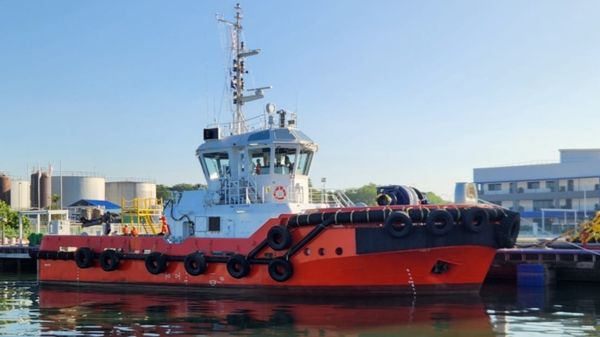
Singapore's first fully electric tug completes commissioning ahead of April deployment
PaxOcean and ABB’s 50-tonne bollard-pull vessel represents an early step in harbour craft electrification. |
|
|
|
||

|
BV Malaysia partners with Straits Bio-LNG on sustainable biomethane certification
MoU aims to establish ISCC EU-certified biomethane production and liquefaction facility in strategic alliance. |
|
|
|
||
|
Molgas becomes non-clearing member at European Energy Exchange
Spanish energy company joins EEX as it expands European operations and strengthens shipper role. |
|
|
|
||

|
Diamandopoulos appointed CEO of Elinoil as Aligizakis becomes chairman
Greek marine lube supplier announces leadership changes following board meeting on 5 January. |
|
|
|
||
|
Bureau Veritas to host webinar on sustainable marine fuel transition challenges
Classification society to address regulatory compliance, market trends, and investment strategies in February online event. |
|
|
|
||
|
Inchcape to provide bunkering services from new Indonesian offices
Port agency establishes presence in key bulk and tanker operation hubs handling 150 calls annually. |
|
|
|
||
|
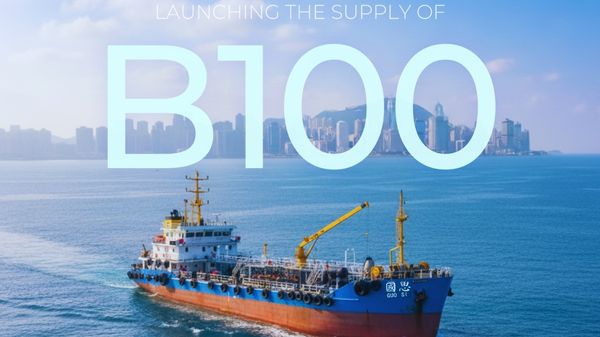
Chimbusco Pan Nation launches B100 biodiesel supply in Hong Kong
Bunker tanker Guo Si becomes Hong Kong's first Type II certified vessel for pure biodiesel operations. |
|
|
|
||
|
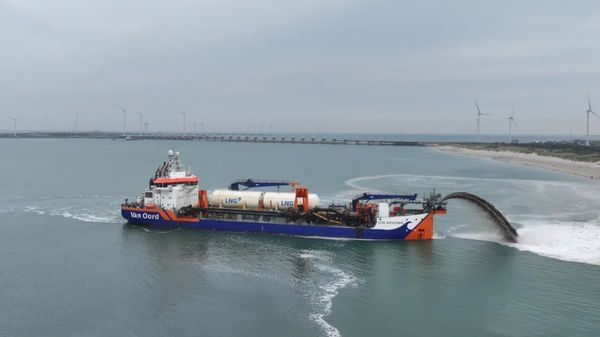
Van Oord completes Dutch beach replenishment using 100% bio-LNG
Dredger Vox Apolonia deposited 1 million cbm of sand at Noord-Beveland beach under Coastline Care programme. |
|
|
|
||
|
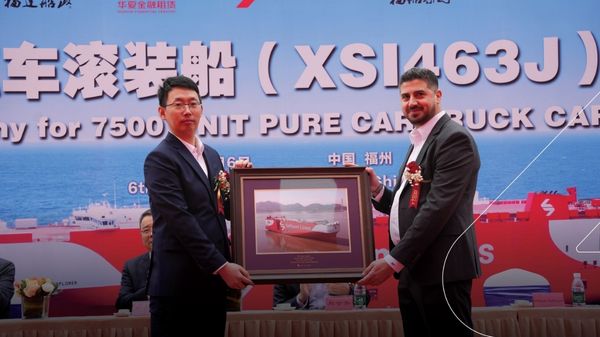
Sallaum Lines takes delivery of LNG-fuelled car carrier MV Ocean Explorer
The 200-metre vessel was built by Fujian Mawei Shipbuilding with dual-fuel propulsion systems. |
|
|
|
||
| Lloyd's Register completes Europe's first major LNG cruise ship dry docks with Carnival [News & Insights] |
| Lloyd's Register, Exmar, and Belgium’s Federal Public Service develop interim guidelines for ammonia cargo as fuel [News & Insights] |
| Ammonia Energy Association releases gas detection whitepaper with Lloyd's Register input [News & Insights] |
