
 |
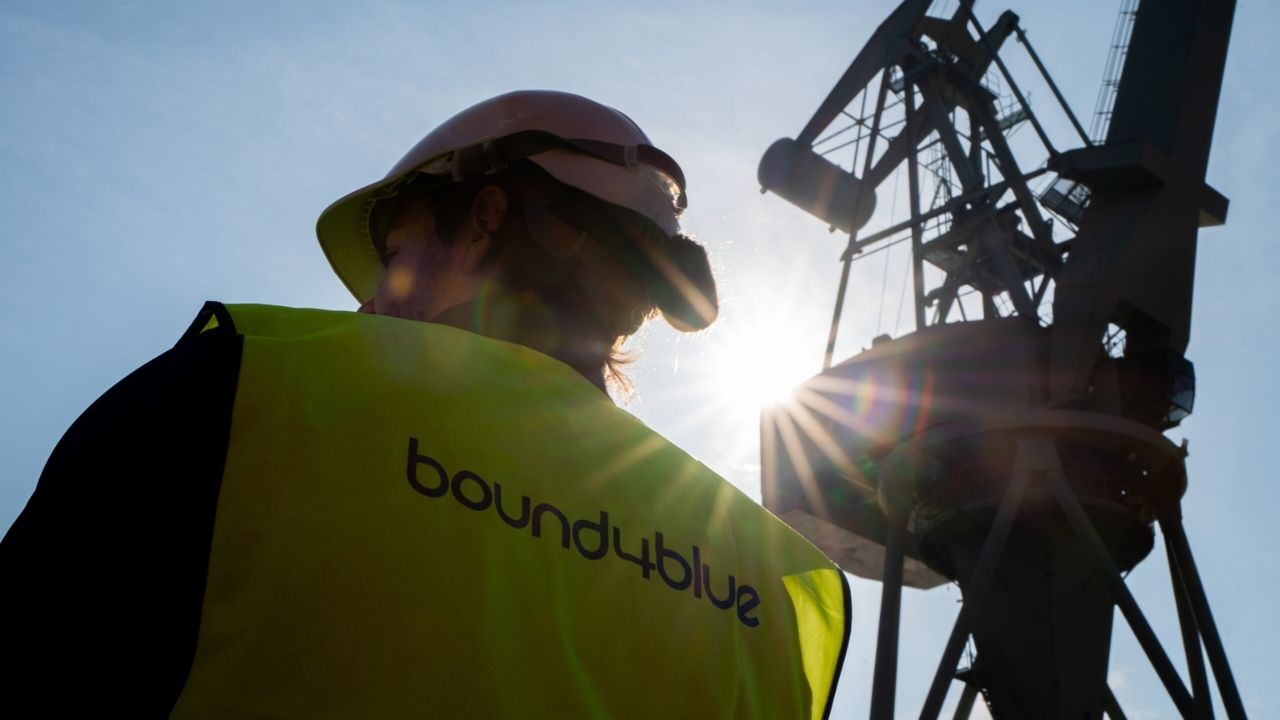
Bound4blue has established production capabilities in China through a network of outsourced manufacturing partners, the Spanish wind propulsion technology company announced on November 27.
The facilities, located around Shanghai and the Yangtze River Delta, are certified to ISO 9001, ISO 14001, and ISO 45001 standards and regularly evaluated by classification societies including DNV, Bureau Veritas, and Lloyd's Register, according to the company.
The partners' combined capacity supports the production of up to 100 eSAIL units annually from 2026, with potential for expansion through additional space allocation and secondary facilities.
Bound4blue has also signed partnerships with Chinese manufacturing suppliers, including firms specializing in heavy-marine and port-handling equipment, structural components, and lifting systems. The collaborations will initially focus on manufacturing and logistics, with plans to extend into after-sales service and technical support.
"China is central to the future of maritime decarbonization. It's where a large share of the world's new vessels are designed and built, and where shipowners are looking for proven, practical technologies to meet fuel and emission targets," said Juan José Arrebola, chief operating officer of bound4blue.
The company said the expansion will reduce lead times for its Model 2 and Model 3 eSAILs and improve logistics efficiency for projects throughout Asia, bringing it closer to shipyards in China, South Korea, and Japan.
Technology and market position
Bound4blue's eSAIL is a suction sail system that uses fans to draw air across an aerodynamically optimized surface, creating lift that the company claims is up to seven times greater than that of a conventional rigid sail of the same size.
The system is designed for both retrofit and newbuild applications across vessel types including tankers, bulk carriers, ro-ros, cruise vessels, ferries, and gas carriers. According to bound4blue, the technology reduces engine loads and fuel consumption, cutting vessel operating costs and CO₂ emissions.
The company, founded in 2014 and headquartered in Cantabria, Spain, has deployed its eSAIL system on seven ships since completing its first installation in 2021, with 12 more in its order book, representing more than 50 eSAILs. Its client portfolio includes Eastern Pacific Shipping, Maersk Tankers, Odfjell, Klaveness Combination Carriers, and BW Epic Kosan.
China accounts for the majority of global shipbuilding output. The country has committed to peak carbon emissions before 2030 and achieve carbon neutrality by 2060 under its 'dual carbon' goals.
"By building on our established production capability in Europe and combining it with Asia's industrial strength, we are expanding our capacity to meet growing global demand and helping shipping take a decisive step toward cleaner, smarter, and more sustainable operations," Arrebola said.
The company is due to exhibit at Marintec China 2025, taking place December 2–5 at Shanghai New International Expo Centre.
|
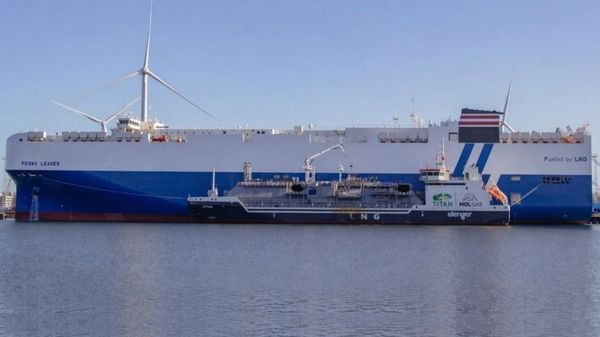
Titan Clean Fuels completes first FuelEU Maritime pooling exercise with DNV verification
Pool included several hundred vessels, with LNG and biomethane helping balance compliance deficits. |
|
|
|
||
|
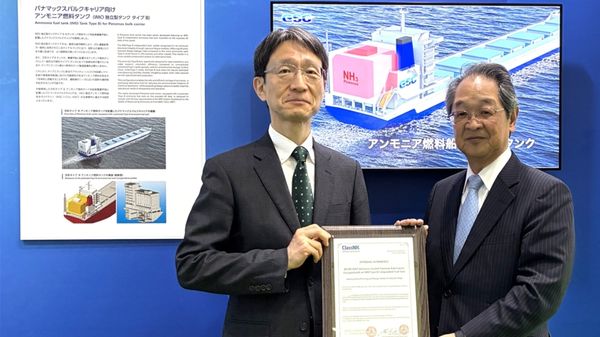
ClassNK grants world-first approval for ammonia-fuelled bulk carrier with Type B fuel tanks
Japanese classification society issues AiP for Panamax design with tanks installed on exposed deck. |
|
|
|
||
|
EmissionLink warns UK ETS preparations at risk amid Strait of Hormuz focus
Maritime emissions compliance provider says regulatory deadline cannot be delayed despite geopolitical disruptions. |
|
|
|
||
|
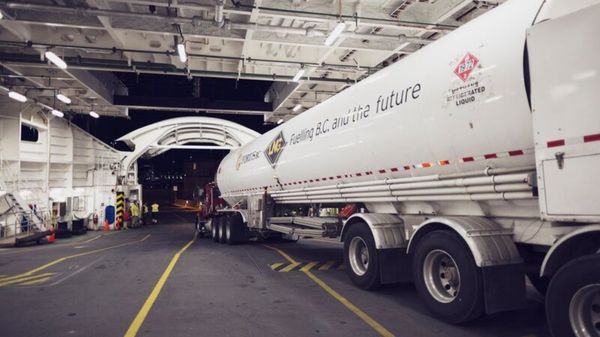
FortisBC completes 10,000th LNG bunkering operation for marine vessels
Canadian utility reaches refuelling milestone as West Coast LNG marine fuel demand grows. |
|
|
|
||
|
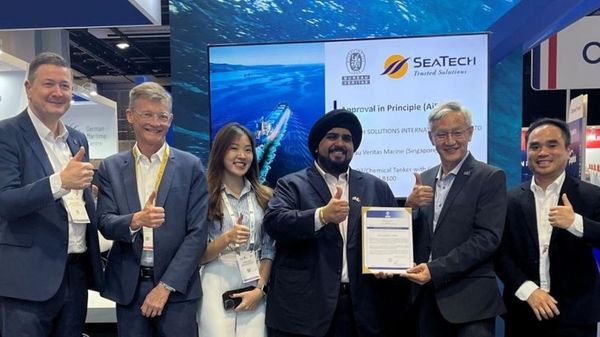
Bureau Veritas approves dual-fuel tanker designs for Australian coastal operations
SeaTech Solutions receives approval in principle for 80 m vessels designed to carry methanol and biofuels. |
|
|
|
||
|
Japanese shipping firms secure government funding for Singapore ammonia bunkering trial
Sumitomo, K Line and NYK to demonstrate ship-to-ship ammonia fuel supply operations. |
|
|
|
||
|
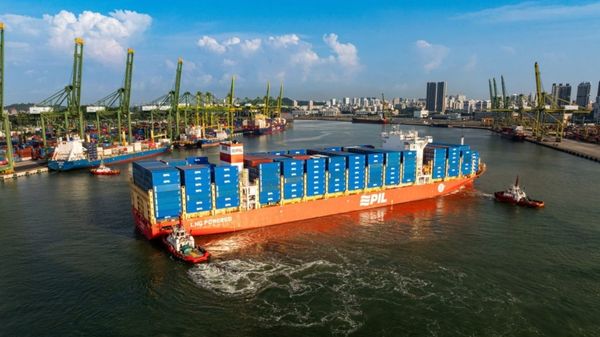
PIL and PSA launch Singapore’s first joint land-sea green shipping service
DNV-verified service allows shippers to reduce Scope 3 emissions through lower-carbon fuel allocation. |
|
|
|
||
|
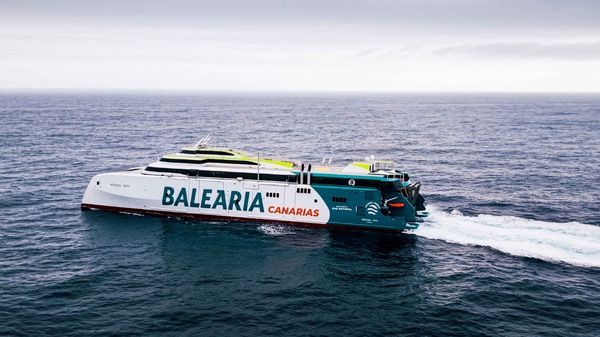
Baleària begins sea trials of dual-fuel catamaran Mercedes Pinto in Gijón
Third LNG-powered fast ferry expected for delivery in May, destined for Canary Islands routes. |
|
|
|
||
|
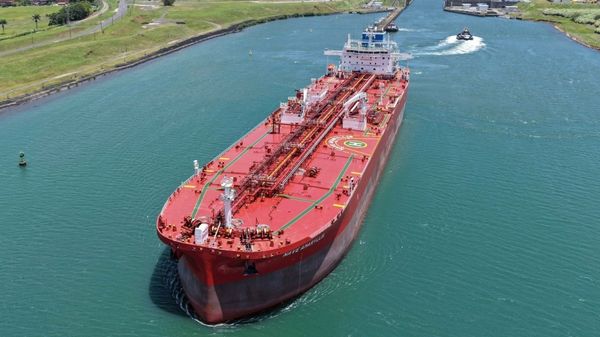
Navios Partners takes delivery of dual-fuel-ready Aframax tanker
Nave Amaryllis is equipped with LNG and methanol readiness alongside shore power capability. |
|
|
|
||
|
IBIA backs IMO as global shipping regulator ahead of MEPC 84
Marine fuel industry body supports joint shipping statement emphasising multi-stakeholder approach to decarbonisation. |
|
|
|
||
| Bound4blue secures first LPG carrier contract with BWEK for wind propulsion system [News & Insights] |
| MoU signed to develop wind-assisted propulsion for LNGCs [News & Insights] |
| Lloyd's Register publishes first nuclear shipping guidance [News & Insights] |
| Private Chinese shipbuilder plans to deliver eight dual-fuel boxships [News & Insights] |
| Tallink Group moves towards 100% renewable fuel on Helsinki–Tallinn route [News & Insights] |
| Bureau Veritas to host webinar on sustainable marine fuel transition challenges [News & Insights] |
| Keel laid for LNG dual-fuel crude oil tanker in China [News & Insights] |
